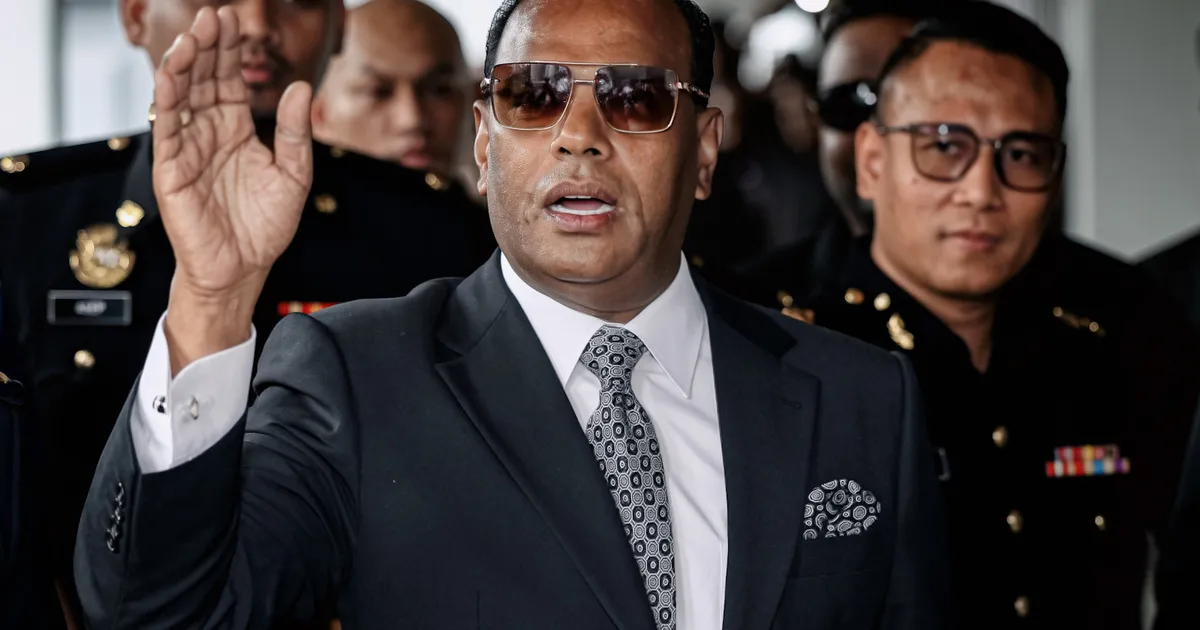
Former Human Resources Minister Saravanan has rejected suggestions that his correspondence with Prime Minister Anwar Ibrahim amounted to seeking preferential treatment or a cover-up of his corruption case. Speaking publicly about the matter, Saravanan clarified that his written communication to the Prime Minister was motivated solely by a desire for a thorough and impartial examination of the charges levelled against him, which he maintains lack credible foundation.
The controversy surrounding Saravanan's letter represents a significant moment in Malaysian political discourse, touching on questions about how former ministers interact with sitting premiers when facing legal jeopardy, and the fine line between requesting legitimate administrative review and attempting to influence the course of justice. Saravanan's assertion that he sought nothing more than a comprehensive reassessment of his case reflects the defensive posture adopted by many prominent figures navigating the country's anti-corruption machinery in recent years.
The charges facing Saravanan have drawn considerable public and media scrutiny, particularly given his previous cabinet rank and the visibility of the Human Resources portfolio during his tenure. His characterisation of the allegations as lacking credibility places him at odds with whichever investigative and prosecutorial bodies have determined sufficient grounds exist to pursue the matter. This divergence between how the former minister views the charges and how authorities have proceeded with them underscores the broader tension between those accused of graft and the institutional mechanisms designed to address such offences.
Saravanan's decision to write directly to Anwar Ibrahim signals the continued significance of prime ministerial channels in Malaysian political practice, even as the nation has sought to strengthen the independence of its anti-corruption institutions. The fact that he felt compelled to seek the Prime Minister's intervention—or at minimum, his consideration—reflects enduring patterns in how Malaysian politics operates, particularly when individuals of high standing find themselves entangled in criminal proceedings. Such moves are rarely undertaken lightly, suggesting that Saravanan believed the situation warranted direct escalation to the head of government.
The distinction Saravanan draws between requesting a thorough review and seeking a cover-up hinges on questions of intent and perception. From his perspective, appealing for a comprehensive re-examination of his case represents legitimate recourse—a former official exercising his right to seek fair treatment through proper administrative channels. However, critics might question whether any letter from an ex-minister facing serious charges to the sitting Prime Minister carries an implicit expectation of intervention or special consideration, regardless of explicit wording. This ambiguity sits at the heart of the current dispute.
In the Malaysian context, where political networks and personal relationships have historically influenced administrative outcomes, the appearance of impropriety can prove as damaging as actual wrongdoing. Saravanan's public clarification appears designed to counter perceptions that his letter represented an attempt to weaponise his political standing or leverage personal connections with Anwar Ibrahim to his advantage. By emphasizing that he sought only a review rather than dismissal or special treatment, he attempts to position his actions as reasonable rather than self-serving.
The timing of this matter also carries weight within broader patterns of Malaysian politics. The country has experienced significant churn in its leadership and institutional priorities over the past several years, with successive administrations adopting varying approaches toward investigating and prosecuting corruption allegations against former officials. Saravanan's case must be understood within this context of shifting political winds and inconsistent application of anti-corruption efforts, where the fortunes of former ministers can swing dramatically depending on whether their political allies remain in power.
Saravanan's insistence that his graft charges lack credibility fundamentally challenges the work of those who investigated and brought the case forward. This stance is commonplace among the accused—few admit the legitimacy of charges against them—but when coupled with direct appeals to the Prime Minister, it raises questions about whether such appeals constitute proper use of administrative channels or represent attempts to circumvent normal judicial processes. The former minister appears to believe that additional scrutiny at the highest political level will vindicate him, a calculation that assumes impartiality at that level.
For Malaysian observers, this episode illuminates persistent challenges within the country's governance architecture. It demonstrates how even well-intentioned reforms to strengthen anti-corruption institutions can be complicated by the persistence of old political habits and the blurred boundaries between executive and judicial functions. When former ministers facing charges can appeal directly to Prime Ministers, questions inevitably arise about whether legal processes operate with genuine independence or remain susceptible to political influence.
Moving forward, Saravanan's case will likely hinge less on the content or motivation behind his letter and more on the substantive merits of the allegations themselves. However, the episode serves as a reminder of how Malaysian politics continues to grapple with the transition from patronage-based systems toward more institutionalised approaches to governance. Whether his appeal to Anwar Ibrahim ultimately influences the trajectory of his case remains to be seen, but his public rebuttal of cover-up accusations demonstrates the political stakes involved and his determination to shape the narrative surrounding both his letter and his broader legal predicament.

