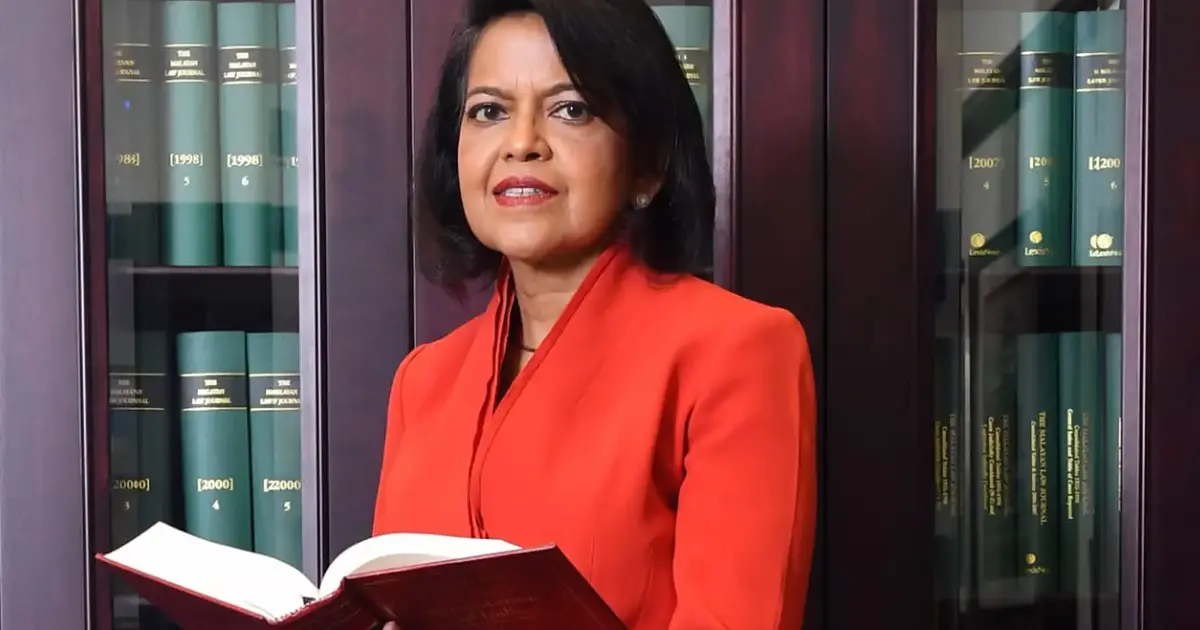
The Malaysian Media Council has appointed Nallini Pathmanathan, a retired Federal Court judge, to serve as its chairman, a move the council says reflects the urgency of leadership during a period of substantial disruption across the media landscape. The appointment marks a significant decision by the council's governing body, which identified Pathmanathan's judicial background as suited to the complex regulatory and ethical terrain that Malaysia's news industry now navigates.
Pathmanathan's career on the bench afforded her extensive exposure to constitutional matters, media-related cases, and the delicate balance between press freedom and the broader interests of the state. Her elevation to the chairmanship signals the council's recognition that contemporary media challenges often intersect with legal frameworks and require seasoned judgment. The council's statement emphasised that her appointment arrives at a critical juncture, when the industry faces mounting pressures from multiple directions simultaneously.
Malaysia's media sector has encountered a confluence of difficulties in recent years. Digital transformation has fractured traditional revenue models, forcing newsrooms to downsize and consolidate. Simultaneously, the proliferation of social media platforms and unregulated online publishers has diluted the market share of established outlets and contributed to an erosion of professional standards across the information ecosystem. Misinformation, once a peripheral concern, now circulates as rapidly as verified news, complicating public discourse and eroding trust in institutions.
The regulatory environment itself has grown more intricate. Newsrooms operate under an evolving set of rules encompassing the Communications and Multimedia Act, Broadcasting Act, and various state-level regulations, alongside external pressure from political actors who increasingly scrutinise editorial decisions. Media organisations report mounting uncertainty about the boundaries of permissible reporting, particularly on matters touching governance, religious sensitivities, or national security. This regulatory fog has prompted self-censorship and editorial conservatism, trends that concern media observers who worry about the long-term health of investigative journalism.
Pathmanathan's judicial orientation may bring a legalistic dimension to the council's advocacy and standard-setting functions. The council itself lacks statutory enforcement powers and operates primarily through persuasion, guidelines, and industry consensus-building. Her presence could lend greater intellectual weight to council statements on regulatory proposals or public discourse about press freedom. Conversely, her judicial track record could invite scrutiny from those concerned that former bench members bring institutional conservatism or deference to government authority into advocacy roles.
The appointment also reflects broader questions about who ought to lead media institutions in societies where journalism itself has become contested terrain. In Malaysia, as across Southeast Asia, debates about media independence often pit commercial interests against editorial autonomy, and both against state security concerns. The council itself operates in a somewhat ambiguous position—nominally independent, yet composed of industry players with commercial stakes and government officials with regulatory mandates. Pathmanathan's arrival as an outsider with no prior media industry experience could introduce fresh perspective, or risk misunderstanding the practical realities of newsroom operations.
Industry challenges extend beyond the regulatory and digital realms into fundamental economics. Print circulation has contracted sharply, advertising revenue has migrated toward tech platforms, and subscription models remain underdeveloped in Malaysia. Newsrooms struggle to fund investigative reporting, training, and the infrastructure that sustained quality journalism in previous decades. Some publications have folded or ceased print editions entirely, concentrating market reach among fewer, larger players. This consolidation raises concerns about diversity of voices and the representation of regional and minority interests in national discourse.
For Malaysian readers and media consumers, the appointment carries implications for how industry standards and press freedom issues will be articulated in public forums. The council under new leadership may become either a more assertive voice defending journalistic interests against regulatory encroachment, or a more cautious custodian of press responsibility and restraint. Pathmanathan's judicial background suggests she may emphasise the constitutional dimension of press freedom, potentially grounding council positions in constitutional law rather than commercial or practical arguments alone.
Regionally, Malaysia's media developments attract attention from neighbouring countries wrestling with similar challenges. Singapore's media landscape, despite substantial prosperity, has long confronted state oversight and limited political pluralism in newsrooms. Thailand and Myanmar have experienced acute political pressures on press freedom. Indonesia's democratic media ecosystem offers a comparative model of how press freedom can coexist with regulatory pluralism. Malaysia's path forward, shaped partly by the council's direction, may offer lessons for how middle-income democracies can navigate the tension between media independence and state interests.
Pathmanathan's leadership will likely shape the council's priorities over the coming years. These may include advancing digital-age standards and ethical codes, engaging with online publishers and social media, proposing regulatory reforms, and defending professional journalists' interests in public debates. Her judicial experience might prove valuable in interpreting complex media law questions and in drafting more sophisticated ethical frameworks suited to contemporary journalism's hybrid forms—video, interactive, collaborative, and cross-border reporting that traditional codes have yet to adequately address.
The council's assertion that this appointment comes amid significant industry challenges understates the scale of transformation underway. Malaysia's media sector is not merely adjusting to digital disruption; it is undergoing structural realignment that may permanently alter how news reaches audiences, which voices receive platforms, and how professional journalism sustains itself economically. Under Pathmanathan's leadership, the council's response to these changes will merit close observation from journalists, regulators, and the broader Malaysian public invested in the quality and independence of news media.