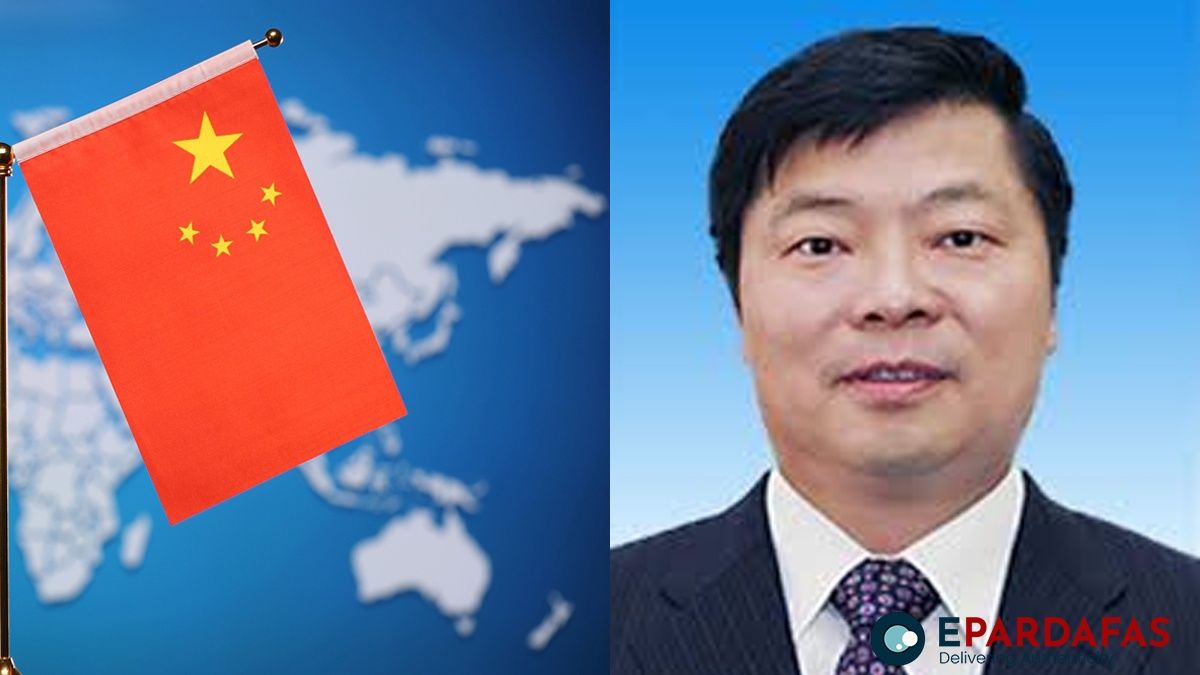
Beijing's top anti-corruption watchdog announced on Sunday, July 19, that Ouyang Weimin, the former president of the China Development Bank, is under investigation for alleged serious violations of party discipline and law. The Central Commission for Discipline Inspection and the National Commission of Supervision jointly announced the move, though both agencies provided minimal detail about the nature of the allegations or expected timeline for the inquiry.
Ouyang's career spanning nearly four decades within China's financial system places him among the country's most senior banking officials to face such scrutiny. He first joined the Chinese Communist Party in 1986 and spent substantial portions of his early professional life at the People's Bank of China, the nation's central banking authority. His trajectory exemplifies the typical pathway for elite officials ascending China's economic establishment, progressing from foundational roles in monetary policy toward increasingly prominent positions of state authority.
The 2019 appointment to lead the China Development Bank represented the pinnacle of Ouyang's career to that point. Preceding his tenure at the development lender, he had served as vice-governor of Guangdong, one of China's most economically significant provinces and a crucial manufacturing and financial hub adjacent to Hong Kong. His elevation to the China Development Bank's presidency placed him at the helm of a major state institution directly accountable to China's State Council, the country's highest executive body responsible for overseeing critical economic levers.
Ouyang stepped down from the presidency in 2023, though circumstances surrounding his departure remain unclear. The timing of the formal investigation announcement—occurring roughly a year after he relinquished the role—suggests a deliberate sequencing common in Beijing's investigative procedures, where individuals are often removed from sensitive positions before public charges materialise.
The China Development Bank itself operates as a cornerstone institution within China's state-directed economic framework. Established in 1994 during the early phases of China's market reform era, the bank functions primarily as a development finance vehicle rather than a traditional commercial lender. Its mandate centres on deploying capital toward strategic sectors deemed critical to national economic development, including infrastructure, energy, and industries operating in economically disadvantaged regions. This specialised focus positions the institution as a policy implementation tool, with lending decisions frequently reflecting broader government economic priorities rather than purely commercial considerations.
Ouyang's investigation arrives amid an intensifying pattern of anti-corruption enforcement across China's financial sector. Over the past decade, particularly since Xi Jinping assumed the presidency, Beijing has systematically targeted high-ranking officials within banking, insurance, and state-owned enterprises. The campaign has extended beyond civilian administrators to ensnare military generals and Communist Party luminaries, creating an atmosphere of institutional vulnerability among China's administrative elite.
Critics and international observers contend that the anti-corruption apparatus, while ostensibly designed to eliminate graft and restore institutional integrity, simultaneously functions as a mechanism for consolidating political power. By investigating rivals and potential power bases, the centralised enforcement machinery reinforces Xi's authority within the party hierarchy. The selective nature of investigations—targeting certain factions while sparing others—has fuelled perceptions that the campaign serves dual purposes beyond purely ethical reform.
For Malaysia and the broader Southeast Asian region, developments within China's financial institutions carry tangible implications. The China Development Bank remains a significant source of development financing for infrastructure projects throughout Southeast Asia, having funded major initiatives in countries ranging from Indonesia to Myanmar. Any disruption to institutional stability or leadership continuity at the bank could influence lending patterns, project approval timelines, and strategic investment priorities across the region's development portfolios.
The investigation also illustrates the risks confronting senior officials within China's system, where career advancement coexists with vulnerability to institutional scrutiny. For international partners engaging with Chinese financial institutions and state entities, Ouyang's case underscores the importance of understanding China's domestic political dynamics when negotiating long-term financing arrangements or partnership structures. Leadership transitions driven by anti-corruption investigations can reshape institutional priorities and decision-making frameworks in ways that affect external stakeholders.
As the inquiry progresses, further revelations regarding specific allegations against Ouyang may emerge, potentially implicating other officials or exposing systemic vulnerabilities within the development banking sector. The opacity surrounding the investigation reflects standard Chinese Communist Party practice, whereby accusations and evidence remain largely confidential until formal conclusions materialise. This approach contrasts sharply with transparent judicial systems elsewhere, complicating international understanding of the case's broader significance and institutional ramifications.

