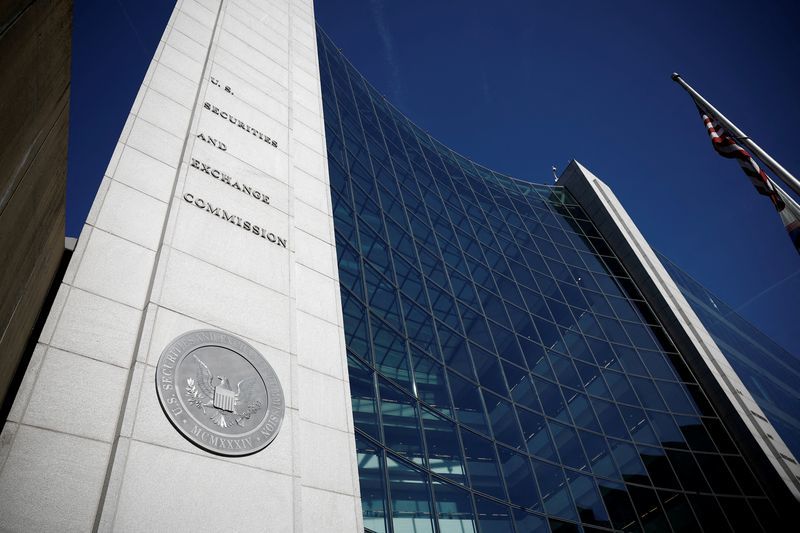
American securities regulators have brought charges against Jason Satsky, a former co-head of Bank of America's power and renewable energy banking operations, in connection with what the SEC describes as a classic insider trading scheme involving information about a major corporate acquisition. The case underscores persistent vulnerabilities in financial institutions' information barriers, particularly when personal relationships intersect with professional access to sensitive deal information in the investment banking realm.
The Securities and Exchange Commission alleges that Satsky tipped Gavin Wolfe, described as both a longtime friend and former colleague, about the impending acquisition of South Jersey Industries, an energy holding company for which Bank of America was providing advisory services. The tip allegedly occurred in late 2021, months before the transaction became public knowledge. Wolfe, who now operates investment vehicle Evergreen Capital, capitalized on this advance notice by accumulating more than 2.2 million shares in the parent company at an aggregate cost approaching $53 million, the SEC said. When South Jersey Industries' $8.1 billion buyout was announced on February 24, 2022, the securities surged in value, allowing Wolfe to realise a 36 percent gain—translating to approximately $18.5 million in unlawful profits.
Regulatory filings reveal that the two men maintained multiple channels of communication regarding the potential deal, demonstrating the depth of their coordination. Their conversations allegedly continued even during personal moments of leisure. The SEC noted that Satsky and Wolfe, accompanied by their respective spouses, attended a high-profile college basketball game between Duke and Kentucky at Madison Square Garden, where they discussed acquisition prospects. Satsky's access to luxury box seating through his employer apparently provided a comfortable venue for these sensitive exchanges, illustrating how corporate perquisites can inadvertently facilitate breaches of market integrity. Such details are significant for Malaysian observers monitoring governance standards, as they highlight how informal settings can circumvent institutional compliance mechanisms.
The regulatory action carries substantial consequences for both parties should the allegations prove accurate. The SEC is seeking disgorgement of the illegal profits realised by Wolfe, coupled with civil monetary penalties and permanent bans from serving as officers or directors of public companies against both men. These remedies reflect the seriousness with which federal authorities treat insider trading violations, particularly those involving sophisticated financial professionals who should understand their fiduciary obligations and legal constraints.
Both defendants have vigorously rejected the allegations. Satsky's legal representative, Robert Anello, issued a statement asserting his client's complete innocence, contending that the evidence will ultimately vindicate Satsky and demonstrate that he scrupulously respected information barriers. According to Anello, Satsky never communicated material nonpublic information regarding South Jersey Industries to Wolfe or any other individual. Wolfe's counsel, Reed Brodsky, similarly characterised the charges as baseless, claiming his client will mount a robust defence. Brodsky further asserted that Wolfe's acquisition of South Jersey shares reflected an independent investment analysis rather than reliance on confidential information, and pointed to sworn testimony and documentary evidence supporting this contention. The defence argument suggests that the SEC has overlooked or discounted legitimate evidence of autonomous decision-making by Wolfe.
The professional histories of both men reveal a long-standing association spanning decades and institutional affiliations. Prior to joining Bank of America in 2012, Wolfe held a senior banking position at Credit Suisse, where he specialised in power and renewable energy transactions. This shared background in the same industry sector provides additional context for their relationship and may inform how authorities assess whether Wolfe could have possessed independent analytical capabilities regarding South Jersey Industries. Wolfe subsequently established Evergreen Capital, which functions as a vehicle for managing family investment assets, though precise details regarding its operations remain limited.
Institutional accountability mechanisms appear to have functioned in this instance, though perhaps tardily. Bank of America terminated Satsky's employment in March 2025, indicating that the bank took action once the regulatory investigation had progressed significantly. The institution itself escaped accusation of wrongdoing, and company officials confirmed that Satsky no longer maintains an employment relationship with the organisation. This outcome contrasts with scenarios where institutional negligence in compliance oversight attracts separate enforcement actions.
The timing of these developments carries implications for ongoing debates surrounding insider trading enforcement in the financial sector. With Satsky aged 59 and residing in New York, while Wolfe, 55, maintains residences in both New York and Sunny Isles Beach, Florida, the case involves affluent financial professionals operating within established networks rather than isolated bad actors. This characteristic typifies many insider trading cases that prosecutors pursue, as sophisticated market participants operating in concentrated professional circles often have access to material nonpublic information unavailable to retail investors or the broader market.
For Malaysian stakeholders and Southeast Asian financial professionals, this case reinforces several critical governance lessons. First, it demonstrates that enforcement agencies in mature markets like the United States maintain sophisticated surveillance capabilities and institutional memory regarding trading patterns and personal relationships. Second, it illustrates that seniority within prestigious institutions provides no immunity from prosecution. Third, it emphasises that friendship and historical association do not excuse breaches of market conduct rules; indeed, such relationships may themselves generate suspicion when combined with trading activity. As Malaysia and regional financial centres continue strengthening their own enforcement capabilities through agencies like the Securities Commission, cases such as this provide instructive precedents regarding investigation methodologies, evidentiary standards, and the importance of information barriers within investment banking operations, particularly where bankers interact socially with potential market participants.

