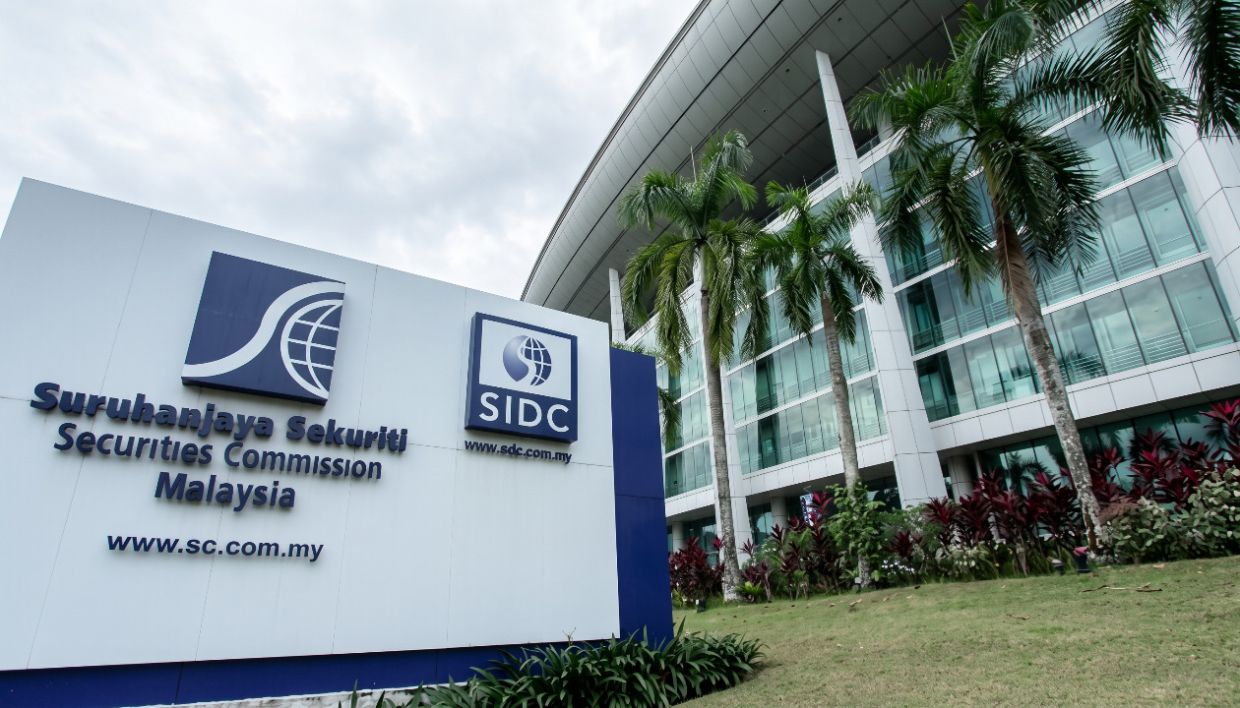
The Kuala Lumpur Sessions Court has handed down a three-year custodial sentence to Mohd Arif Fadzlee Mohd Arifin, a former bank analyst who was found guilty of engaging in unauthorised regulated financial activities. The conviction underscores the Securities Commission Malaysia's ongoing crackdown on individuals operating outside the bounds of Malaysia's financial regulatory framework, a priority that has intensified over recent years as authorities seek to protect retail investors from unqualified operators.
Mohd Arif faced two distinct charges brought by the Securities Commission Malaysia in January 2024, both stemming from breaches of the Capital Markets and Services Act 2007. The first charge centred on his representation of himself as an agent of CIMB Wealth Advisors Berhad whilst engaging in securities dealing—a regulated activity requiring specific licensing—despite holding no Capital Markets Services Representative's Licence from the SC and lacking any registered status within the regulatory framework. Securities dealing occupies a protected category under Malaysia's capital markets law precisely because retail clients depend on licensed representatives to provide trustworthy advice and maintain professional standards.
The second charge concerned his misuse of the Unit Trust Consultant designation, a title which carries recognised professional standing in Malaysia's financial advisory sphere. By adopting this title without authorisation, Mohd Arif created an impression among clients that he possessed proper licensing to deal in securities when in fact no such credentials existed. This form of credential misrepresentation strikes at the heart of consumer confidence in financial markets, as investors often rely on professional designations as visible markers of competence and regulatory compliance.
The offences prosecuted in this case occurred over a decade ago, with the unlicensed activities documented in the Petaling Jaya and Nilai areas during 2011. The extended timeframe between the alleged misconduct and formal charges reflects the sometimes protracted nature of financial crime investigations, particularly in cases where the full extent of wrongdoing becomes apparent only through subsequent regulatory scrutiny or complaints. Bail was granted at the moderate level of RM60,000, suggesting the court viewed Mohd Arif as a flight risk of minimal concern despite the gravity of the charges.
At trial, the prosecution methodically built its case with testimony from ten witnesses, two of whom were individuals who had been victimised by Mohd Arif's conduct. In late February 2026, after hearing the government's evidence, the Sessions Court determined that a prima facie case had been established, obligating Mohd Arif to mount a substantive defence. He chose to present his own testimony but declined to call supporting witnesses, a tactical decision that ultimately proved unsuccessful in creating reasonable doubt about the prosecution's allegations.
The court's analysis of the evidence proved decisive. The judge found that Mohd Arif had failed to construct a plausible counter-narrative to the prosecution's case, allowing the conviction to proceed on both charges. His own testimony, whilst mandatory under his legal rights, apparently did not persuade the court that the evidence against him was unreliable or insufficient. This represents a significant evidentiary hurdle cleared by authorities in what constitutes a notable enforcement victory.
The sentencing outcomes reflect a measured approach by the judge, with Mohd Arif receiving three years imprisonment on each count, ordered to run concurrently rather than consecutively. Concurrent sentencing means the total prison term remains three years rather than doubling to six years, a distinction that suggests the judge viewed the two offences as manifestations of a single underlying course of misconduct rather than entirely separate criminal enterprises. Nevertheless, three years represents a substantial custodial consequence designed to deter similar conduct within the financial services sector.
The statutory penalties available to the court highlighted the seriousness with which Parliament views such violations. Section 59(1) of the Capital Markets and Services Act carries a maximum fine of RM5 million or imprisonment up to five years, or both, reflecting the protective intent of licensing requirements. Section 362(3), addressing misuse of professional titles, permits fines up to RM1 million or imprisonment extending five years, or both. The judge's decision to impose imprisonment rather than relying solely on financial penalties suggests a determination to use custodial punishment to reinforce compliance across the financial services community.
For Malaysian consumers and the broader regional investment public, this judgment reinforces several critical principles. First, individuals marketing themselves as financial advisors must obtain proper licensing, with the onus on regulators to prosecute those circumventing these safeguards. Second, professional designations such as Unit Trust Consultant carry legal weight and cannot be appropriated by unqualified operators. Third, the Securities Commission remains willing to pursue historical misconduct even when years have elapsed, signalling that time alone does not extinguish regulatory liability.
The conviction also carries implications for CIMB Wealth Advisors Berhad, whose name was invoked without authorisation, though the bank itself faced no charges. This case serves as a cautionary reminder to licensed institutions about the risks of inadequate compliance monitoring within their own operations, particularly regarding which individuals may be representing their services to the public. The reputational association between Mohd Arif's fraudulent activities and CIMB's legitimate brand illustrates how unlicensed operators can exploit established financial institutions to lend false credibility.
Regionally, Malaysia's enforcement action aligns with heightened scrutiny across Southeast Asia of unregulated financial services and investment scams. Neighbouring jurisdictions including Singapore, Thailand, and Indonesia have similarly intensified prosecution of unlicensed securities dealers and fraudulent investment schemes. This convergence reflects shared concerns about protecting less sophisticated investors from exploitation and maintaining institutional confidence in capital markets that remain critical to economic development across the region.
The broader significance of this case extends beyond the individual defendant. It demonstrates that Malaysia's regulatory agencies possess both the investigative capacity and prosecutorial will to pursue financial crimes that may lack the visibility of larger-scale frauds yet cause genuine harm to affected investors. The Securities Commission's willingness to commit substantial resources—involving ten witnesses and a full trial—to cases spanning over a decade suggests a commitment to comprehensive market oversight rather than a reactive approach focused solely on crisis situations.

