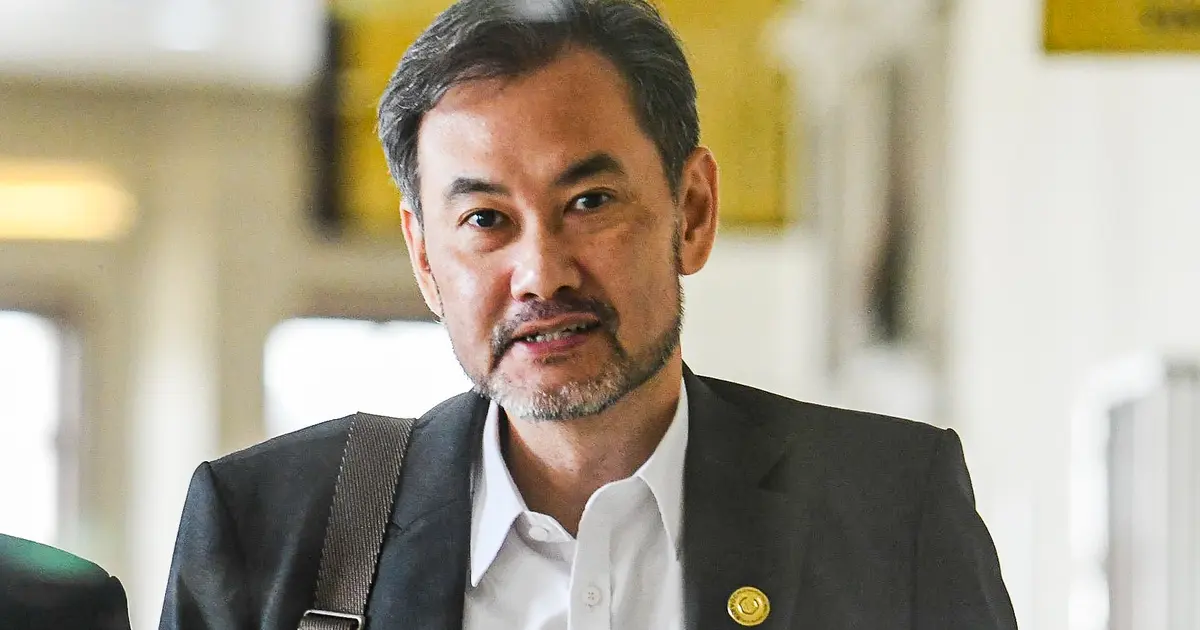
Shahrol Azral Ibrahim Halmi, who served as the founding chief executive officer of 1Malaysia Development Berhad, has rejected characterisations that he afforded Jho Low the kind of authority and deference typically reserved for Malaysia's prime minister. The distinction carries significant weight in the context of ongoing legal proceedings surrounding the massive financial scandal that engulfed the development fund and implicated senior government officials.
In his testimony, Shahrol Azral sought to clarify the nature of his interactions with the influential businessman, emphasising that while informal channels of communication existed between himself and then-Prime Minister Najib Razak, these did not represent an unusual or inappropriate governance structure. The former executive's account appears designed to reframe the scope of Jho Low's influence within the institution, suggesting his role was more circumscribed than some accounts have suggested.
The distinction matters considerably because establishing the precise hierarchy of influence within 1MDB becomes crucial for determining who bore responsibility for the fund's eventual collapse and the billions of ringgit that disappeared from its coffers. If Jho Low operated with near-presidential authority over the development fund, this would fundamentally alter assessments of culpability and the mechanisms through which the fraud occurred. Conversely, characterising his role as subordinate to proper institutional channels supports narratives of compartmentalised influence rather than systematic control.
Shahrol Azral's clarification touches on a broader pattern observed throughout the 1MDB scandal: the difficulty in establishing clear lines of command and authority within the institution. Multiple investigations have revealed that decision-making processes were frequently bypassed, that normal corporate governance structures were routinely circumvented, and that instructions often flowed through unexpected channels. The former CEO's testimony suggests he viewed informal communication with the prime minister through Jho Low as a practical arrangement rather than evidence of extraordinary power concentration.
The fugitive businessman Jho Low has remained a shadowy figure throughout the scandal despite his central role in orchestrating the fund's most significant transactions. Operating from abroad and beyond the reach of Malaysian law enforcement, Low has maintained a studied silence while others embroiled in the scandal have faced trials, convictions, and imprisonment. His absence from the courtroom has made him an inevitable focal point for questions about responsibility and influence, even as testimony struggles to establish the precise contours of his authority within 1MDB.
For Malaysian readers and regional observers, Shahrol Azral's testimony underscores the ongoing complexity of assigning accountability for what authorities have characterised as one of the world's largest financial frauds. The case represents far more than a simple matter of embezzlement; it encompasses questions about institutional integrity, the vulnerability of state enterprises to capture by private interests, and the mechanisms through which checks and balances can be systematically dismantled. Understanding exactly how Jho Low exercised influence directly affects how Malaysia can prevent similar abuses in the future.
The development fund itself was established with considerable fanfare as a vehicle for advancing national prosperity and strategic investment priorities. Its founders envisioned an institution capable of generating wealth for the Malaysian state and contributing to long-term economic development objectives. Instead, the structure proved susceptible to exploitation, with massive sums eventually flowing into overseas accounts associated with associates and entities connected to the scheme. The gap between institutional intention and actual practice remains one of the scandal's most damning indictments.
Shahrol Azral's role in 1MDB proved complex and increasingly controversial as the fund's problems emerged into public view. His position as the chief executive placed him at the nexus of decision-making, yet testimony and investigation have revealed he often operated under significant constraints and pressure from superior authorities. Questions persist about the degree to which he was complicit in fraudulent transactions or merely a functionary within a structure already corrupted by forces beyond his control.
The testimony also illuminates enduring questions about governance standards within Malaysian state enterprises and sovereign wealth funds more broadly. Regional governments throughout Southeast Asia have observed the 1MDB case with considerable attention, recognising that similar vulnerabilities could threaten their own institutions if adequate safeguards remain unimplemented. The mechanisms through which oversight bodies failed, audit procedures were compromised, and senior leadership became aligned with fraudulent objectives offer cautionary lessons extending well beyond Malaysia's borders.
As the legal proceedings continue their protracted course, testimony from figures like Shahrol Azral provides crucial detail regarding the mechanics of the fraud and the networks through which decisions flowed. These accounts, taken collectively, are gradually constructing a comprehensive picture of how institutional safeguards eroded and how private interests came to dominate a state enterprise nominally governed in the public interest. The specific question of whether Jho Low functioned as an unofficial prime minister remains contestable, but his extraordinary influence over the fund's operations appears beyond serious dispute.

