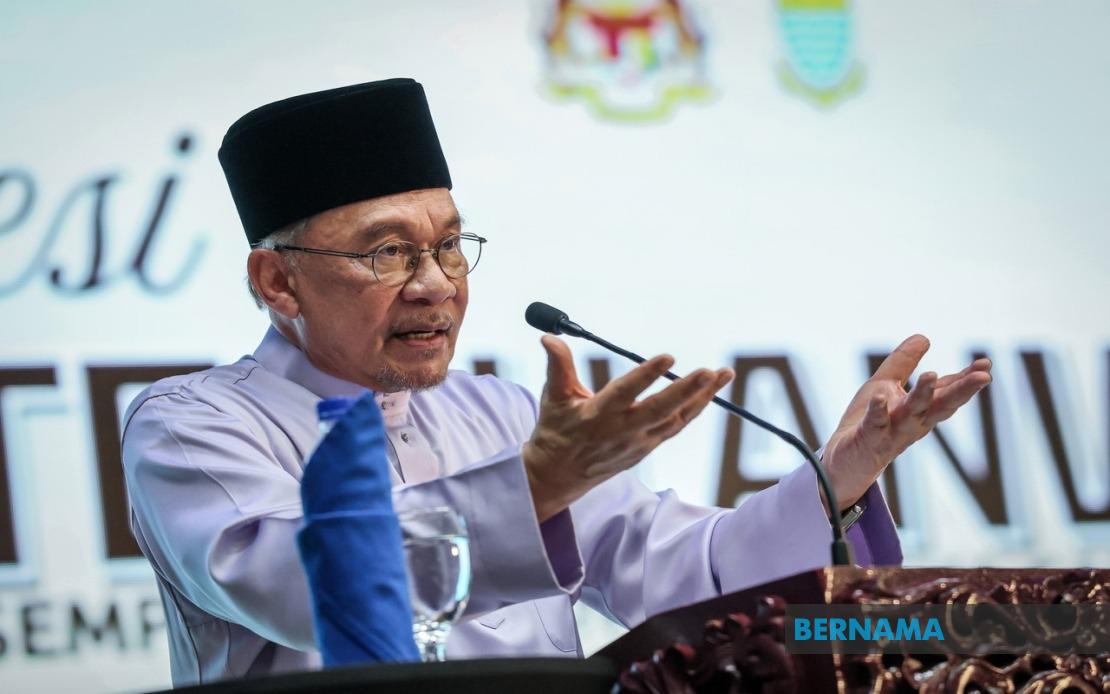
Prime Minister Datuk Seri Anwar Ibrahim has committed to providing a dedicated allowance for Form Six students through Budget 2027, which will be presented to Parliament in October. The announcement comes as part of government efforts to ensure equitable financial support across all levels of Malaysia's education pathway, from primary through to tertiary institutions.
The decision emerged during Anwar's participation in a MADANI dialogue session at the Tuanku Bainun Teacher Education Institute in Bukit Mertajam, where he emphasised the inconsistency in current assistance mechanisms. Under existing arrangements, financial support is extended to pupils in primary school through Form Five, and separately to university-level students, yet sixth-form scholars have remained in a support void that the government now seeks to rectify.
In articulating the rationale behind this move, Anwar drew attention to feedback gathered during recent engagements with pre-university cohorts. These interactions highlighted student concerns about the absence of allocated funds during a critical transitional phase of education. "From Year One to Form Five, there are allowances, and at university, there are allowances. But Form Six, pre-university students, do not receive any," Anwar stated, underscoring what he termed a structural oversight in the current social safety net.
Education Minister Datuk Seri Fadhlina Sidek, present at the event, corroborated the announcement and contextualised it within a broader student engagement framework. The Form Six allowance was identified as one among twelve resolutions presented by student representatives during the MADANI Pre-University Congress held earlier that morning in Klang. Fadhlina committed that the Ministry of Education would conduct thorough examination of all proposals to assess their feasibility and alignment with national education priorities.
While the government has signalled clear intent to move forward with the initiative, Anwar noted that the precise monetary value remains to be determined. The final allocation will depend on Malaysia's fiscal position at the time of budget finalisation and broader budgetary constraints facing the government. This cautious approach reflects the administration's acknowledgment that substantial new spending commitments must be calibrated against competing priorities and revenue projections.
The timing of this commitment holds particular significance for Malaysia's education sector. Form Six represents a crucial juncture where students transition from secondary schooling toward university or vocational pathways, often accompanied by increased academic pressures and the need for supplementary learning materials and resources. Many families face heightened financial strain during these two years, particularly those in middle and lower-income brackets where institutional support can prove decisive in enabling continuation of studies.
This measure aligns with the government's broader MADANI framework, which positions inclusive development and social equity as central governance principles. By extending the welfare net to encompass a previously uncovered demographic, the administration seeks to reinforce its commitment to reducing educational barriers rooted in economic disadvantage. The initiative also acknowledges that pre-university education—whether conducted in government institutions or private colleges—requires investment comparable to other stages of formal schooling.
The announcement carries implications beyond individual student welfare. Form Six completion rates and academic performance have long been subjects of policy concern, with economic hardship cited as a contributing factor in student attrition. By introducing financial support mechanisms, the government may improve retention figures and educational outcomes at this level, while also reducing pressure on families to withdraw adolescents from formal education for employment.
For Malaysian educators and stakeholders observing education policy evolution, this development signals receptiveness to student-led advocacy and systematic review of support structures. The MADANI Pre-University Congress served as an effective conduit for grassroots concerns to reach ministerial level, demonstrating a mechanism through which student voices shape policy formulation. Whether similar engagement channels will be sustained and formalised remains an open question with implications for future policy development.
The October 2027 budget presentation will provide concrete details regarding allowance levels, eligibility criteria, and implementation timelines. These specifications will determine the practical impact on Form Six populations across Malaysia's diverse socioeconomic spectrum. Given that Form Six students constitute a defined, finite cohort compared to primary or secondary cohorts, budget allocation becomes more predictable, potentially facilitating swift implementation once parliament approves the measure.
Regionally, Malaysia's expansion of student support reflects a wider Southeast Asian trend of governments investing in pre-tertiary education infrastructure and student welfare. Countries including Thailand and Indonesia have similarly introduced or expanded allowance schemes at comparable educational levels, recognising that removing financial barriers to education generates broader economic and social returns.

