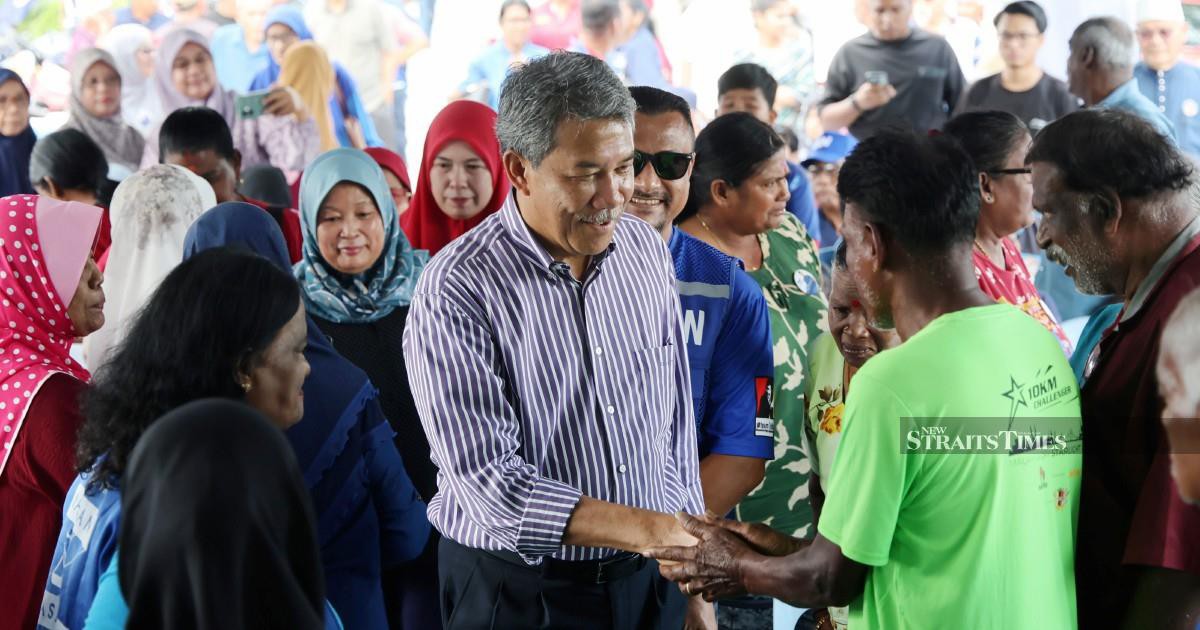
Foreign Minister Datuk Seri Mohamad Hasan has signalled his willingness to vacate his position whenever Prime Minister Datuk Seri Anwar Ibrahim deems it necessary, a statement that reflects the conventional deference shown towards the head of government within Malaysia's cabinet structure. Speaking in his parliamentary constituency of Rembau, the minister conveyed an unambiguous message about his readiness to comply with any such directive from the premier, essentially leaving the door open for a potential reshuffling of his portfolio at the government's discretion.
The declaration carries significance within the current political landscape, where Malaysia's cabinet ministers have historically demonstrated varying degrees of stability and continuity in their respective positions. The Foreign Ministry remains one of the government's most consequential portfolios, handling crucial diplomatic relations with neighbouring countries throughout Southeast Asia and maintaining strategic partnerships on the global stage. Mohamad Hasan's tenure in this role has encompassed a period marked by complex regional dynamics, from relations with Singapore and Thailand to bilateral arrangements with major powers and involvement in multilateral organisations.
Such public pronouncements from ministers regarding their tenure have become customary in Malaysian political discourse, often serving as calibrated signals of loyalty to the prime minister and broader cabinet unity. The statement effectively removes any appearance of resistance to potential cabinet restructuring, a tactic that can sometimes insulate a minister from unexpected removal by demonstrating cooperative spirit and subordination to executive authority. This approach contrasts sharply with situations where ministers have questioned their portfolios or expressed reluctance to step aside, episodes that have occasionally precipitated unexpected departures from government.
The timing of Mohamad Hasan's statement warrants consideration within the broader context of Malaysia's political stability. Cabinet reconfiguration discussions have periodically surfaced within ruling coalition circles, with observers monitoring which ministers might be vulnerable to reassignment. By preemptively acknowledging his willingness to transition, the Foreign Minister appears to be positioning himself as a team player amenable to whatever organisational changes the government might implement, thereby potentially reducing the likelihood of involuntary removal.
From a regional perspective, consistency in foreign ministry leadership can benefit a nation's diplomatic endeavours, allowing ministers to develop deeper relationships with their counterparts across Southeast Asia and globally. However, Malaysia's cabinet structure occasionally requires adjustments to balance factional interests within the ruling coalition or to refresh portfolios with new leadership perspectives. The Foreign Ministry portfolio has attracted various individuals over successive administrations, each bringing distinct diplomatic approaches shaped by their experience and political background.
The Rembau constituency itself holds particular relevance within Mohamad Hasan's political identity, serving as his electoral anchor since entering parliament. Statements made within one's home constituency often carry added weight, as they reach constituents directly and contribute to the political narrative a representative wishes to cultivate locally. The minister's remarks in this setting suggest an effort to maintain focus on governmental responsibilities rather than engage in internal political maneuvering or speculation about his ministerial future.
Cabinet stability constitutes an important element of effective governance, particularly in foreign affairs where continuity in relationships and policy direction holds considerable value. Frequent changes in foreign ministry leadership can sometimes interrupt ongoing diplomatic initiatives or require extensive relationship rebuilding with international counterparts. Nonetheless, democratic systems require mechanisms for elected executives to reshape their administrations according to evolving priorities and coalition dynamics.
The Malaysian government currently operates within a complex coalition framework that necessitates careful management of ministerial portfolios to maintain balance among component parties and internal factions. These structural realities mean that even capable and loyal ministers can face reassignment as political needs shift. Mohamad Hasan's explicit statement acknowledging this reality suggests pragmatic acceptance of the political environment within which he operates.
Looking forward, the Foreign Ministry will continue requiring strategic direction as Malaysia navigates relationships with regional neighbours, addresses trade relationships, and participates in global forums addressing issues from climate change to economic cooperation. Whether the current minister remains in post or transitions to other responsibilities, the portfolio itself demands sustained attention to Malaysia's international positioning. Mohamad Hasan's willingness to step aside represents the kind of flexibility that cabinet governments periodically require when circumstances call for portfolio reallocation or refreshed leadership in specific domains.

