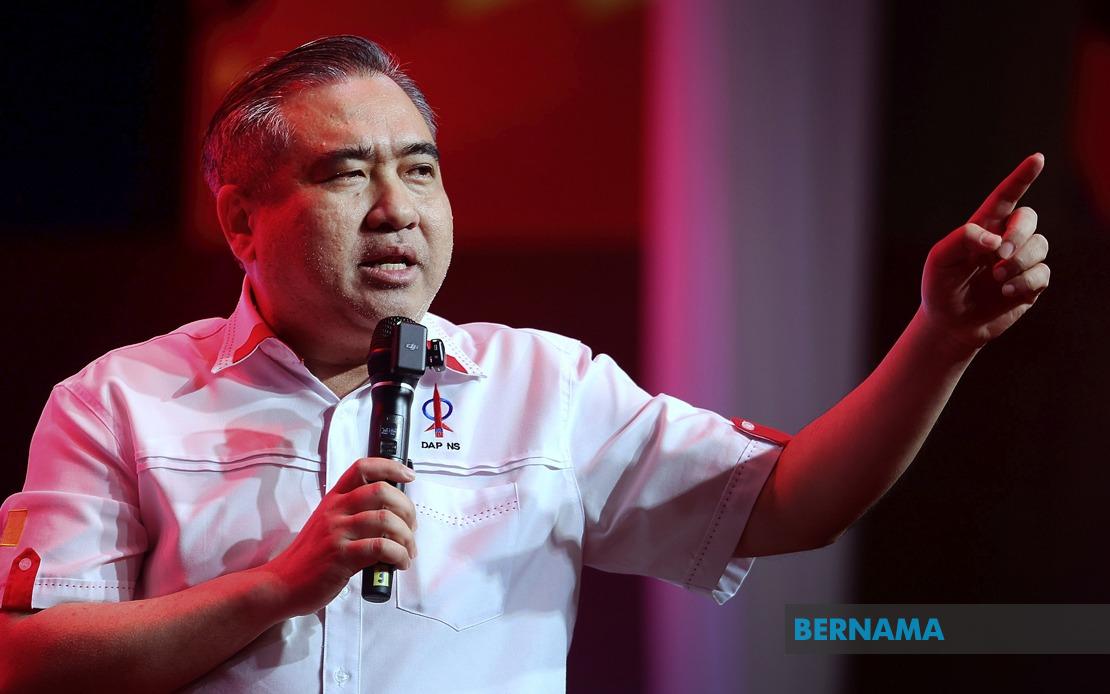
Malaysia's political campaigns would benefit from a return to substance-based discourse, according to DAP secretary-general Anthony Loke, who has committed to steering clear of personal attacks against Cabinet colleagues throughout the 16th Negeri Sembilan state election. Speaking after a Pakatan Harapan gathering in Seremban on July 19, Loke outlined a campaign strategy centred on practical proposals that parties can deliver to constituents, rather than engaging in the character assassination that has become an increasingly familiar feature of Malaysian electoral contests.
Loke's pronouncement reflects broader concerns within the Unity Government about maintaining cohesion during state-level contests. The Transport Minister acknowledged that he had taken this principled stance in direct response to guidance from Prime Minister Datuk Seri Anwar Ibrahim, who has underscored the importance of government officeholders exercising restraint when campaigning. This directive suggests recognition at the highest levels that constant internecine criticism between coalition partners risks fracturing the fragile political alliance that emerged from the 2022 general election.
The decision to avoid attacking Cabinet members stems from practical considerations rooted in Malaysia's collective governance structure. Loke highlighted that he encounters his ministerial colleagues in weekly Cabinet meetings, where they must collaborate effectively to advance government objectives. The inherent tension between electoral competition and executive cooperation demands a degree of professional restraint—a principle that has historically been observed more in the breach than in the observance within Malaysian politics.
This measured approach extends to geographical restraint as well. Loke has deliberately opted not to campaign in Rantau, the state constituency being contested by Foreign Minister and BN deputy chairman Datuk Seri Mohamad Hasan. That decision, Loke explained, prioritises preserving harmony within the broader Unity Government framework. Instead, his campaigning efforts concentrate on his own Chennah seat and DAP-fielded constituencies, while he also provides support for Menteri Besar Datuk Seri Aminuddin Harun's campaign in the Linggi division.
The emphasis on policy substance represents a potential counterweight to the increasingly personalised nature of Malaysian electoral politics. By redirecting focus toward what his party intends to accomplish for voters, Loke seeks to elevate the quality of democratic discourse at a time when such elevation appears necessary. This approach implicitly critiques the erosion of issues-based campaigning, replacing it with a commitment to articulating concrete proposals and clarifying party positions on substantive matters.
Loke has also addressed perceptions that his demanding ministerial responsibilities have created distance from his constituency. He contends instead that his Transport portfolio represents a distinct advantage for Chennah residents, enabling him to channel resources and secure allocations that smaller constituencies might otherwise struggle to access. The Kampung MADANI initiative, a government programme aimed at enhancing community development, exemplifies the tangible benefits that ministerial position can direct toward his electoral base.
Furthermore, Loke has assembled what he describes as a highly engaged, dedicated full-time constituency team capable of managing local affairs and assisting residents with their concerns even during periods when he is occupied with Cabinet duties. This institutional arrangement reflects a modern approach to balancing ministerial obligations with constituency representation—a challenge that has historically produced friction in Malaysian politics, where backbenchers and opposition politicians frequently attack ministers for abandoning their constituencies.
The electoral calendar reinforces the immediacy of these campaign dynamics. Early voting in the 16th Negeri Sembilan state election is scheduled for July 28, with the main polling day set for August 1. This compressed timeline means that candidates must communicate their messages swiftly and effectively, placing a premium on clarity and substance rather than extended negative campaigning.
The Negeri Sembilan contest itself holds particular significance for coalition politics. As a state long dominated by BN but increasingly competitive, the election serves as a barometer of Unity Government resilience in a traditional stronghold. Loke's emphasis on inter-coalition civility and policy substance thus carries implications beyond Seremban; it signals how Pakatan Harapan intends to navigate the delicate balance between electoral competition and governmental partnership.
Such restraint, if genuinely observed across the political spectrum, could establish precedent for future state elections and the anticipated 2025 general election. Malaysian voters increasingly express frustration with endless personal recriminations that obscure policy differences and reduce complex governance challenges to character contests. Loke's positioning potentially taps into that latent demand for more serious political engagement.
The challenge, however, lies in ensuring that other participants in the electoral process honour equivalent standards. Campaign discipline depends on collective commitment, and past experience suggests that unilateral restraint by one coalition can be exploited by opponents unwilling to reciprocate. Yet Loke's explicit framing of this approach—rooted in Prime Minister Anwar's guidance and grounded in practical governance imperatives—may carry sufficient weight to influence the broader campaign tenor, at least among Pakatan Harapan participants.
Ultimately, Loke's advocacy for substance-focused campaigning represents a modest but meaningful intervention in Malaysian electoral politics. Whether it gains traction depends partly on resonance with voters and partly on whether the broader political establishment proves receptive to elevating discourse standards during competitive elections. The Negeri Sembilan contest will provide early evidence of whether policy-centred campaigns can succeed in the contemporary Malaysian context.

