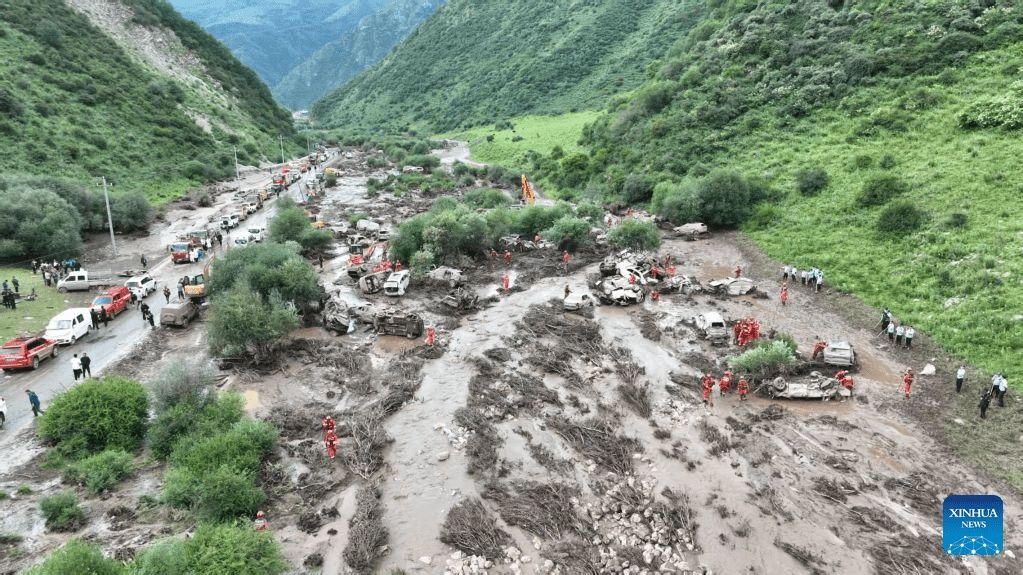
A catastrophic flash flood swept through a popular tourism destination in northwest China's Gansu Province on Sunday afternoon, claiming at least 10 lives and leaving 23 others injured. The disaster struck visitors who were camping in a scenic area within Weiyuan County, administered under Dingxi City, when torrential rains suddenly overwhelmed the locale. The trapped holidaymakers faced harrowing circumstances as rescue teams from local public security and fire-and-rescue departments worked urgently through the evening to locate survivors amid the deluge. By early evening, authorities had mobilised comprehensive search-and-rescue operations across the affected zone, though the remote mountainous terrain complicated access to stranded individuals.
The Gansu incident unfolded against the backdrop of Typhoon Noul's destructive passage across China's eastern and southern regions. This formidable storm, the nation's twelfth tropical cyclone this year and its third typhoon within a single month, made landfall at approximately 3:50 a.m. Sunday morning in Huidong County, Guangdong Province. The typhoon's Korean-derived name, signifying the glow of sunrise or sunset, belied the devastation it unleashed. As it churned inland from the coast, the system maintained considerable strength, drenching vast swathes of the country with torrential precipitation and driving gale-force winds that necessitated extraordinary preparedness measures throughout affected regions.
The scale of human displacement triggered by Noul demonstrates the profound disruption such weather systems inflict on modern economies and societies. Authorities in Guangdong Province, one of China's most economically dynamic regions, were compelled to relocate more than 700,000 people ahead of and during the typhoon's arrival. This extraordinary evacuation operation reflected both the storm's intensity and the densely populated character of southern Chinese provinces. The decision to shift such vast populations underscored official assessments of imminent danger to life and infrastructure, highlighting how even China's advanced early-warning systems and administrative capacity face severe tests when confronting nature's most powerful phenomena.
Recognising the severe flood risks materialising across multiple provinces simultaneously, China's water management and meteorological authorities took the exceptional step of issuing the nation's highest-level red alert for flash flooding. The joint warning from the Ministry of Water Resources and China Meteorological Administration identified seven provinces and regions as particularly vulnerable: Jiangxi, Hunan, Guangdong, Sichuan, Shaanxi, Gansu and southeastern Xinjiang. These jurisdictions faced unprecedented flood threats from Sunday evening through Monday evening, with meteorologists projecting that the heaviest downpours would persist through Tuesday in certain localities. The multi-province scope of the alert underscored Noul's exceptional geographical reach and rainfall potential.
For Malaysian and Southeast Asian observers, such extreme weather patterns carry sobering implications. The region sits within the same tropical weather systems that periodically generate typhoons capable of affecting nations from the Philippines westward to Bangladesh. Noul's trajectory and intensity offer instructive lessons regarding how monsoon-influenced meteorological patterns can shift rapidly, potentially affecting multiple countries simultaneously. Malaysia's east coast, already vulnerable to northeast monsoon flooding during the traditional wet season, remains susceptible to typhoon-driven rainfall despite its distance from typical cyclone formation zones. Regional meteorological agencies continuously monitor such developments to refine forecasting capabilities and inform disaster preparedness protocols.
The meteorological administration projected that rainfall would persist across southern China through Tuesday, with certain areas including Fujian Province facing possibilities of extraordinarily heavy precipitation. Officials specifically warned resident populations and local government administrators to maintain heightened vigilance over traditionally flood-vulnerable locations including mountainous terrain, river valleys, construction sites, and bridge approaches. These geographic features share common characteristics across East and Southeast Asia, suggesting that similar advisory protocols apply broadly throughout the broader regional context. The emphasis on real-time monitoring, early warning dissemination, and preventive evacuation procedures reflects international best practices in disaster risk reduction.
Hong Kong experienced Typhoon Noul's direct impacts as the system moved across the territory during Sunday morning and early afternoon. The storm's centre passed within approximately 80 kilometres of the Asian financial hub, generating southwesterly gales that pounded exposed areas despite weakening as it progressed inland. Hong Kong's meteorological observatory progressively cancelled all typhoon warning signals by Sunday evening as conditions moderated, though not before compelling Hong Kong International Airport to suspend flight operations for more than twelve hours. The airport authority initiated gradual resumption of services during Sunday afternoon, though disruptions to regional air traffic persisted throughout the day.
Typhoon Noul represents the latest manifestation of intensifying extreme weather phenomena that meteorologists increasingly associate with shifting climatic patterns. The convergence of multiple severe tropical cyclones within a single month, coupled with their capacity to trigger widespread inland flooding across geographically dispersed regions, suggests emerging vulnerabilities in disaster management frameworks developed during earlier climatological regimes. Southeast Asian nations, accustomed to seasonal typhoons and monsoon-driven flooding, may face compounding risks if such systems become more frequent, more intense, or arrive during previously considered lower-risk periods. The experiences unfolding across China offer valuable data points for regional planners assessing long-term infrastructure resilience and emergency response capacity requirements.
The economic implications of such catastrophes extend beyond immediate fatalities and injuries to encompass disruptions to commerce, transportation, agriculture, and essential services. A single major typhoon can impose billions of dollars in damages across affected regions, consequences that reverberate through supply chains and financial systems throughout Asia and globally. Hong Kong's airport suspension, though temporary, illustrated how weather emergencies can instantly disconnect world financial centres from international connectivity. For Malaysia's economy, which depends substantially on regional trade and investment flows, the ripple effects from major typhoons affecting China, the Philippines, or Vietnam merit serious consideration in risk assessment frameworks and business continuity planning.
As Typhoon Noul gradually weakened while moving deeper inland across China's interior, meteorological agencies maintained close monitoring of secondary hazards including landslides triggered by saturated soil conditions and delayed flooding in river systems already swollen by multiple days of heavy precipitation. The rescue operations in Gansu Province would likely continue for several days as teams located additional casualties and assisted stranded individuals in accessing assistance. The broader regional implications of this weather system would unfold gradually as damage assessments proceeded and authorities evaluated the effectiveness of their preparedness and response mechanisms. For Malaysia and neighbouring nations, the unfolding situation reinforced the importance of maintaining robust meteorological monitoring, maintaining clear communication channels with regional warning centres, and sustaining investment in disaster preparedness infrastructure despite the considerable expense involved.

