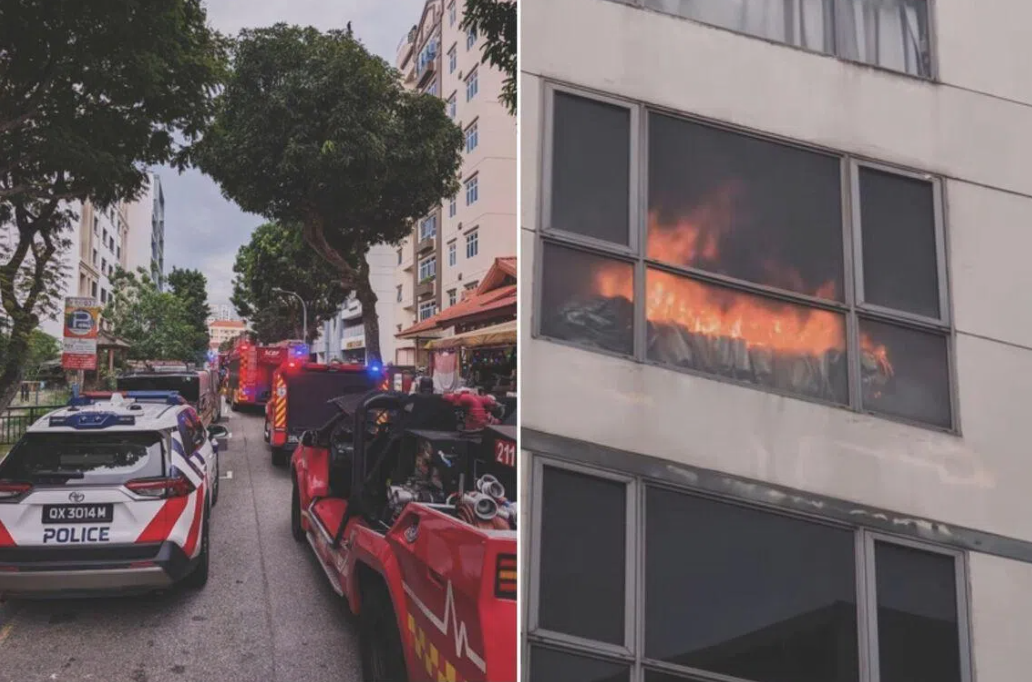
A residential fire caused by an unattended power-assisted bicycle battery has raised fresh concerns about the safety risks posed by active mobility devices in densely populated housing estates across Singapore. The Singapore Civil Defence Force responded to a call at 9 Lorong 26 Geylang, identified as the condominium Casa Aerata, on Sunday 21 June at 5.35pm, where a PAB battery ignited whilst being charged in a seventh-floor unit's living room. The incident resulted in the precautionary evacuation of five residents from neighbouring units, though fortunately no injuries were sustained.
The fire was brought under control using conventional firefighting methods, with SCDF personnel deploying a hosereel and compressed air foam backpack to extinguish the blaze. Preliminary findings indicate the fire originated from electrical malfunction related to the PAB's battery system. The speed with which the situation deteriorated was evident from the intensity of the heat generated, which caused a window to shatter—a development anticipated by Bishan-Toa Payoh GRC Member of Parliament Cai Yinzhou, who attended the scene and directed the evacuation of residents in the area directly below the burning unit.
This incident reflects a broader pattern of electrical fires linked to active mobility devices in Singapore's residential sector. Data released by the SCDF reveals that of 304 electrical fires recorded across residential premises in 2025, 34 involved some form of active mobility device. The category encompasses power-assisted bicycles, personal mobility devices, and personal mobility aids. The figures demonstrate that whilst the overall number of active mobility device-related fires has declined from 67 cases in 2024 to 49 in 2025, the composition of these incidents has shifted significantly, with personal mobility device fires increasing from 25 to 31 cases during the same period.
Battery management emerges as the critical factor in preventing such incidents. The SCDF has issued explicit guidance recommending that users avoid charging their active mobility device batteries overnight or for extended, unattended periods. The risk multiplies when users resort to non-original replacement batteries sourced from third-party vendors. These aftermarket batteries often lack the safety certifications and quality control standards embedded in manufacturer-approved components, making them significantly more prone to thermal runaway—a condition where the battery's internal temperature spirals beyond safe operating limits, leading to fire or explosion.
The dangers associated with defective or substandard batteries are particularly acute in multi-unit residential buildings such as condominiums and HDB flats, where a fire in one unit can rapidly threaten adjacent properties and residents. Shared ventilation systems, proximity of units, and limited evacuation routes mean that incidents of this nature pose community-wide risks rather than isolated dangers. The Geylang fire underscores how a single act of inattention—leaving a charging battery unattended—can necessitate coordinated emergency response and evacuation procedures affecting multiple households.
For Malaysian readers, the Singapore experience carries direct relevance given the rapid proliferation of power-assisted bicycles and personal mobility devices across Malaysian urban centres including Kuala Lumpur, Penang, and Johor Bahru. As adoption of these devices accelerates in response to traffic congestion and last-mile transport demands, battery-related hazards will inevitably emerge in Malaysian residential areas. Many users may be equally unfamiliar with proper charging protocols or tempted to use cheaper non-original batteries to reduce ownership costs. The regulatory framework governing the sale and use of these devices, along with public education campaigns, remains comparatively underdeveloped in Malaysia relative to Singapore's more mature market.
The incident also highlights vulnerabilities in consumer purchasing behaviour across the region. Price-sensitive consumers often opt for non-certified replacement batteries available through online marketplaces or informal retail channels, unaware of the safety implications. Manufacturers and retailers bear responsibility for ensuring that original replacement batteries remain competitively priced and readily accessible, thereby reducing incentives for users to seek cheaper alternatives. In parallel, apartment management companies and residential associations must establish clear policies regarding the storage and charging of active mobility devices, potentially designating dedicated charging areas rather than permitting batteries to charge within living spaces.
Singapore's response framework, coordinating civil defence forces with local policing and political representatives, demonstrates the institutional capacity required to manage such incidents effectively. The rapid evacuation of neighbouring units and the immediate deployment of appropriate firefighting equipment prevented what could have escalated into a more serious event. Cai Yinzhou's on-site presence and decisive action to clear the area below the window reflected proactive community leadership. However, prevention remains preferable to response, and systemic changes in battery standards, charging infrastructure, and user education offer the best pathway to reducing future incidents.
The SCDF's public advisory explicitly cautioning against non-original batteries and unattended charging represents the primary line of defence available to consumers and authorities. The message resonates beyond Singapore's borders, as the same battery chemistry and electrical systems function identically regardless of national jurisdiction. Active mobility device users throughout Southeast Asia—whether in Malaysia, Indonesia, or Thailand—face identical risks when employing substandard batteries or practising unsafe charging habits. Coordinated public health messaging across the region, supported by national fire safety authorities and product certification bodies, could substantially reduce the incidence of such fires before they become a persistent problem in Malaysian urban residential areas.

%22%2F%3E%3C%2Fpattern%3E%3C%2Fdefs%3E%3Crect%20width%3D%22100%25%22%20height%3D%22100%25%22%20fill%3D%22url(%23ph13eoug)%22%2F%3E%3Crect%20width%3D%22100%25%22%20height%3D%22100%25%22%20fill%3D%22url(%23ph13eoup)%22%2F%3E%3Ctext%20x%3D%2250%25%22%20y%3D%2250%25%22%20text-anchor%3D%22middle%22%20dominant-baseline%3D%22central%22%20fill%3D%22rgba(255%2C255%2C255%2C0.95)%22%20font-family%3D%22Georgia%2C%20'Times%20New%20Roman'%2C%20serif%22%20font-weight%3D%22700%22%20font-size%3D%22170%22%20letter-spacing%3D%22-0.02em%22%3EMalaysia%3C%2Ftext%3E%3C%2Fsvg%3E)
%22%2F%3E%3C%2Fpattern%3E%3C%2Fdefs%3E%3Crect%20width%3D%22100%25%22%20height%3D%22100%25%22%20fill%3D%22url(%23ph79e8g)%22%2F%3E%3Crect%20width%3D%22100%25%22%20height%3D%22100%25%22%20fill%3D%22url(%23ph79e8p)%22%2F%3E%3Ctext%20x%3D%2250%25%22%20y%3D%2250%25%22%20text-anchor%3D%22middle%22%20dominant-baseline%3D%22central%22%20fill%3D%22rgba(255%2C255%2C255%2C0.95)%22%20font-family%3D%22Georgia%2C%20'Times%20New%20Roman'%2C%20serif%22%20font-weight%3D%22700%22%20font-size%3D%22170%22%20letter-spacing%3D%22-0.02em%22%3EMalaysia%3C%2Ftext%3E%3C%2Fsvg%3E)