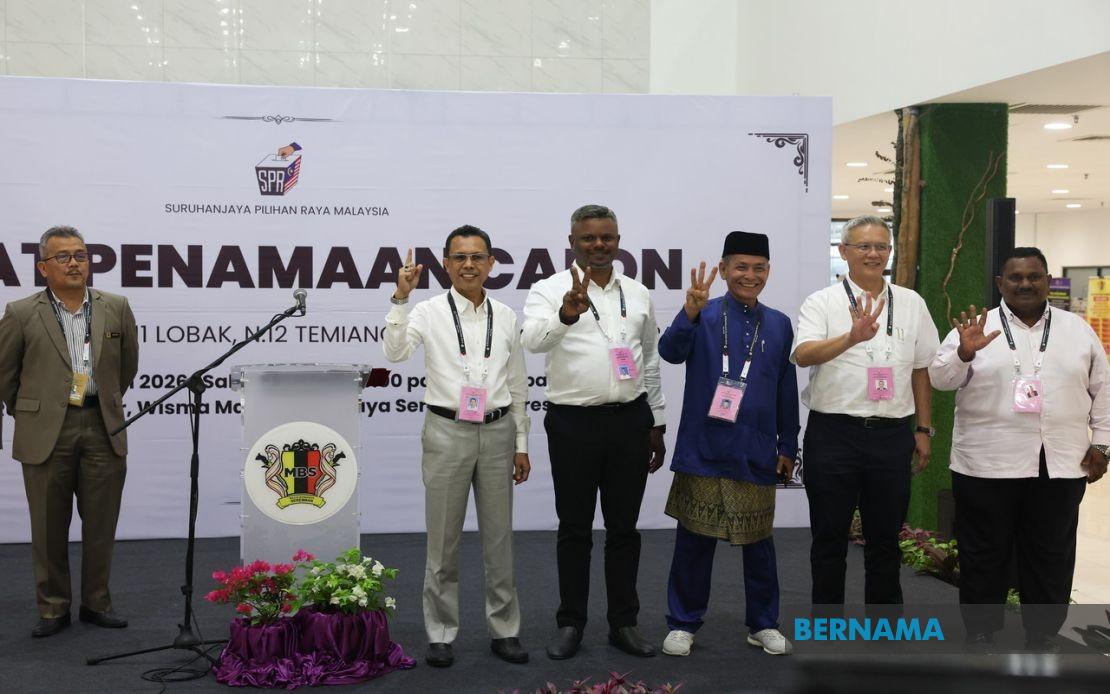
The impending Negeri Sembilan state election is shaping up to deliver several nail-biting contests, none more precarious than the incumbent seat of Nilai, where DAP National vice chairman J. Arul Kumar must navigate a congested ballot paper featuring five different challengers vying for a single assembly position. The crowded field, announced on July 18 following the nomination deadline in Seremban, reflects the intensifying competition across the state ahead of August 1 polling day and represents a significant test of whether the Pakatan Harapan government can maintain its grip on this previously secure seat.
Arul Kumar's opponents represent a politically fractured landscape that extends well beyond the traditional three-way contests typical in Malaysian state elections. Alongside the Barisan Nasional's Datuk Lai Chien Kong, who brings the machinery of the long-dominant coalition, the Nilai seat has attracted candidates from smaller coalitions and independents: Zamani Ibrahim representing Berjasa, Datuk V. Saravana Kumar fielding the Perikatan Nasional through Bersatu, and independent Omar Mohd Isa. This splintering of the opposition vote could theoretically work in Arul Kumar's favour, yet it simultaneously suggests underlying dissatisfaction with the incumbent that prompted multiple challengers to throw their hats into the ring.
The fragmentation visible in Nilai mirrors broader dynamics unfolding across the 36-seat Negeri Sembilan state assembly, where the dissolution on June 5 triggered numerous contests that have transcended the binary BN-versus-opposition framework that dominated Malaysian politics for decades. In several constituencies, candidates from Bersatu, which was previously aligned with Perikatan Nasional, are standing independently or as spoilers, complicating the electoral arithmetic for both establishment coalitions and underscoring the persistent instability within Malaysia's political party system.
Sikamat presents a three-cornered encounter where Nor Azman Mohamad, serving as political secretary to the Menteri Besar, will champion Pakatan Harapan's interests against Perikatan Nasional's Datuk Razali Abu Samah and Bersatu's Datuk Tun Faisal Ismail Aziz. An independent candidate, Bujang Abu, withdrew at the eleventh hour, narrowing the field. This seat exemplifies how incumbency and proximity to executive power can provide advantages, though the presence of two competing opposition-leaning parties threatens to divide anti-government sentiment should voters coalesce around a single challenger.
Elsewhere, the contests display varying degrees of competitiveness. Lenggeng will witness a three-way tussle between PH's Zarinna Abu Zarin, incumbent BN representative Datuk Mohd Asna Amin, and Bersatu's Zool Amali Hussin. The Temiang and Ampangan seats similarly feature three candidates each, with PH's Ho Weng Wah, a political secretary to the Transport Minister, contesting Temiang alongside BN's Datuk Leaw Kok Chan and Bersatu's Fazly Hamid, while Muhammad Nazri Kassim from the Yayasan Negeri Sembilan takes on PN's Datuk Dr Mohamad Rafie Malek and Bersatu's Noor'azah Harun in Ampangan.
In contrast, the Lobak constituency stands as perhaps the election's straightest contest, a direct bilateral clash between incumbent Chew Seh Yong of Pakatan Harapan and Dr P. Kumar representing Perikatan Nasional. Such two-candidate races are increasingly rare in contemporary Malaysian elections, making Lobak a test case of which coalition commands stronger grassroots support when voters face a clear, unburdened choice.
The proliferation of multi-cornered battles across Negeri Sembilan reflects broader fragmentation within Malaysia's political ecosystem, particularly the rise of Bersatu as a disruptive force willing to contest seats where it possesses limited organisational presence, apparently content to function as a spoiler. This strategy, whether intentional or incidental, weakens the traditional opposition coalitions by dividing anti-establishment votes across multiple platforms, potentially benefiting BN in tight contests despite its own declining electoral performance nationally.
For Pakatan Harapan, the situation demands careful management. While the coalition controls the state government and nominally holds multiple seats, the presence of strong challengers in constituencies like Nilai suggests that voter sentiment may be shifting or that local dissatisfaction could override broader coalition loyalties. The appointment of political secretaries—such as Nor Azman in Sikamat and Ho Weng Wah in Temiang—signals an attempt to leverage administrative proximity and ministerial connections to shore up support, though such tactics risk appearing disconnected from grassroots concerns should local issues dominate electoral discourse.
The Election Commission has established July 28 as the early voting date, allowing police, military personnel, and other designated categories to cast ballots ahead of the main polling day on August 1. This compressed election schedule, following dissolution on June 5, provides limited time for campaigning compared to federal elections, potentially favouring incumbents with existing machinery and media access while disadvantaging less-resourced challengers and newcomers attempting to build name recognition.
From a regional perspective, the Negeri Sembilan election carries significance beyond the state itself. As a relatively moderate, economically developed state within Malaysia's heartland, the result will offer insight into whether Pakatan Harapan's governance has consolidated voter support or whether dissatisfaction is prompting electorate realignment. Given the state's geographic proximity to Kuala Lumpur and its middle-class, relatively educated population, voting patterns here often foreshadow broader national trends, making close observation of contests like Nilai essential for understanding the trajectory of Malaysian politics beyond August.
The crowded field in Nilai ultimately underscores an uncomfortable truth for all Malaysian political coalitions: voter loyalty remains volatile, alternative organisational platforms continue proliferating, and traditional structures can no longer guarantee safe seats. Arul Kumar's navigation of five challengers will determine not merely his own political future but offer lessons about electoral survival in an era of fragmenting political allegiances.

