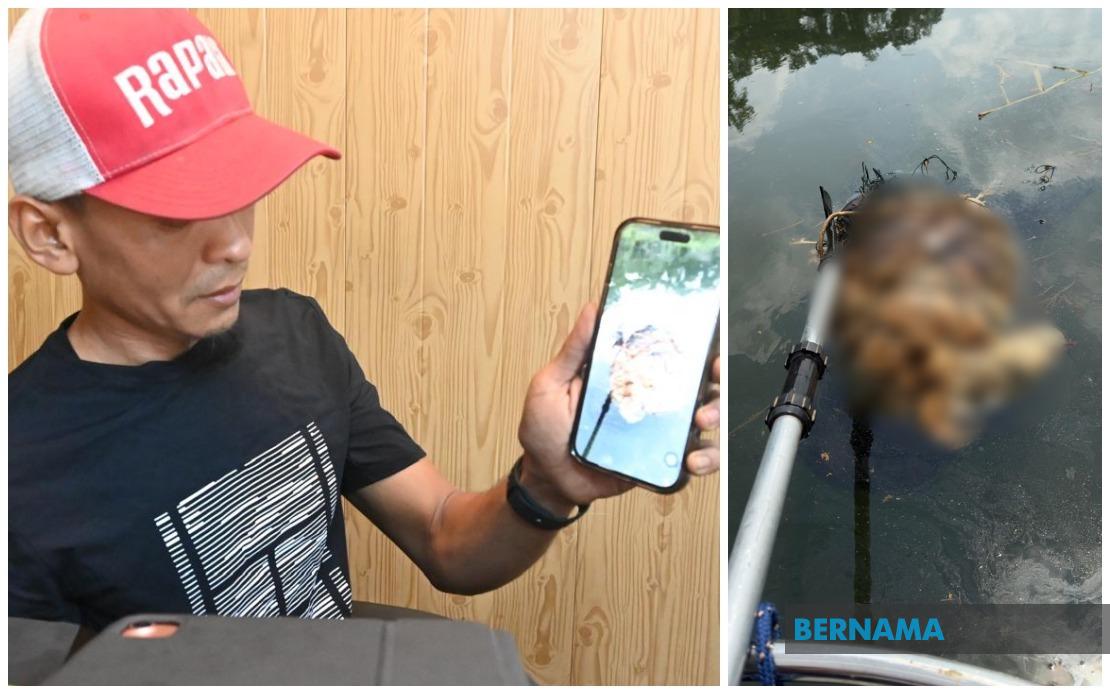
A fisherman's routine outing turned into a grim discovery when he spotted a body wrapped and bound with netting floating in Sungai Tanjung Sembrong at Parit Raja in Batu Pahat yesterday. The 33-year-old angler, Muhamad Zul Fikri Borhanodin, had been documenting his fishing activities for social media content when he encountered the discovery around 11 am, setting off a chain of events that has now drawn police attention across the state.
The circumstances surrounding the sighting reveal how experience and attentiveness can lead to crucial findings. When Muhamad Zul Fikri first noticed the floating object, his initial instinct was to dismiss it as an animal carcass—a common sight in the waterway. However, two telltale signs gave him pause: an overwhelmingly foul stench emanating from the bundle and the deliberate wrapping of the object in netting. These details prompted him to investigate further rather than continue his fishing expedition uninterrupted.
Realizing the potential gravity of what he had found, Muhamad Zul Fikri sought immediate assistance from a companion who was fishing nearby on another vessel. Upon closer inspection, the presence of clothing—specifically a pair of jeans visible on the wrapped object—left little doubt that this was a human body rather than discarded animal remains. This observation proved pivotal in transitioning the situation from a curious finding to a serious criminal matter requiring urgent police intervention.
The location itself carries historical significance in Muhamad Zul Fikri's personal experience. With more than two decades of fishing experience in these waters, he has witnessed the river's dangers firsthand. This was his second encounter with a deceased person at Sungai Tanjung Sembrong, the previous incident occurring several years earlier when someone had fallen into the river. Such unfortunate events underscore the dangers that waterways can pose, particularly in areas with limited supervision or safety infrastructure.
The police response was swift once authorities received notification of the discovery at approximately 12.30 pm. Johor's deputy police chief, DCP Hoo Chuan Huat, disclosed that law enforcement had immediately launched investigations into the circumstances surrounding the body's presence in the river. The discovery set in motion parallel investigative tracks that would soon connect the deceased to a missing person case that had been filed weeks earlier.
Three male suspects, aged between 26 and 40, were apprehended in and around the Batu Pahat district on the same day the body was found. Their detention came as part of the initial investigative process to determine their knowledge of or involvement in the circumstances leading to the body's appearance in the river. Police have been questioning these individuals to establish a timeline of events and understand their connection to the victim.
The breakthrough in identifying the victim came through connection to an existing missing person report. Police records showed that on July 29—just days before the body's discovery—a woman had filed a missing person report concerning her husband's disappearance. The reported location was Mutiara Rini in Iskandar Puteri, a residential area in the southern Johor region. This temporal and circumstantial connection provided investigators with a crucial lead in determining the deceased's identity and reconstructing the events that preceded the body's discovery.
The case highlights the broader challenges surrounding missing person investigations in Malaysia, where the gap between disappearance and discovery can span weeks and involve geographical distances. The progression from a residential area in Iskandar Puteri to a river in Parit Raja suggests movement across the state, raising questions about the sequence of events and the involvement of the three detained suspects in facilitating or witnessing this movement.
For residents and regular users of Johor's waterways, the incident serves as a sobering reminder of potential dangers and the importance of community awareness. The Sungai Tanjung Sembrong, like many Malaysian rivers, forms a vital part of the local ecosystem and recreational landscape, yet incidents such as this underscore the vulnerability of these areas to criminal activity. The discovery also emphasizes how ordinary citizens—in this case, a dedicated fisherman documenting his hobby—can inadvertently play a crucial role in bringing criminal matters to light.
As police investigations continue under DCP Hoo Chuan Huat's direction, the focus remains on establishing the definitive cause and circumstances of the death, the timeline of events from the victim's disappearance to discovery, and the precise roles played by the three detained suspects. The case will likely provide insights into investigation protocols for missing person cases and the coordination between different police units in addressing potential criminal activity across state jurisdictions.

