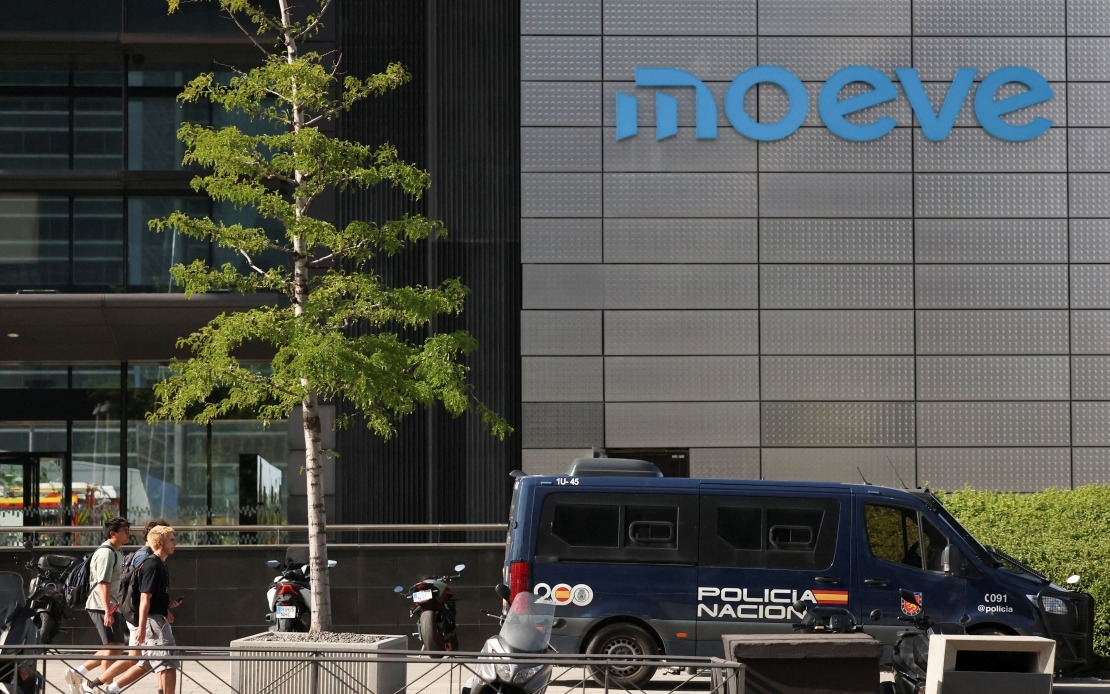
A major fire erupted at Torre Moeve in central Madrid on Tuesday afternoon, triggering one of the Spanish capital's most visible emergency responses in recent years. The incident unfolded after an explosion rocked the building around 5.00 pm local time, unleashing thick columns of smoke that became visible across the city's skyline and drawing immediate attention from residents and media outlets. The building's prominent location and distinctive architecture made the dramatic scene impossible to miss, with the plume visible from numerous vantage points throughout Madrid.
Spain's second-tallest skyscraper was swiftly emptied as a precautionary measure following the explosion and fire outbreak. The National Police, coordinating with Madrid's emergency services, initiated a comprehensive evacuation procedure to ensure all occupants could safely leave the premises. This decision proved crucial in preventing any loss of life, as the speed and efficiency of the evacuation process meant that personnel were clear of the building before the situation could deteriorate further.
According to the Spanish government delegation in Madrid, the fire originated on the 25th floor, an area designated for technical equipment and mechanical systems essential to the building's operations. This location proved significant, as technical rooms often contain electrical infrastructure, HVAC systems, and other machinery that can ignite rapidly under certain conditions. The concentration of combustible and electrical materials on this floor likely contributed to the rapid spread of flames following the initial explosion.
Madrid City Council firefighters mobilised rapidly to the scene and successfully contained the blaze, declaring it fully extinguished after several hours of intensive operations. Crews subsequently conducted thorough inspections of the building's interior to ensure no pockets of fire remained and to assess the extent of structural and equipment damage. Their swift response prevented the fire from spreading to adjacent floors or causing the catastrophic damage that could have resulted from an uncontrolled blaze in such a prominent structure.
The human toll from the incident remained remarkably limited given the scale of the emergency. Local media reports indicated that two workers sustained minor smoke inhalation injuries and required basic medical attention, whilst a passerby experienced an anxiety attack triggered by the dramatic scene unfolding overhead. All three individuals received treatment at the scene and were released without requiring hospitalisation, a testament to the controlled nature of the evacuation and the rapid containment effort.
This incident highlights the critical importance of building safety protocols and emergency response procedures in high-rise structures, particularly those that house significant numbers of workers and visitors. Torre Moeve, as one of Madrid's most recognisable landmarks and a major commercial centre, serves thousands of people daily. The successful evacuation and containment demonstrated that established safety systems functioned as designed when put to the test under genuine emergency conditions.
For Malaysian and Southeast Asian readers, this event underscores lessons relevant to the region's own expanding skyline of modern high-rise buildings. As countries across Southeast Asia experience rapid urbanisation and construction of increasingly tall commercial and residential structures, the importance of rigorous safety standards, regular maintenance of technical systems, and well-rehearsed evacuation procedures becomes ever more pronounced. The incident at Torre Moeve shows that even in developed European nations with stringent building codes, unexpected incidents can occur, requiring constant vigilance and preparedness.
The cause of the initial explosion remains under investigation by Spanish authorities, with investigators examining whether the incident stemmed from an electrical malfunction, gas-related issue, or other mechanical failure within the technical equipment housed on the 25th floor. Understanding the root cause will inform safety recommendations not only for Torre Moeve but potentially for similar structures across Europe and beyond. The technical nature of the affected area suggests that equipment failure rather than human error may have triggered the sequence of events.
Torre Moeve's status as Spain's second-tallest building means the incident received significant attention from building safety experts and emergency management professionals across the country. The structure, completed in 2008, represents modern architectural standards and incorporates safety systems designed to handle such emergencies. The successful resolution of the crisis validates many of these systems, though any identified deficiencies will likely prompt retrofitting or procedural improvements across comparable Spanish buildings.
The incident occurred without disrupting broader Madrid operations significantly, as the building's evacuation and the fire containment remained largely localised events. Economic activity in the surrounding commercial district continued with minimal disruption, and no secondary emergencies were triggered by the incident. This outcome reflects both careful emergency management and the compartmentalised nature of modern building design, which prevents fires from easily spreading between different sections.

