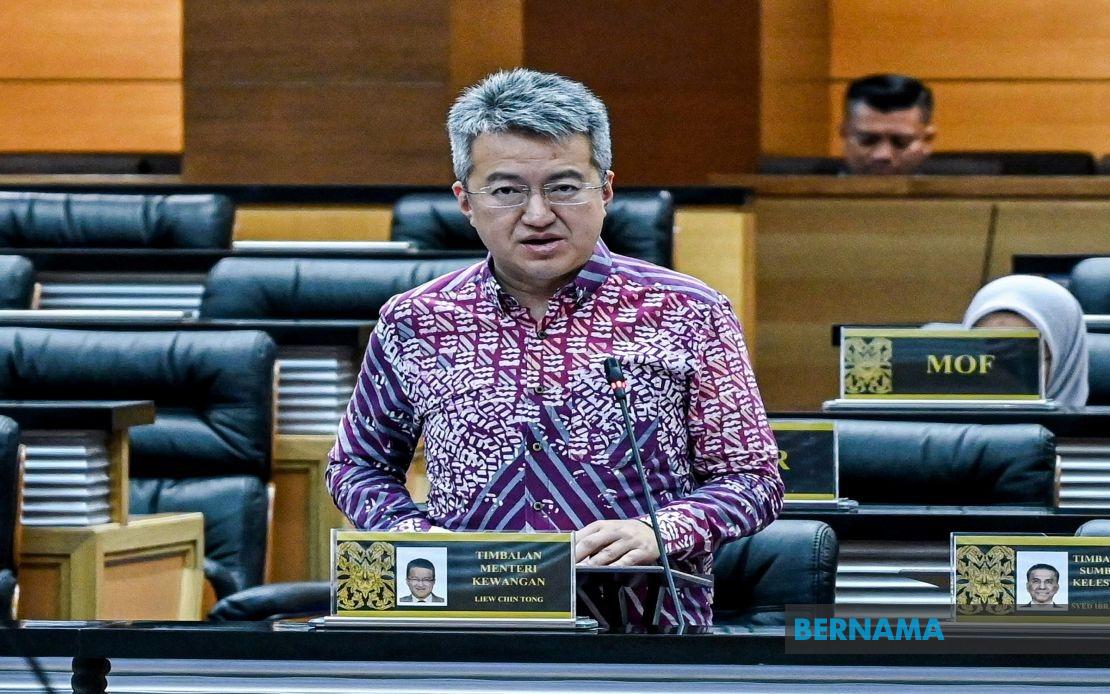
The Malaysian government is actively investigating the possibility of removing the eight percent Sales and Service Tax from elderly care centres, acknowledging growing pressure from lawmakers and families concerned about affordability. Deputy Finance Minister Liew Chin Tong revealed during parliamentary proceedings that the Ministry of Finance and the Ministry of Women, Family and Community Development are collaborating on an in-depth examination of this proposal, with particular attention to how the current taxation framework affects different categories of care facilities across the country.
The urgency of this review stems from mounting complaints that the existing SST has created considerable financial strain for ordinary Malaysian households already grappling with rising costs of living. Care facilities registered with the Social Welfare Department typically charge monthly fees around RM2,500, and the eight percent service tax compounds this burden significantly. For middle-income and lower-income families seeking proper elderly care arrangements, this additional levy represents a meaningful obstacle to accessing quality services for aging relatives, forcing difficult choices between healthcare standards and household budgets.
Liew's commitment goes beyond theoretical study. He pledged that the Finance Ministry, working alongside the Women, Family and Community Development Ministry, would undertake comprehensive field visits to affected care centres to understand operational realities and the actual pressures facing facility operators. These site visits represent an important acknowledgment that policy decisions affecting the elderly care sector require ground-level understanding rather than desk-based analysis alone. The fact that a senior finance official is personally committing to this engagement signals genuine ministerial attention to the issue.
The scope of the investigation extends to differentiating between care facilities based on service levels. Authorities are examining which establishments provide basic essential services versus those offering premium amenities, recognising that a blanket exemption or blanket tax may not appropriately reflect the diversity within the sector. This nuanced approach suggests the government is considering whether the most vulnerable elderly persons in basic care settings deserve different treatment than those in more upmarket facilities, a distinction that could shape any eventual policy decision.
Parliamentary member Lee Chuan How from Ipoh Timor prompted this review by formally urging the government to remove SST from registered elderly care services. His intervention reflects broader constituency concerns about elderly welfare and family affordability. The cross-party engagement on this issue—with government and opposition members raising care centre challenges—indicates this is not a partisan matter but rather a genuine social policy concern shared across the political spectrum in Parliament.
The Financial Ministry's willingness to incorporate stakeholder feedback before finalising any decision demonstrates an understanding that the elderly care sector encompasses various operators with different cost structures and service models. Input from care centre operators themselves, family advocacy groups, and relevant government departments will shape the final recommendations. This consultative process acknowledges that top-down decisions without sector input risk unintended consequences, whether adverse impacts on facility sustainability or inadequate solutions to affordability concerns.
For Malaysia's ageing population, the outcome of this review carries real implications. The country faces demographic pressures similar to other Southeast Asian nations, with an expanding elderly cohort requiring professional care services. Any policy that either burdens families economically or creates financial unsustainability for care operators undermines broader geriatric care capacity. An exemption could make professional elderly care more accessible while potentially requiring alternative revenue mechanisms or cost absorption by operators, creating trade-offs that require careful calibration.
The timing of this review occurs as Malaysia continues adjusting to SST implementation following earlier taxation changes. The willingness to revisit specific sectoral applications of SST suggests the government recognises that blanket approaches to consumption taxes may not account for sectors serving vulnerable populations. Elderly care exists alongside education and healthcare as a social service area where tax policy can significantly affect accessibility and equity, making targeted exemptions a reasonable policy consideration.
This review reflects broader regional trends in Southeast Asia regarding elderly care policy. As populations age across the Association of Southeast Asian Nations, member states are grappling with how to ensure quality care remains financially accessible. Malaysia's examination of tax treatment for care services may inform approaches in neighbouring countries facing similar pressures, positioning the nation as a case study in balancing fiscal management with social welfare objectives.
The involvement of two separate ministries underscores that elderly care is not purely a health or finance matter but intersects with family policy, social development, and economic considerations. This whole-of-government approach, while potentially slower, increases likelihood that eventual recommendations will address multiple concerns simultaneously rather than optimising for a single objective at the expense of others.
Liew's assurance that Finance Ministry officers will engage directly with care centre operators signals a shift toward collaborative problem-solving rather than unilateral policy imposition. For an industry where operators often lack sophisticated lobbying resources compared to larger economic sectors, direct ministerial engagement provides crucial access to decision-making processes affecting their viability and service delivery capacity.
Ultimately, the outcome of this study will test whether Malaysia's government prioritises accessibility of elderly care services through tax relief or maintains current tax collection while pursuing alternative affordability mechanisms. The decision will carry consequences not only for current elderly Malaysians and their families but also for the nation's preparedness for an increasingly aged population in coming decades.

