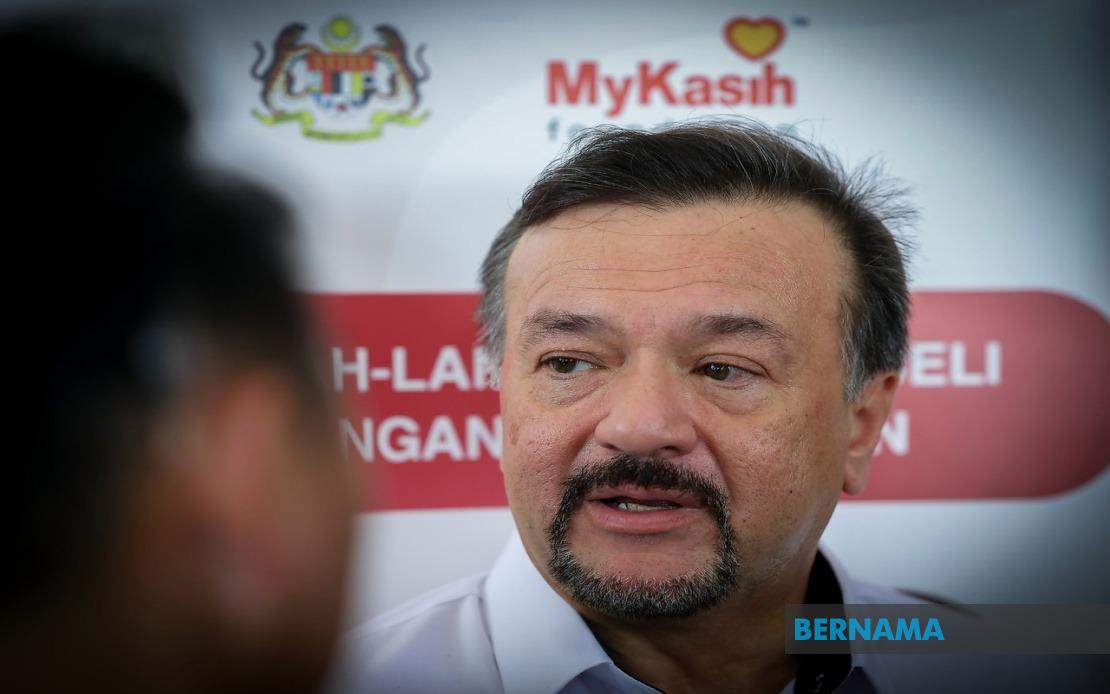
The Malaysian government has signalled its receptiveness towards refinements to the BUDI MADANI Diesel subsidy programme, with the Finance Ministry prepared to evaluate any concrete proposals that could strengthen the scheme's operation. Speaking after a media briefing on targeted diesel subsidy reforms in Kuching, Finance Minister II Datuk Seri Amir Hamzah Azizan underscored that policy decisions—including contentious questions around quota increases—would be anchored in empirical usage statistics rather than speculation or pressure from lobby groups.
The BUDI Diesel initiative represents a significant shift in how Kuala Lumpur approaches fuel support, marking a transition from blanket subsidies to means-tested allocations. This calibrated approach aims to direct assistance more precisely to those who genuinely need it whilst curbing wasteful consumption and leakage. However, like most new subsidy frameworks, the programme has faced criticism from certain quarters contending that initial quota allocations are inadequate, particularly for commercial operators and those in remote areas with limited alternatives to diesel-powered transport.
Amir Hamzah referenced early data from the RON95 petrol subsidy scheme to illustrate why patience with data collection matters. The statistics from January through May this year reveal that fewer than one per cent of RON95 subsidy users actually exceeded the 200-litre monthly threshold, suggesting that the quota system is functioning as designed for the vast majority. This granular evidence contradicts pre-implementation predictions that suggested quotas would prove constraining, demonstrating that real-world usage often diverges markedly from theoretical projections made during the policy design phase.
The Finance Ministry's approach mirrors its previous experience managing targeted subsidies in the e-hailing sector, where initial quota allocations similarly drew complaints from drivers claiming insufficient fuel allowances. Rather than immediately capitulating to these demands, the government commissioned detailed reviews of actual consumption patterns reported by ride-sharing platforms. This evidence-based recalibration resulted in the establishment of differentiated quota tiers—600 litres and 800 litres monthly—calibrated to reflect genuinely higher fuel consumption among certain driver segments. This pragmatic adjustment mechanism preserved fiscal discipline whilst accommodating legitimate variations in operational requirements.
For Malaysian consumers and businesses, this philosophy carries important implications. It suggests that the government, having learned from earlier subsidy overhauls, is adopting a more scientifically grounded methodology for evaluating spending programmes. Rather than making reactive policy reversals based on anecdotal complaints, officials now emphasise gathering comprehensive data before committing to structural changes. This stance, whilst potentially frustrating for those seeking immediate quota increases, reflects a maturing institutional approach to subsidy management in an era of fiscal constraints.
The presence of Works Minister Datuk Seri Alexander Nanta Linggi at the briefing underscores the cross-ministerial coordination required for effective subsidy delivery. Transport and logistics sectors, falling partly within the Works Ministry's purview, have considerable stakes in diesel pricing stability, given the fuel's centrality to freight operations, construction activities, and rural connectivity. The joint appearance suggests alignment across government agencies on maintaining disciplined implementation of the targeted subsidy framework.
Southeast Asian observers monitoring Malaysia's subsidy architecture may find this experience instructive. The region has long grappled with the challenge of balancing fiscal sustainability against political pressure to maintain cheap fuel, with countries from Indonesia to Thailand struggling to reform energy pricing without sparking public backlash. Malaysia's incremental, data-driven approach to BUDI Diesel refinement offers a potential middle path—one that acknowledges legitimate concerns whilst insisting on empirical justification before expanding public expenditure.
The government's willingness to revisit policy parameters also reflects institutional learning from past missteps. Earlier blanket fuel subsidies in Malaysia consumed enormous budgetary resources with limited targeting efficiency, effectively subsidising affluent vehicle owners alongside genuinely disadvantaged populations. The targeted model now operationalised represents a deliberate correction, even if implementation requires periodic adjustments as real-world usage patterns emerge.
For businesses dependent on diesel—particularly in agriculture, transportation, and manufacturing—the stability signalled by Amir Hamzah's comments may prove reassuring. Rather than facing arbitrary quota changes responding to political cycles, operators can anticipate that adjustments will follow transparent, data-driven processes. This predictability, whilst not guaranteeing expanded allowances, at least removes uncertainty about the criteria guiding policy evolution.
The Finance Ministry's openness to proposals also invites stakeholders to engage constructively with evidence-gathering processes. Industry associations and user groups seeking quota modifications now understand that anecdotal narratives carry less weight than systematic consumption documentation. This dynamic could incentivise greater data transparency throughout the diesel distribution chain, benefiting policymakers seeking accurate usage intelligence.
Looking ahead, the BUDI Diesel programme's trajectory will depend substantially on whether the data collection and analysis machinery functions robustly. If officials execute rigorous monitoring and respond transparently to findings—expanding quotas where justified and maintaining them where usage justifies current levels—the scheme may establish a template for more efficient subsidy delivery across the region. Conversely, if political pressures ultimately override empirical findings, the programme risks reverting to the opacity that plagued earlier subsidy regimes.
The government's emphasis on allowing the system adequate time to generate reliable statistics before making structural decisions represents a departure from Malaysia's historical pattern of responding rapidly to subsidy complaints. Whether this more methodical approach gains traction will significantly influence not only the diesel programme's success but also the credibility of future targeted subsidy initiatives across Southeast Asia.

