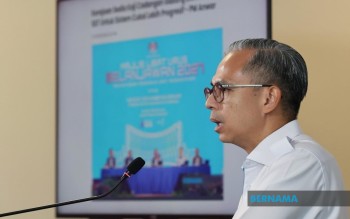
The Malaysian government is not rushing toward major tax reform, according to officials who confirmed this week that Finance Minister II Datuk Seri Amir Hamzah Azizan will be afforded considerable time to develop a detailed report examining the feasibility of combining the Goods and Services Tax with the Sales and Services Tax. Government spokesperson Datuk Seri Fahmi Fadzil, who serves concurrently as Communications Minister, indicated that the comprehensive analysis will subsequently be presented to the Cabinet for deliberation and ministerial decision-making.
The cautious timeline reflects the complexity inherent in restructuring Malaysia's tax architecture. Fahmi emphasized that any proposal affecting the national taxation framework cannot be executed hastily, particularly given the need to extract lessons from Malaysia's previous experience implementing the GST system before its repeal, as well as the operational challenges that have emerged under the current SST regime. The Ministry of Finance has effectively been granted discretionary authority to conduct thorough background research and cost-benefit analysis before advancing the matter for high-level government consideration.
Prime Minister Datuk Seri Anwar Ibrahim has directed the Finance Ministry to undertake this comprehensive examination, signaling that the hybrid taxation concept represents genuine policy interest within the MADANI administration rather than preliminary speculation. The fact that Anwar deemed this important enough to brief the full Cabinet indicates that tax modernization remains on the government's policy agenda, though implementation remains distant. This marks a significant development in Malaysia's ongoing debate about how best to structure consumption taxation in a way that achieves both revenue efficiency and economic progressivity.
The hybrid approach under consideration would maintain the SST as Malaysia's primary consumption tax framework whilst selectively incorporating specific GST elements that could enhance the system's effectiveness. Malaysia abandoned the GST in 2018 following widespread public opposition, returning to the SST system that had been in place before. The government's willingness to revisit elements of GST architecture suggests a recognition that some aspects of the tax might have possessed structural merit, despite the political circumstances that led to its discontinuation.
When asked whether the Prime Minister had established a specific deadline for report completion or whether findings might be announced during the upcoming budget presentation, Fahmi declined to confirm either detail. This non-committal response suggests the government is genuinely preserving flexibility regarding both the timeline and the mechanism for public disclosure. Finance Minister II Amir Hamzah will likely require several months to properly evaluate the technical, administrative, and economic dimensions of such a significant proposal, and announcing conclusions prematurely could prove counterproductive if further analysis reveals implementation challenges.
For Malaysian businesses and consumers, the significance of this development lies in what it signals about future tax policy direction. A successful hybrid system could theoretically improve revenue collection efficiency whilst maintaining the simplified rate structure that characterized the SST. However, past experience with tax reform in Malaysia demonstrates that public acceptance remains crucial. The government's deliberate, consultative approach contrasts with the rapid GST implementation in 2015, which encountered significant public backlash regarding pricing transparency and perceived regressive impact on lower-income households.
The Ministry of Finance's examination will necessarily encompass comparative analysis of how other regional and international jurisdictions have structured hybrid or modified value-added taxation systems. Singapore, Thailand, and Indonesia each operate different consumption tax frameworks that Malaysia might study for instructive examples of both successful and problematic design choices. Understanding how neighboring economies have balanced revenue objectives with taxpayer compliance and consumer acceptance will inform Malaysia's analysis.
Anwar has previously stated that Malaysia would retain SST as its foundational tax system whilst potentially adopting specific GST characteristics deemed acceptable and beneficial. This formulation suggests the government is thinking about selective features rather than wholesale replacement. Elements such as improved input tax recovery mechanisms, enhanced compliance tracking systems, or refined rate differentiation between goods and services might be adopted whilst preserving the essential SST structure that the public has grown accustomed to since 2018.
The broader context matters for understanding this initiative. Malaysia's fiscal situation has improved modestly following recovery from the pandemic-driven economic contraction, yet revenue demands remain substantial given infrastructure investment commitments, social spending programs, and debt servicing obligations. A more efficient consumption tax framework could support government objectives without requiring significant rate increases that would prove politically unpopular.
Business community responses to the announcement have been measured. While the Malaysian Chamber of Commerce and Industry has previously expressed openness to tax reform if structured thoughtfully, the private sector remains wary of sudden changes that could disrupt operations or customer relationships. Finance Minister II Amir Hamzah's task therefore extends beyond technical tax design to encompassing meaningful engagement with relevant stakeholder groups to build consensus around any eventual proposal.
What distinguishes this initiative from previous tax discussions is the government's explicit acknowledgment that implementation cannot be rushed. The experience of the 2015 GST introduction and subsequent 2018 reversal has clearly influenced administrative thinking. Officials now appreciate that sustainable tax reform requires not just technical soundness but also adequate time for stakeholder consultation, public education, and system preparation. The decision to defer any budget-presentation announcement similarly suggests this is viewed as a medium-term initiative rather than an imminent policy change.

