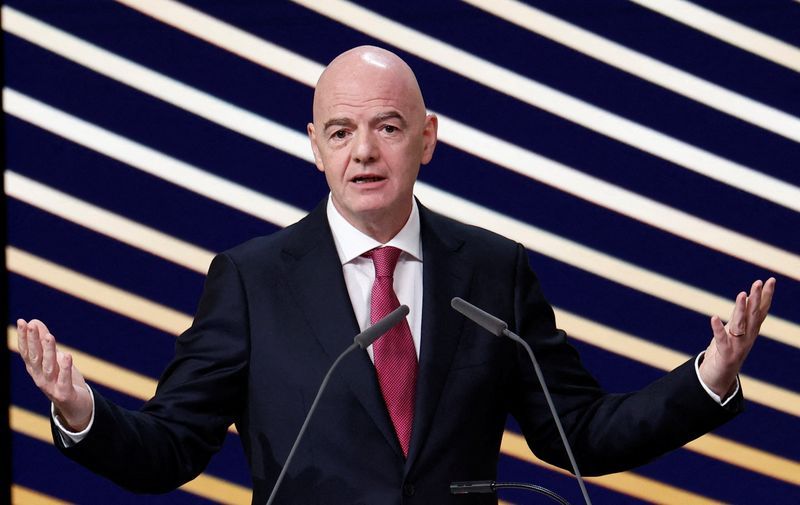
The Oceania Football Confederation has publicly welcomed FIFA's decision to shelve its controversial private investment scheme, even as New Zealand takes the unusual step of breaking regional solidarity by withdrawing backing for President Gianni Infantino's bid to secure another term. The reversal comes amid mounting pressure on Infantino from three major continental bodies—UEFA, the AFC, and CONCACAF—which have openly demanded a comprehensive review of his leadership and conduct surrounding the failed initiative.
The so-called FIFA Forward Enterprise (FFE) proposal represented an ambitious attempt to inject private capital into the World Cup and other FIFA competitions, fundamentally reshaping how the sport's premier events are financed. The scheme attracted considerable controversy, with critics arguing it prioritised commercial interests over the integrity of football governance. The withdrawal of the plan signals a significant retreat by FIFA's executive leadership and acknowledges the depth of resistance the proposal generated across the football community.
The OFC, which represents soccer's geographically dispersed but numerically smallest confederation with just 11 full member nations, has adopted a notably pragmatic stance. In a statement released following a Wednesday executive meeting, the confederation expressed satisfaction with FIFA's willingness to abandon the proposal and commit to examining the circumstances that led to its conception and rejection. The OFC's measured response reflects the smaller confederation's reliance on FIFA funding and development support, which have demonstrably improved the region's football infrastructure over the past decade.
However, New Zealand's position signals deeper concerns within the membership about FIFA's institutional governance. As the sole Oceania nation to qualify for this year's World Cup, New Zealand possesses outsized influence within the regional bloc and has chosen to use it to articulate a fundamental critique of FIFA's direction. The New Zealand Football Association explicitly stated it has withdrawn its support for Infantino's reelection campaign at the forthcoming FIFA Congress, a move that underscores genuine divisions emerging within even smaller confederations.
New Zealand Football has further requested an independent investigation into the development and promotion of the FFE scheme, suggesting that the controversy runs deeper than mere policy disagreement. The association's statement emphasises that decision-making processes within FIFA have fostered a breakdown in trust and widened fractures across the international football landscape. This language indicates concern not simply about the failed investment plan itself but about how FIFA leadership approached stakeholder engagement and communication throughout the process.
The financial incentives attached to the FFE scheme help explain why its withdrawal carries such symbolic weight. Member associations faced the prospect of receiving $20 million in grants during the next funding cycle, with the possibility of doubling that amount if they endorsed the proposal. For smaller confederations and developing football nations, such sums represent consequential resources for player development, infrastructure projects, and administrative capacity-building. Yet despite these material incentives, the proposal generated sufficient opposition to force its abandonment.
Infantino's position has grown increasingly precarious following the crisis intervention meeting held in Morocco last week. Although FIFA issued an apology to all 211 member associations for mishandling the proposal and claimed that the leadership retained full backing, the visible opposition from UEFA, the AFC, and CONCACAF—three of FIFA's six continental confederations—demonstrates that Infantino's authority has been substantially undermined. The fact that the AFC, which encompasses some of the world's wealthiest and most influential football nations, has aligned against him carries particular significance for regional governance.
For Malaysian readers and Southeast Asian observers, New Zealand's stance holds instructive lessons about the dynamics of international sports governance. Despite the regional confederation's historical willingness to accommodate FIFA initiatives, the breakdown of trust has motivated even a geographically peripheral member to challenge the incumbent leadership. This dynamic suggests that FIFA's reputational damage extends across all levels of its membership and that confidence-building measures will require substantial institutional reform rather than mere public relations efforts.
The OFC's diplomatic acceptance of the review, juxtaposed against New Zealand's more adversarial position, reveals tensions within smaller football regions between institutional dependence and governance integrity. Smaller confederations require FIFA's financial and technical support to sustain development programmes, yet they also recognise that unchecked executive authority undermines the legitimacy of the governing body itself. New Zealand's decision to prioritise trust restoration over near-term funding benefits represents a strategic calculation that FIFA's long-term credibility matters more than short-term financial gains.
Infantino's reelection campaign, originally anticipated to proceed smoothly given his incumbency and the significant resources at his disposal, now faces a genuinely competitive contest. The convergence of criticism from major confederations, coupled with New Zealand's high-profile withdrawal of support, creates momentum for alternative candidates or significant reform movements within FIFA. The impending FIFA Congress will consequently test whether the organisation can address structural governance weaknesses that have accumulated during the current administration.
The fallout from the FFE proposal and subsequent controversy demonstrates how pivotal moments of institutional failure can catalyse broader reckoning within international sports bodies. FIFA's effort to rapidly modernise its revenue model without adequate consultation or transparency safeguards backfired decisively, exposing governance gaps that stakeholders across multiple confederations identified simultaneously. Whether the promised independent review will address root causes of institutional dysfunction remains uncertain, but the political dynamics unleashed suggest that substantive change will be difficult to avoid.

