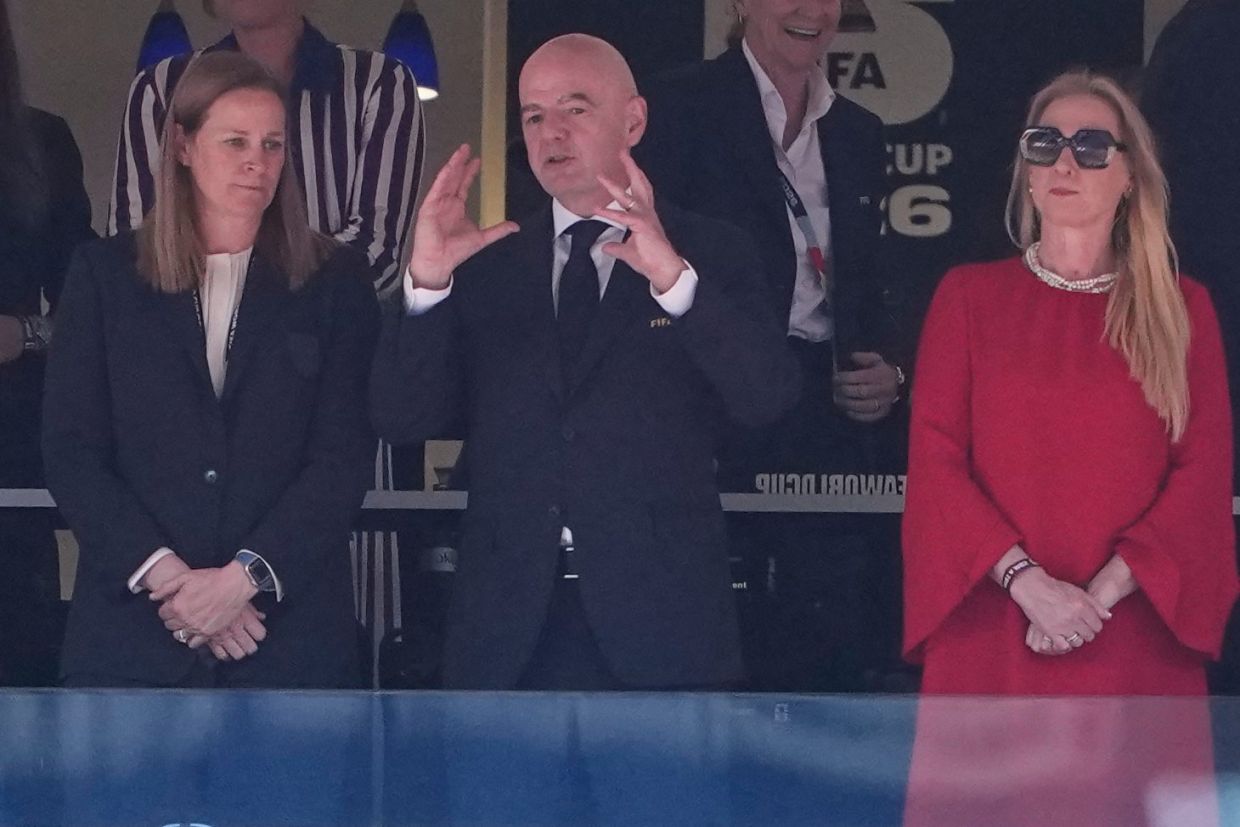
Football's global governing body has emerged financially stronger from the 2026 World Cup despite facing a barrage of criticism on multiple fronts, with FIFA chief Gianni Infantino positioned to tighten his grip on the sport heading into a re-election battle next year. The tournament, which expanded to include 48 teams for the first time in the competition's history, has generated unprecedented revenue streams and sparked intense debate about whether the organization prioritizes profit over sporting integrity and fair governance.
The World Cup has attracted criticism across nearly every dimension of its organization, from the affordability crisis that has priced ordinary supporters out of stadiums to allegations of political manipulation that reached a crescendo when pressure from President Donald Trump reportedly influenced FIFA's decision to allow a suspended United States player to compete. Additional controversies have included the controversial treatment of Iran's national squad and the barring of a Somali referee, each raising fresh questions about the organization's internal decision-making processes and adherence to its own regulations.
According to financial projections, FIFA stands to pocket approximately $9 billion in direct revenue from the 2026 World Cup—a significant increase of roughly $2 billion compared to the 2022 Qatar tournament. This expansion of the organization's financial resources comes at a moment when sports governance experts are questioning whether Infantino has allowed commercial imperatives to override the regulatory authority that FIFA is supposed to exercise over the global game. The tension between generating maximum revenue and maintaining institutional credibility has become the defining challenge of his tenure.
Under Infantino's leadership, FIFA has deliberately enlarged and monetized its tournament portfolio, reshaping the competitive landscape while simultaneously expanding the financial rewards distributed to participating nations. The 2026 tournament features a record prize pool of $871 million, with every team guaranteed a minimum payment of $12.5 million simply for participating. For smaller football nations, this represents transformative wealth; Cape Verde's historic knockout-stage qualification has already generated over $21 million in FIFA payouts, equivalent to approximately 0.75 percent of the country's annual gross domestic product.
The commercial success extends far beyond FIFA's official coffers. Stadium concessionaires have dramatically increased pricing, with fans spending up to $100 per person on food and beverages during matches—nearly double typical expenditures at American football games. Advertisers have benefited from the introduction of mandatory hydration breaks that effectively restructure the traditional two-half format into an American-style four-quarter game, creating additional commercial windows. Bank of America spending data from mid-June documented that credit and debit card transactions in World Cup host cities increased 6.3 percent year-on-year, with spending by visiting fans surging 16.7 percent.
Infantino's consolidation of power extends beyond financial metrics. The upcoming FIFA presidential election, scheduled for early 2027 at the 77th FIFA Congress in Rabat, Morocco, is shaping up as an uncontested coronation. Running unopposed for his third consecutive term, Infantino has already secured backing from major continental confederations across Asia, South America, and Africa. With all 211 FIFA member associations holding one vote each, the electoral mathematics heavily favor the incumbent, whose tenure has coincided with dramatic increases in tournament revenues and payouts to smaller nations.
The political support underpinning Infantino's position reflects a fundamental reality within world football governance: for the majority of member states, especially those from developing regions, FIFA's monetary generosity outweighs concerns about institutional integrity. Sheikh Salman, president of the Asian Football Confederation, has publicly declared that FIFA occupies "its best position ever," a sentiment echoed by officials from across the football world. The Royal Moroccan Football Federation has praised "the great work carried out by Mr. Gianni Infantino and his team to develop African and world football," language that signals enthusiasm for his continued leadership among African member associations.
The controversy surrounding the Trump phone call and the reinstatement of the American player revealed the depth of concern among European football authorities and influential figures about FIFA's independence from political pressure. Former Liverpool manager Jurgen Klopp articulated the anxiety in stark terms, declaring that if Trump and Infantino had privately negotiated the player's reinstatement, it would constitute "madness" that "calls everything into question." Politicians from the United Kingdom and Belgium formally called for Infantino's resignation, representing an unprecedented intervention by national governments into FIFA's internal disciplinary processes.
Yet these objections have encountered a curious dynamic: once the sporting drama concludes and the media spotlight moves to the next match, the intensity of outrage dissipates rapidly. The initial furor over the American player's reinstatement largely evaporated following the United States' 4-1 defeat to Belgium, suggesting that public attention follows the competition itself rather than the institutional controversies that accompany it. This cyclical pattern of complaint and forgetfulness has historically benefited FIFA's leadership, allowing controversial decisions to recede into historical footnotes before the next scandal emerges.
From Infantino's perspective, the 2026 World Cup represents a validation of his strategic vision for the organization. The expanded tournament format has delivered full stadiums despite elevated ticket prices, generated exceptional television audiences as the sport's elite performers have scored freely, and increased global representation through the qualification of nine African teams in the knockout stage. Host nations have benefited from the influx of international visitors and spending, partially offsetting the massive infrastructure investments required to stage a World Cup across multiple countries. The tournament has functioned, by most conventional metrics, as a commercial and sporting success.
For Southeast Asian readers and football enthusiasts, the implications of Infantino's strengthened position merit careful consideration. As FIFA continues to expand tournaments and distribute larger financial allocations to member associations, Asian football federations will increasingly depend on the organization's revenue streams. The Asian Football Confederation, representing 47 member nations, has become a crucial power base for Infantino's political support, and this dependency relationship shapes the confederation's willingness to publicly endorse his leadership regardless of governance concerns. Malaysia's own football association, like others in the region, benefits directly from FIFA's enlarged prize pools and tournament revenue distributions, creating institutional incentives to support the status quo.
The absence of genuine competition for FIFA's presidency reflects a broader pattern in international sports governance where incumbent leaders who deliver financial resources to member organizations encounter minimal electoral challenge. Whether the controversies surrounding the 2026 World Cup ultimately catalyze meaningful governance reforms or fade into historical memory will likely depend on factors beyond Infantino's control—the emergence of organized opposition from multiple confederations, sustained media scrutiny, or intervention by national governments. For now, FIFA's financial success and Infantino's political security remain intertwined, with the organization's expanding wealth insulating its leadership from the institutional accountability that has occasionally challenged other international sports bodies.

