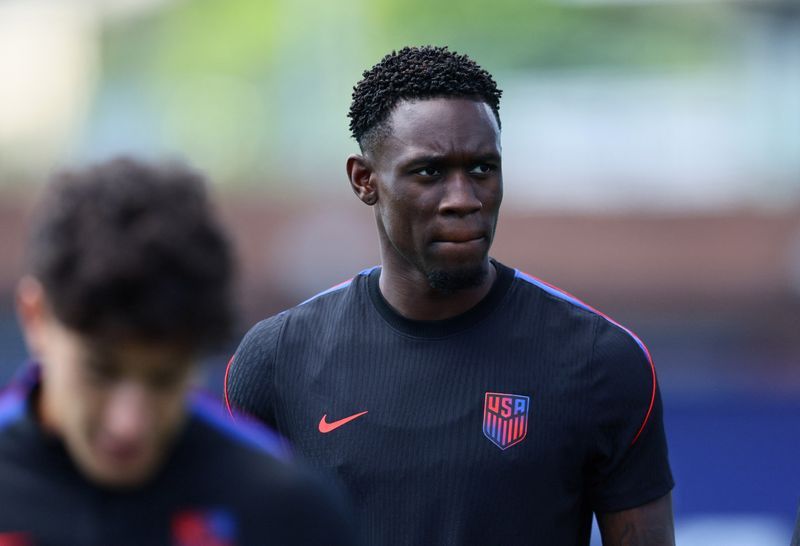
FIFA's decision to suspend the automatic red card suspension facing United States striker Folarin Balogun ahead of Monday's World Cup knockout match against Belgium has unleashed a rare storm of protest across European football governance. The decision, which came after US President Donald Trump contacted FIFA President Gianni Infantino requesting a review, has transformed a routine disciplinary matter into a flashpoint for questions about whether political pressure can override the sport's foundational rules. The move has exposed deep rifts in how major football institutions view the relationship between sport and state power, particularly at football's grandest tournament.
The Belgian Football Association launched the sharpest immediate challenge to FIFA's authority, citing the internal contradictions within FIFA's own rulebook. While the disciplinary code technically permits the FIFA Disciplinary Committee to suspend previously imposed sanctions under Article 27, Article 66.4 explicitly states that red cards result in automatic suspension for the next match—no exceptions, no discretionary pathways. This clarity in the regulations creates an awkward legal position for FIFA, which appears to have stretched its interpretive authority beyond the plain language of its own statutes. The Belgian response highlighted that every other player sent off during the same World Cup has served their suspensions without question, establishing a troubling precedent whereby the application of rules now depends on the profile and nationality of the player involved.
The German Football Association's response struck at the heart of the political dimension. DFB President Bernd Neuendorf demanded that FIFA issue an immediate clarification on whether Trump's telephone call preceded and influenced the disciplinary committee's reversal. His intervention represented an unusual moment of institutional pushback against FIFA, with the DFB framing this not as a complaint about a specific sporting decision but as a fundamental challenge to the separation between political authority and sporting governance. Neuendorf's statement—that the credibility of FIFA itself depends on dispelling impressions of political interference—suggests that European football associations view this as a watershed moment. If national political leaders can successfully lobby for exceptions to tournament rules, the entire architecture of competitive fairness collapses.
The timing and context make the controversy particularly explosive. The World Cup exists as a supposedly neutral arena where nations compete on equal terms, with rules applied uniformly regardless of political or economic power. Once that neutrality is compromised, the tournament loses its legitimacy as a genuine sporting competition. For smaller nations and those with less political clout on the global stage, the implication is chilling: their players will face the full weight of disciplinary rules while larger or more influential countries enjoy discretionary exceptions. This fundamentally undermines the meritocratic principle that should govern sport—that outcomes should reflect only what happens on the pitch, not diplomatic relationships or political favour.
The DFB's broader statement—delivered with pointed sarcasm about FIFA suddenly treating July 5 as April Fools' Day—captured the sense of institutional absurdity. Neuendorf emphasized that European federations are defending not their own national interests but the very concept of consistent, rules-based football governance. His argument centred on a simple principle: once VAR and multiple match officials have collectively determined a red card is appropriate, only the same sporting authorities should be able to review that decision, and only through established appeal mechanisms. The fact that a political leader could effectively override this chain of sporting authority represents a dangerous precedent that extends far beyond this single match.
The German perspective also raised the thorny issue of comparative fairness. Multiple voices in the reactions questioned what happens when similar situations arise later in the tournament. Will those players also receive suspensions overturned if they represent powerful nations? Or will future red cards be enforced rigidly, creating an embarrassing double standard? FIFA's handling of this case has essentially forced the organization into choosing between admitting the decision was politically motivated or maintaining that it was purely sporting—neither option enhances the organization's reputation. If the decision was political, FIFA has violated its own principles; if it was purely sporting, then FIFA's rulebook apparently permits arbitrary decision-making that undermines every previous red card suspension.
For Malaysian and Southeast Asian observers, this controversy carries particular relevance. Smaller nations with less political leverage on the world stage have historically experienced inconsistent treatment in international football governance. The Balogun case demonstrates that this inconsistency may not be accidental or driven by incompetence but rather reflect FIFA's susceptibility to pressure from powerful political figures. Asian teams competing in FIFA tournaments, lacking the diplomatic reach of major powers, face implicit disadvantage if rules become negotiable through high-level political channels rather than remaining immutable competitive standards.
The controversy also raises questions about FIFA President Gianni Infantino's judgment and independence. Whether the decision to suspend Balogun's ban resulted directly from Trump's call or merely coincided with it, the appearance of political influence is devastating to FIFA's credibility. Infantino has long faced criticism from within football governance for perceived lack of autonomy and susceptibility to external pressure. This incident suggests those criticisms may be well-founded. FIFA's fundamental responsibility is to protect the competitive integrity of football tournaments, not to navigate the political interests of individual nations or their leaders.
The broader sporting community's reaction reveals genuine anxiety about institutional decay. Football associations across Europe have traditionally accepted FIFA's authority despite significant disagreements, but only because they believed FIFA would enforce neutral rules fairly. Once that belief collapses, FIFA's legitimacy crumbles. Subsequent World Cup tournaments may face expanded challenges to disciplinary decisions if federations believe political pressure can succeed. The Balogun case thus represents not merely a single controversial decision but potentially the opening of a Pandora's box where FIFA's authority becomes subject to perpetual challenge whenever powerful nations wish to contest disciplinary outcomes.
From a strict legal standpoint, FIFA retains the authority to make this decision, but from an institutional and ethical perspective, the decision represents a profound failure of governance. The Red Card remains fundamentally unfair to players representing nations without political champions at the highest levels. The reversal will permanently taint whatever result emerges from the USA-Belgium match, whether the United States wins or loses. If the Americans advance, critics will attribute it partly to the disciplinary advantage FIFA provided. If Belgium wins despite facing a depleted American squad without Balogun's potential contributions, the victory will carry asterisks. FIFA's decision to prioritize appeasing a political leader over maintaining tournament integrity has therefore damaged not just its own credibility but also the sporting achievement of whichever team advances.

