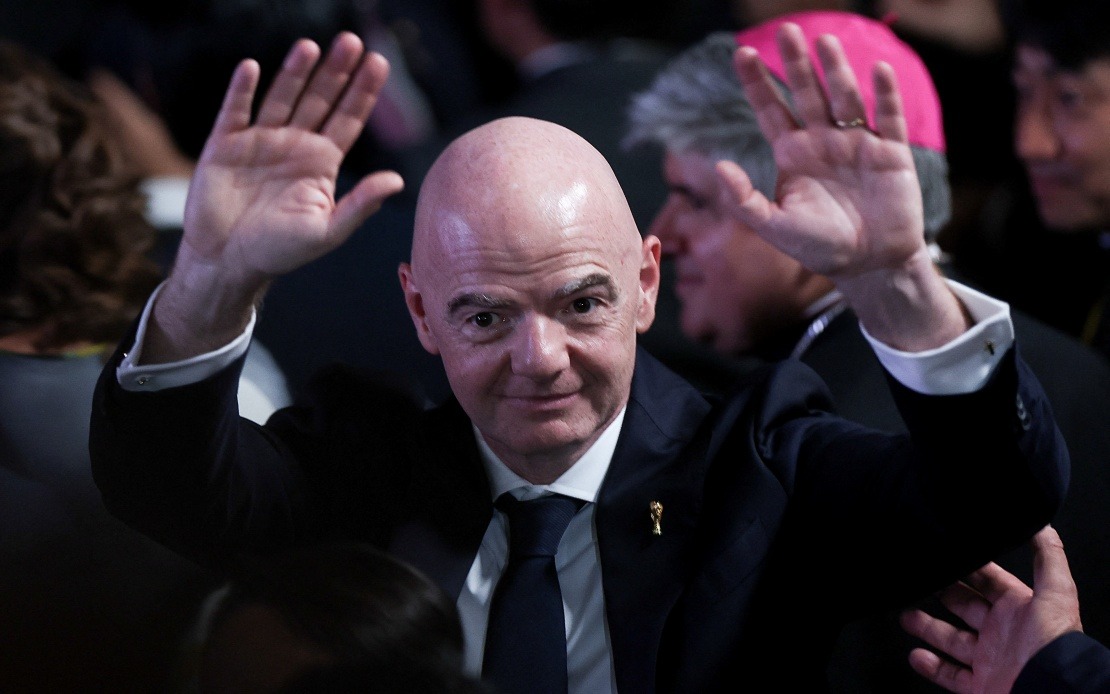
FIFA has moved to shore up support for Gianni Infantino's continued presidency, issuing a stern statement late Saturday that rejects any attempts to circumvent the organisation's established election procedures. The defensive posture underscores mounting internal tensions within world football's governing body as Infantino prepares to seek another term, with critics questioning both his management approach and administrative decisions during his tenure.
The statement from FIFA's leadership emphasises strict adherence to constitutional processes, warning that the organisation will not permit presidential elections held outside its formal statutes and democratic frameworks. This declaration appears calibrated to head off speculation that dissident member federations might pursue alternative paths to challenge Infantino's grip on power, signalling that FIFA views any departure from standard procedure as fundamentally illegitimate.
Infantino's position draws explicit support from FIFA's largest confederations. The South American Football Confederation and the Confederation of African Football, which together represent the majority of FIFA's 211 member associations, have publicly backed his mandate. This alignment suggests the incumbent can count on substantial voting blocs when the presidency is contested, though such visible confederation endorsements also reveal the fissures beneath FIFA's surface.
The organisation's statement characterises opposition to Infantino as part of a deliberate destabilisation effort orchestrated by unnamed actors who resort to allegation and rumour rather than engaging through proper channels. FIFA accuses critics of spreading what it terms demonstrably false claims and unsubstantiated assertions, arguing that repetition of these claims does not render them credible. This framing positions Infantino's opponents as operating outside legitimate governance discourse.
Central to FIFA's defence is a recitation of Infantino's accomplishments across his three decades in European and world football. The organisation credits him with expanding the game's financial reach and improving infrastructure and opportunity pathways globally. These claims form the substantive core of FIFA's case for his continued leadership, moving beyond procedural arguments to assert measurable benefits flowing from his stewardship of the sport.
The timing of FIFA's intervention matters significantly for Southeast Asian and Malaysian football observers. As a confederation member with voting rights in FIFA elections, the Asian Football Confederation carries weight in determining outcomes. The visible support from CONMEBOL and CAF suggests FIFA's machinery is already mobilising regional confederations to maintain unity around Infantino's candidacy, a dynamic that shapes how Malaysia and its neighbours navigate internal football governance.
FIFA's distinction between legitimate scrutiny and what it portrays as malicious insinuation reflects a broader governance challenge facing international sports bodies. The statement acknowledges that oversight and accountability deserve consideration, yet draws a sharp line between good-faith criticism and what it characterises as disinformation campaigns designed purely to distract from substantive issues. This framing attempts to reclaim the moral high ground in what has become a contentious leadership debate.
The reference to a concerted effort to undermine FIFA's president hints at organised opposition brewing within member associations, though FIFA refrains from naming specific rivals or rival blocs. This restraint may reflect either genuine uncertainty about opposition composition or a strategic decision to avoid elevating challengers by engaging them directly. Either way, the language acknowledges that challenges to Infantino's authority are systemic rather than isolated or sporadic.
For Malaysian football stakeholders, Infantino's hold on power affects the competitive framework and resource allocation within Asian football. Presidents who control FIFA determine tournament scheduling, commercial arrangements, and development funding that cascade through confederations to national associations. A destabilised FIFA presidency could create uncertainty in these critical areas, potentially affecting Malaysia's participation pathways and competitive opportunities across the continental calendar.
FIFA's invocation of its responsibility to 211 member associations seeks to reposition its leadership as serving the broader football ecosystem rather than narrow institutional interests. This rhetorical move attempts to frame support for Infantino as support for football's global development, implying that challenging his presidency amounts to jeopardising the sport's advancement. The strategy transforms what is fundamentally a leadership contest into a choice between stability and destructive instability.
The statement's assertion that FIFA will not be distracted from its core mission signals determination to proceed with business as usual regardless of internal divisions. Whether such steadiness proves possible depends partly on how deep and organised the opposition becomes and whether it succeeds in mobilising sufficient voting blocs to mount a serious presidential challenge. The next FIFA election will reveal whether FIFA's institutional machinery can suppress dissent or whether accumulated grievances prove too substantial to contain through procedural assertions.
As regional football administrations observe these developments, the unfolding contest matters because FIFA's internal coherence affects how readily its policies can be implemented across confederations and national associations. A fractious presidency weakens enforcement capacity and can create openings for federations to resist certain directives or demand exceptional treatment. Southeast Asian football bodies have pragmatic reasons to monitor how this leadership contest unfolds and positions that emerge during the campaign.

