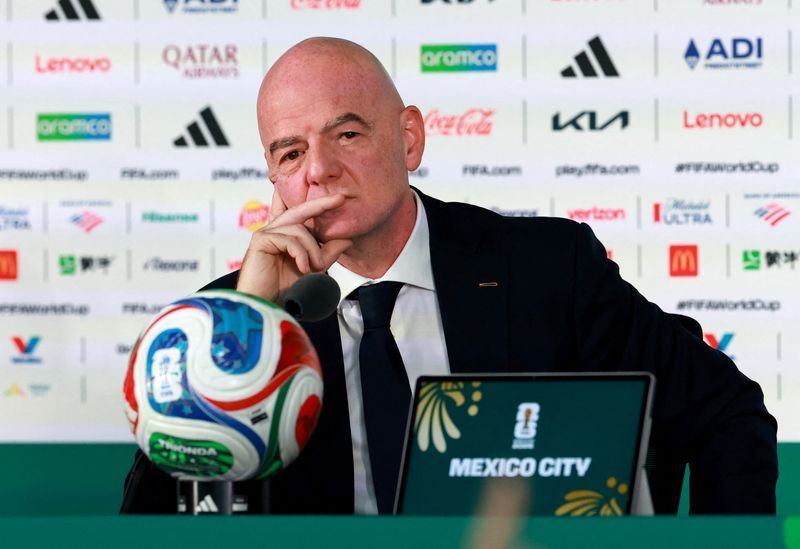
FIFA's leadership convened in Rabat in early August to project unity and affirm support for President Gianni Infantino, yet the carefully choreographed display of solidarity cannot obscure the institutional tensions now simmering beneath world soccer's governing structure. A day after the meeting, FIFA issued a formal apology to its 211 member associations for the bungled rollout of an abandoned proposal to commercialise future World Cup broadcasting rights—a scheme that triggered the most serious internal rebellion during Infantino's decade-long presidency. The governing body acknowledged that the initiative "should have been handled differently" and conceded that associations and Council members felt excluded from critical strategic decisions affecting the sport's financial future. This mea culpa marks a tactical retreat rather than a fundamental shift in how FIFA operates, and observers across Europe, Asia and the Americas are watching closely to see whether promised procedural reforms translate into genuine institutional change.
The commercial rights proposal, which aimed to monetise World Cup broadcasting for tournaments through 2050, exposed deep fractures within FIFA's decision-making hierarchy. National football associations—the ostensible owners of the sport at the grassroots level—found themselves presented with a fait accompli rather than invited into meaningful consultation. Several powerful confederations bristled at being sidelined, with UEFA, the Asian Football Confederation and CONCACAF all voicing public criticism. The speed and opacity with which FIFA's leadership attempted to implement the scheme violated the informal social contract that has traditionally bound together the disparate power centres within world soccer. Even as Infantino secured public backing from Secretary General Mattias Grafstrom and the management board during the Rabat gathering, the underlying grievances about access to information and meaningful participation in strategic decisions remain unresolved.
The governance crisis extends well beyond the abandoned commercial initiative. European Leagues, an umbrella organisation representing over 1,300 clubs across the continent, separately condemned FIFA for imposing an unrealistically compressed four-week deadline for evaluating the proposal to expand the 2030 World Cup from 48 to 64 participating teams. This parallel controversy underscores a pattern of behaviour that independent stakeholders characterise as fundamentally anti-consultative. Rather than developing proposals in dialogue with confederations, national associations, and club football organisations, FIFA's senior leadership has repeatedly unveiled finished products with minimal opportunity for genuine feedback or modification. The confluence of these episodes has created an environment where even FIFA-friendly confederations now scrutinise announcements with heightened scepticism, anticipating that decisions have already been made in closed-door sessions insulated from broader input.
FIFA's institutional response attempts to draw a distinction between procedural failings and substantive governance violations. The organisation insists that all actions surrounding the commercial rights proposal technically complied with existing FIFA regulations, framing the controversy as a matter of communication and transparency rather than rule-breaking. This parsing of responsibility carries limited persuasive power. Grafstrom's internal memorandum to staff, lamenting the "sad and reproachable series of events," acknowledged organisational culpability whilst maintaining that the institution would "no longer tolerate any attacks on its integrity, good governance and due process." The simultaneous admission of fault and assertion of institutional righteousness reflects FIFA's defensive posture. A comprehensive review has been commissioned, with findings to be presented to the Council at its next meeting, but this process will unfold under intense political pressure and public scrutiny.
For Infantino personally, the Rabat meeting achieved its immediate political objective: containing fallout ahead of the March 2027 presidential election in Morocco, where he seeks a fourth consecutive term through 2031. The choreography was unmistakable. Senior FIFA officials publicly endorsed his leadership; Infantino reciprocated by lauding administrative work; photographs circulated showing him beaming alongside Grafstrom at the Women's Africa Cup of Nations. Malaysian and regional readers should note that this display of unity, whilst politically reassuring for Infantino's re-election prospects, masks substantive questions about how FIFA makes decisions that affect football development funding and tournament opportunities in Asia, Africa and beyond. The crisis has not dislodged Infantino politically—no credible challenger has emerged—but it has reframed the conversation around his presidency, shifting focus from administrative accomplishments to institutional accountability.
Infantino maintains formidable political support among smaller national associations, particularly across Africa and Asia, where FIFA development grants constitute essential resources for grassroots and elite football programmes. This geographic coalition has sustained his position through previous controversies and insulates him from immediate electoral threat. However, the governance debate has emboldened influential confederations including UEFA to articulate more forceful critiques of presidential leadership. European football's governing body, along with CONCACAF and the Asian Football Confederation, has signalled that future cooperation depends on demonstrably improved consultation practices. This coalition of powerful confederations cannot easily overthrow an incumbent with deeper pockets and broader grassroots support, yet their coordinated criticism establishes a political ceiling on Infantino's authority and creates space for alternative visions of FIFA governance to gain traction.
The implications for Southeast Asia extend beyond formal governance structures. National football associations across the region depend significantly on FIFA development funding and tournament revenue-sharing arrangements. When World Cup commercial strategies are negotiated in opacity, or when decisions about tournament expansion affect broadcasting rights and qualification pathways, associations lack adequate voice in processes that fundamentally shape their football ecosystems. The Malaysian Football Association, along with peers in Vietnam, Thailand, Indonesia and Singapore, now faces heightened uncertainty about how FIFA will implement promised reforms and whether consultation processes will genuinely incorporate Asian perspectives. The governance crisis has created an opening for associations to demand transparency and participation, but only if they organise collectively and articulate clear demands.
Looking toward the 2027 election and beyond, FIFA faces pressure to institutionalise consultation mechanisms that extend genuine decision-making power to confederations and national associations rather than treating them as stakeholders to be informed ex post facto. The World Cup expansion proposal, the commercial rights initiative, and other strategic decisions will inevitably resurface in modified forms. Stakeholders now expect meaningful participation in their development, not merely notification upon completion. This shift in expectations represents the most significant legacy of the governance crisis. Infantino may retain the presidency, but future FIFA leaders will operate under tighter scrutiny and diminished discretion to implement major initiatives unilaterally.
The question facing football in Southeast Asia and globally is whether this governance reckoning produces sustainable institutional reform or merely postpones deeper structural conflicts. FIFA's apology and promised review suggest recognition that current decision-making processes lack legitimacy among important constituencies. Yet the organisation has simultaneously warned critics that it will "no longer tolerate any attacks on its integrity, good governance and due process"—a formulation that frames accountability demands as threats rather than legitimate oversight. This defensive posture raises doubts about whether FIFA genuinely intends to share power or simply to manage criticism more skilfully. National associations, confederations, and commercial stakeholders should expect a period of apparent openness and consultation before patterns of closed-door decision-making reassert themselves unless transparent governance mechanisms are formally embedded in FIFA's institutional architecture.

