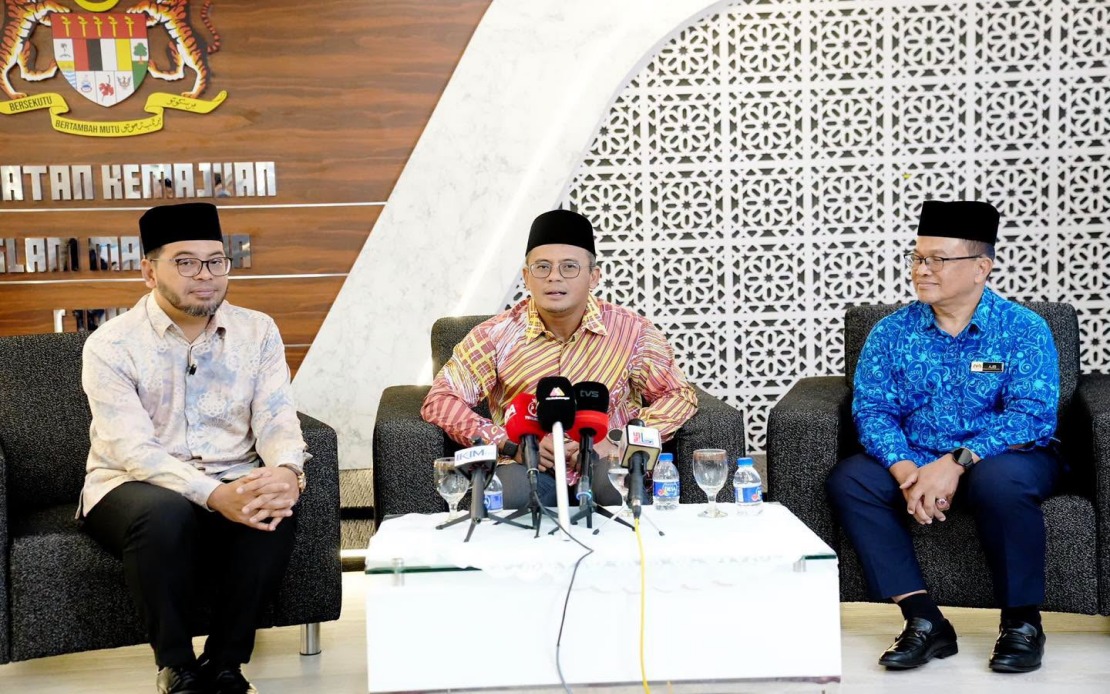
Malaysia is set to host an expanded celebration of Islamic heritage this September when the Festival Turath Islami Selangor transitions to the national stage as Festival Turath Islami Malaysia 2026. The elevation from a state-level initiative to a federally-backed programme signals growing recognition of classical Islamic scholarship's relevance to contemporary Malaysian society, with Selangor Menteri Besar Datuk Seri Amirudin Shari and Minister in the Prime Minister's Department (Religious Affairs) Dr Zulkifli Hasan announcing the move at a Putrajaya briefing this week.
The transformation represents a strategic recalibration in how Malaysia positions itself as a custodian of Islamic intellectual traditions. What began in 2023 as a Selangor initiative has now become a collaborative undertaking between state and federal authorities, reflecting consensus among policymakers that preserving and studying classical Islamic texts serves broader development objectives. The shift from hosting events at the Selangor State Mosque to utilising the Putra Mosque in Putrajaya underscores this institutional elevation, positioning the festival within the nation's capital and under heightened federal visibility.
Festival Turath Islami Malaysia 2026 will unfold over eight consecutive days commencing September 13, centring on the theme "Hikmah Warisan Islam"—Islamic Wisdom Heritage. This year's focus examines Al-Hikam al-Ata'iyyah, a classical Sufi masterwork by Ibn Ata-illah As-Sakandari, a medieval Islamic scholar whose teachings have profoundly shaped Sufi thought across the Islamic world and particularly resonated throughout the Malay-speaking world. The text's emphasis on spiritual sincerity, absolute trust in divine providence, and the transformative bond between worshipper and Creator speaks to enduring questions about faith and personal development that remain pertinent in modern contexts.
The festival's intellectual credentials rest substantially on its roster of speakers, which will include 23 distinguished scholars from Malaysia and abroad. Prominent among them is Sheikh Dr Ali Jum'ah, a globally recognised Islamic scholar whose participation lends considerable academic weight to proceedings. The programme also features Malaysian scholars of repute including Prof Dr Sayyid Idris al-Fasi al-Fihri, Ustaz Dr Adi Hidayat, Ustaz Wadi Annuar, and Selangor Mufti Datuk Setia Dr Haji Anhar Haji Opir. Collectively, these figures will deliver more than 42 scholarly sessions, ensuring substantive engagement with classical texts rather than superficial cultural tourism.
The festival's trajectory across three prior editions establishes it as a serious scholarly endeavour. In 2023, FTIS examined Ihya' 'Ulumuddin by Imam Al-Ghazali, perhaps Islam's most comprehensive ethical and theological treatise. The 2024 edition turned to Al-Arba'in al-Nawawiyah by Imam al-Nawawi, a compendium of prophetic traditions essential to Islamic jurisprudence and spirituality. The 2025 iteration focused on Tafsir al-Jalalain by Imam Jalaluddin al-Suyuti, one of Islam's most widely studied Quranic commentaries. This methodical progression through foundational works demonstrates curatorial intent and intellectual continuity rather than ad hoc programming.
Programming throughout the eight days encompasses multiple dimensions of Islamic scholarship and practice. Early morning Kuliah Subuh sessions will provide intensive textual study, while Dalail al-Khairat recitations—devotional invocations with centuries-old pedigree—create spaces for communal spiritual engagement. The Talaqqi Kitab Al-Hikam component offers direct transmission of knowledge from senior scholars to students, preserving pedagogical methods that predate modern institutional education. Additionally, the festival will stage a Tausiah Perdana (inaugural address), Qasidah ceremonies celebrating Islamic poetic traditions, and an Islamic Book Festival designed to showcase contemporary and classical Islamic publications.
A particularly significant innovation for 2026 is the inaugural National Muzakarah Ulama Turath, a convening of Islamic scholars from across Malaysia specifically tasked with intellectual cooperation and problem-solving. This new initiative suggests organisers envision the festival not merely as a platform for historical appreciation but as an incubator for applying classical wisdom to contemporary Malaysian challenges. The muzakarah framework—consultation and deliberation—echoes Islamic governance traditions while modernising their application to national concerns affecting Muslim communities.
From a Malaysian governance perspective, the festival's elevation reflects strategic thinking about soft power and cultural identity. The collaboration between Selangor and federal authorities demonstrates willingness to transcend typical state-federal tensions in pursuit of shared cultural objectives. By anchoring the festival in Putrajaya and securing ministerial-level support, federal stakeholders signal that Islamic heritage preservation constitutes a core national priority rather than incidental cultural programming. This positioning may resonate particularly in Selangor, Malaysia's most economically dynamic state, where sophisticated urban audiences increasingly seek intellectual and spiritual substance beyond conventional religious discourse.
The choice of classical Sufi texts across the festival's lifetime merits consideration. Sufism has historically occupied complex terrain in Malaysian Islamic discourse, sometimes embraced as authentic spiritual expression and sometimes viewed with suspicion by modernist schools. By dedicating substantial national resources to studying Al-Hikam al-Ata'iyyah, festival organisers implicitly validate contemplative and mystical Islamic traditions as legitimate scholarly domains. This carries implications for how Malaysia reconciles modern development with spiritual consciousness—positioning Sufi wisdom not as antiquarian curiosity but as viable framework for addressing contemporary existential questions.
The regional context matters too. Southeast Asia hosts substantial populations invested in classical Islamic learning, particularly in Indonesia and Brunei. By hosting an internationally-calibre festival featuring both regional and global scholars, Malaysia positions itself within broader Islamic intellectual networks. The presence of international speakers alongside Malaysian ulama suggests aspiration toward establishing Putrajaya as a recognized hub for Islamic scholarship, potentially attracting visiting scholars and students from throughout the Muslim world. This scholarly tourism could generate cultural and economic benefits whilst enhancing Malaysia's standing within the global Islamic community.
For Malaysian audiences, particularly those seeking engagement with Islamic tradition beyond institutional religious structures, the festival offers rare opportunities to encounter leading contemporary interpreters of classical texts. In an era of digital saturation and competing claims about Islamic authenticity, access to scholarly consensus through the muzakarah format and direct engagement with published materials through the Islamic Book Festival components provide grounding in established intellectual traditions. This matters in a society where Islamic discourse often fragments into competing ideological camps, each claiming authoritative interpretation.
The festival also reflects broader trends in how Malaysia constructs national identity. Rather than positioning Islam purely as legal/constitutional framework or devotional practice, FTIM 2026 emphasises Islam's intellectual heritage and philosophical depth. This framing potentially appeals across educational and socioeconomic divides, from university students to urban professionals seeking sophisticated engagement with their faith tradition. By hosting this festival at the national level and marshalling significant scholarly resources, Malaysian authorities acknowledge that cultural development and spiritual flourishing constitute legitimate state concerns alongside economic and political objectives.

