The Federal Government's decision to elevate Sabah's interim Special Grant allocation from RM600 million to RM1.5 billion represents a meaningful acceleration in addressing longstanding grievances over the state's constitutional entitlements. Announced by Prime Minister Datuk Seri Anwar Ibrahim on May 31, the substantial increase underscores a shift in how Putrajaya is treating one of Malaysia's most contentious federal-state financial disputes, offering Sabah tangible progress after decades of advocacy for fuller recognition of its rights enshrined in the foundational Malaysia Agreement 1963.
Gabungan Rakyat Sabah secretary-general Datuk Armizan Mohd Ali characterised the funding boost as validation of the MADANI Government's stated commitment to restoring constitutional parity for the state. The development carries particular weight given that Sabah's fiscal position has long constrained its ability to invest in infrastructure, education, and healthcare at levels comparable to peninsular states. This injection represents not merely a budgetary adjustment but a symbolic acknowledgement that the federal apparatus recognises the legitimacy of Sabah's claims, which have animated state politics for generations and remain central to how Kuala Lumpur's relationship with Kota Kinabalu is measured by voters.
Yet the increased allocation, while welcome, operates within a framework that remains legally contested. GRS has maintained that the underlying question of Sabah's 40 per cent revenue entitlement—a figure derived from Articles 112C and 112D of the Federal Constitution—must proceed toward permanent resolution rather than reliance on interim grants that can fluctuate with political circumstances. The interim arrangement, by its nature, lacks the durability that constitutional recognition would provide. This distinction matters enormously for long-term planning in Sabah, where officials and legislators must budget with visibility into sustained revenue streams.
Armizan's insistence that the Special Grant review be fully implemented and gazzetted within the current year reflects growing impatience within Sabah's political establishment for definitive action rather than incremental concessions. The timing of his remarks is significant: they come after Prime Minister Anwar's November 13 speech in Parliament reaffirming the government's acknowledgement of Sabah's 40 per cent entitlement. This parliamentary affirmation, while non-binding in immediate fiscal terms, provides political cover for GRS to press for implementation without appearing obstructionist toward a federal leadership broadly aligned with the state's position.
The legal proceedings surrounding Sabah's revenue claim continue in parallel, adding another dimension to the dispute. Courts and administrative processes move slowly, and their outcomes remain uncertain. Consequently, the Special Grant increase can be understood partly as a confidence-building measure designed to demonstrate federal goodwill while litigation proceeds. For Sabah's electorate, the RM1.5 billion figure carries psychological importance as evidence that Kota Kinabalu's leaders are extracting tangible returns from negotiations with the centre—a critical metric in a state where federal neglect has been a recurring political grievance.
For Malaysia's federal system more broadly, the Sabah question illustrates the unresolved tensions within the original 1963 compact. Sarawak has navigated similar issues with greater assertiveness, securing dedicated revenue-sharing arrangements that Sabah has struggled to match. The willingness of the current federal administration to move on this file, even incrementally, suggests a recognition that constitutional ambiguities inherited from the nation's founding period require clarification and corrective action. Leaving such matters unresolved creates chronic friction between state and federal governments, complicates development planning, and feeds political instability.
Armizan's role as Domestic Trade and Cost of Living Minister adds an interesting dimension: his ability to channel federal resources toward Sabah depends partly on his standing within the federal cabinet and ruling coalition. His position as GRS secretary-general simultaneously obligates him to his party's constituents. This dual mandate means his engagement with federal authorities over Sabah's entitlements carries weight beyond ordinary state advocacy, as he straddles the federal-state divide in ways that concentrate both opportunity and pressure on his shoulders.
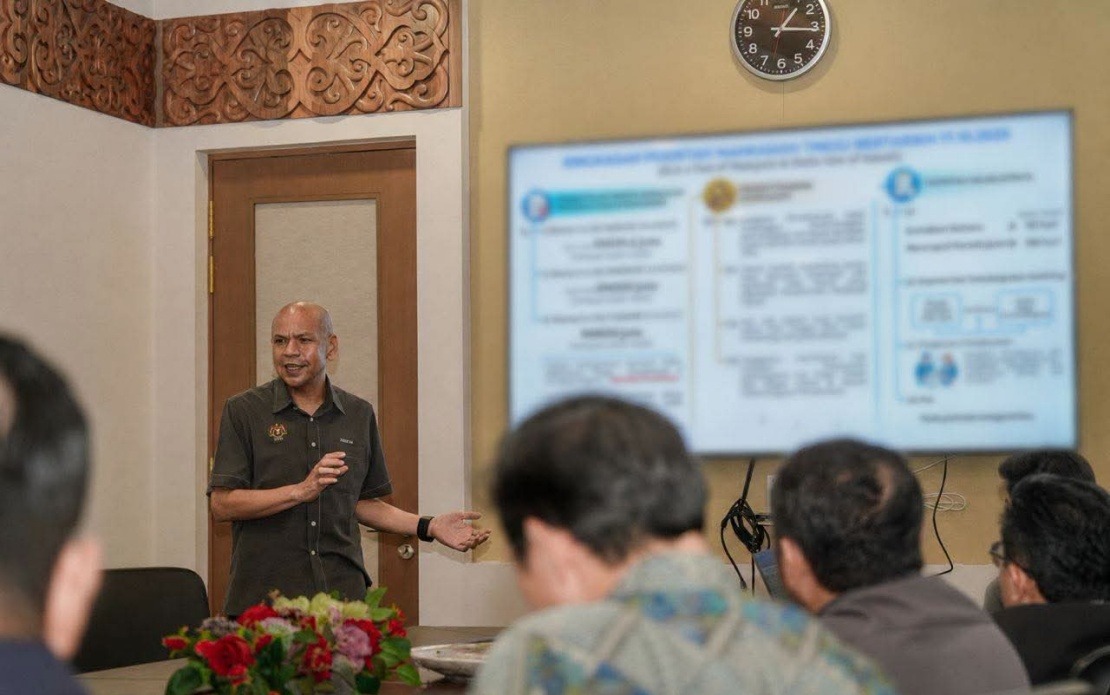
The special meeting Armizan convened with Sabah MPs underscores that the state's political leadership remains mobilised around the 40 per cent question, treating it not as a settled matter but as an active campaign. This coordination suggests that further escalation is possible if the federal government fails to move toward permanent arrangements. The fact that multiple Sabah MPs were gathered to discuss implementation status indicates this issue transcends party boundaries within the state—a rare phenomenon that speaks to its foundational importance in Sabah politics.
Regionally, developments in Sabah carry implications for how Southeast Asian federalism and power-sharing arrangements evolve. Indonesia, with its vast archipelago and internal diversities, monitors Malaysian constitutional disputes closely. How Malaysia manages Sabah's claims speaks to the credibility of federal compacts in the region more broadly. If Malaysia's federal framework can accommodate legitimate state aspirations through negotiation rather than deadlock, it reinforces confidence in constitutional federalism as an organising principle. Conversely, protracted unresolution deepens cynicism about constitutional commitments.
The pathway forward depends substantially on whether the federal government is prepared to move from interim measures to formal, permanent revision of the Special Grant framework. The Prime Minister's parliamentary affirmation of Sabah's 40 per cent entitlement, combined with the funding increase, creates momentum for finalisation. Yet bureaucratic and political obstacles remain formidable, particularly given that any permanent revision to Sabah's entitlements carries budgetary implications for the federal centre and other states. The coming months will be crucial in determining whether the current opening hardens into genuine constitutional reform or reverts to the pattern of incremental, temporary adjustments that have characterised federal-Sabah relations for decades.

%22%2F%3E%3C%2Fpattern%3E%3C%2Fdefs%3E%3Crect%20width%3D%22100%25%22%20height%3D%22100%25%22%20fill%3D%22url(%23ph1354vg)%22%2F%3E%3Crect%20width%3D%22100%25%22%20height%3D%22100%25%22%20fill%3D%22url(%23ph1354vp)%22%2F%3E%3Ctext%20x%3D%2250%25%22%20y%3D%2250%25%22%20text-anchor%3D%22middle%22%20dominant-baseline%3D%22central%22%20fill%3D%22rgba(255%2C255%2C255%2C0.95)%22%20font-family%3D%22Georgia%2C%20'Times%20New%20Roman'%2C%20serif%22%20font-weight%3D%22700%22%20font-size%3D%22320%22%20letter-spacing%3D%22-0.02em%22%3EGRS%3C%2Ftext%3E%3C%2Fsvg%3E)