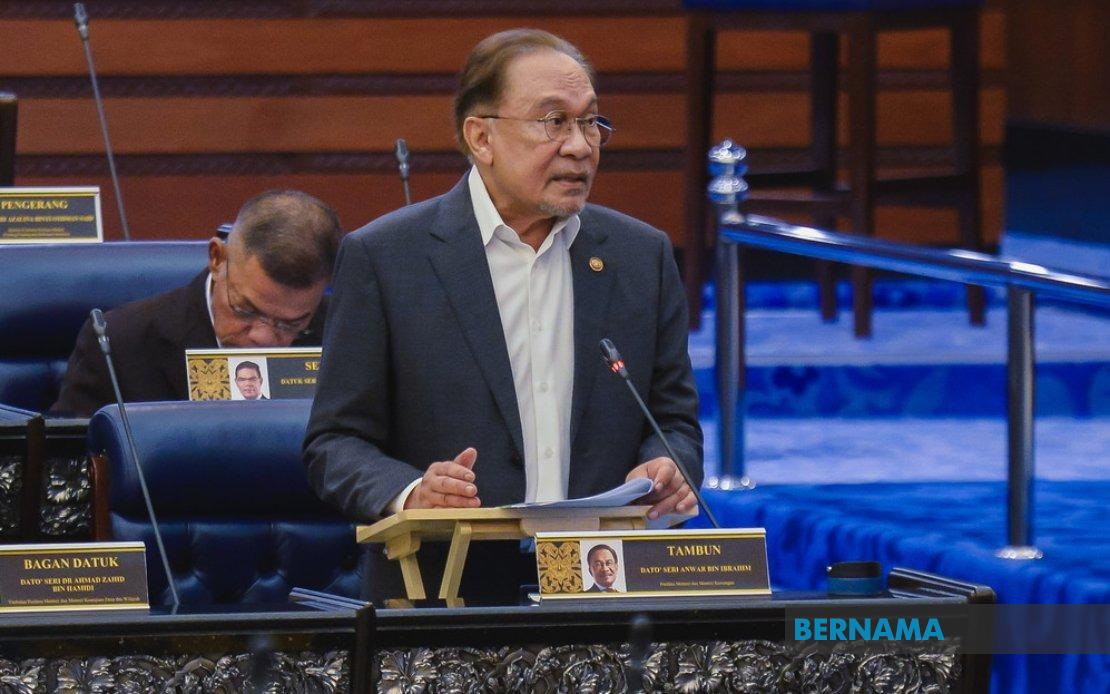
Prime Minister Datuk Seri Anwar Ibrahim has drawn a firm line on how the Federal Government will handle requests from state administrations seeking extra funding for development initiatives involving a Notice of Change (NOC). Speaking during parliamentary question time in the Dewan Rakyat, Anwar emphasized that no state can expect automatic approval or loan provision whenever project costs rise, signalling a more cautious approach to federal spending despite pressures from state governments.
The clarification came in response to a question from Datuk Awang Hashim regarding Kedah's pursuit of additional resources for the Pulau Bunting Water Treatment Plant project, which requires NOC approval. Anwar's response outlined a structured process that demands fresh assessment and renegotiation rather than expedited disbursement, reflecting broader concerns about fiscal discipline across Malaysia's federation.
At the core of Anwar's position lies the recognition that an NOC triggers significant financial consequences that cannot be addressed through routine administrative channels. The Prime Minister stressed that issuance of a Notice of Change inherently means substantial additional expenditure, transforming what might initially appear as a technical document into a matter with serious budgetary repercussions. This framing suggests the federal administration views such requests less as administrative formalities and more as substantive financial commitments requiring rigorous evaluation.
Anwar identified two critical steps in the evaluation process. First, authorities must establish accountability regarding contractor responsibility and identify the fundamental drivers behind cost escalation. This distinction proves crucial because it determines whether increases stem from legitimate factors like material price fluctuations or reflect inefficiencies and mismanagement at the project level. The Prime Minister's emphasis on determining "the contractor's role and the root cause of the cost increase" indicates the government seeks to ensure public funds do not compensate for private sector underperformance or state-level administrative failures.
The second element in Anwar's framework addresses the constitutional and fiscal relationship between federal and state governments. He stressed that once additional funding becomes necessary, the matter automatically involves the Federal Government's balance sheet and resources. This means Kuala Lumpur cannot be bound by prior commitments or decisions made unilaterally by state administrations, nor can it be expected to automatically augment allocations whenever costs escalate. This position reasserts federal authority over national finances and suggests wariness about open-ended liability for state-level projects.
The implicit concern underpinning Anwar's remarks reflects a broader governance challenge across Malaysia's federal system. State governments, particularly those with different political alignments from the Federal Government, occasionally pursue development projects with inadequate feasibility studies or cost projections. When reality diverges from planning assumptions, states naturally look to Kuala Lumpur for financial rescue. However, such arrangements create moral hazard, incentivizing states to underestimate costs during initial planning and subsequently extract federal resources through NOC requests.
The Pulau Bunting Water Treatment Plant case exemplifies this pattern. Water infrastructure represents a genuine public necessity, and Kedah's requirements for improved treatment capacity reflect legitimate developmental needs across the region. Nevertheless, the fact that additional funding is being sought through an NOC rather than being incorporated into initial project budgeting suggests either changed circumstances or original underestimation. Anwar's response signals that the Federal Government intends to scrutinize such situations rather than automatically supplement state budgets.
For Malaysian states, the pronouncement carries significant implications for project planning and execution. State administrations must now anticipate that cost escalations will trigger protracted renegotiations rather than expedited federal support. This reality should encourage more rigorous initial planning, more conservative cost assumptions, and stronger contractor accountability mechanisms at the state level. It effectively places the onus on states to ensure their project estimates are robust and their procurement processes competitive, rather than treating federal reserves as a fallback option.
Anwar delegated detailed explanation of the matter to Deputy Prime Minister and Energy Transition and Water Transformation Minister Datuk Seri Fadillah Yusof, indicating the issue involves technical and sectoral considerations beyond broad fiscal principle. Fadillah's portfolio encompassing energy transition and water transformation suggests Kedah's project aligns with national priorities in water security, yet even strategically important initiatives must navigate the new gatekeeping framework the Prime Minister has established.
The timing of this clarification matters within Malaysia's political context. With multiple states controlled by opposition coalitions, establishing transparent and consistent criteria for federal funding decisions helps insulate the government against accusations of partisan favoritism or discrimination. By articulating clear principles about NOC assessment and renegotiation, Anwar creates defensible standards applicable to all states regardless of their electoral preferences, thereby strengthening the legitimacy of federal funding decisions.
This stance also reflects the fiscal consolidation pressures facing the federal government. Malaysia's debt levels remain elevated, and Kuala Lumpur faces competing demands for infrastructure investment, social spending, and debt servicing. A more stringent approach to state funding requests represents part of broader fiscal discipline, ensuring that additional disbursements are genuinely justified rather than routine. Anwar's framing transforms what might appear as a procedural matter into a centerpiece of fiscal responsibility.
Looking forward, states seeking additional funding through NOC routes should anticipate detailed questioning about cost drivers, contractor performance, and the fundamental necessity for increased allocation. The Federal Government will likely demand evidence that escalations were unavoidable and that contractors have not extracted unwarranted premium costs. This disciplinary approach, while potentially complicating timely project completion, aims to improve overall governance standards across Malaysia's public infrastructure development pipeline and ensure federal resources are deployed with appropriate scrutiny.

