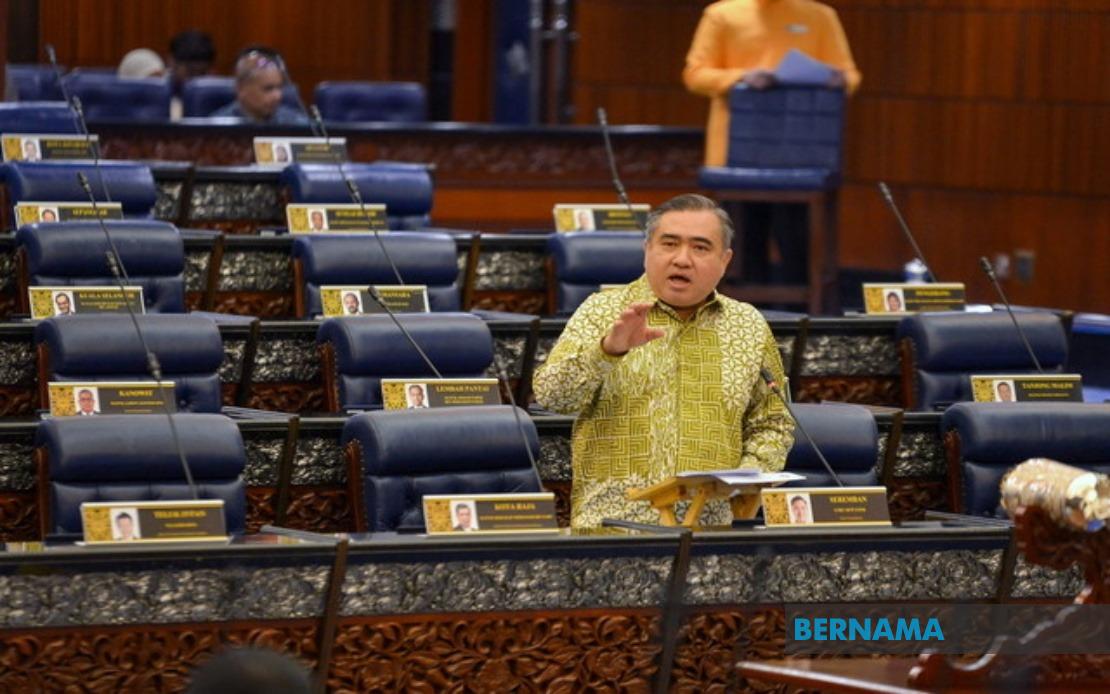
Transport Minister Anthony Loke has confirmed that the federal government will provide financial support for Johor's ambitious Elevated Autonomous Rapid Transit (E-ART) project, addressing longstanding questions about how the massive infrastructure initiative will be funded. The minister made the announcement during parliamentary question-and-answer proceedings, responding to queries from opposition and government backbenchers about the project's financing structure and implementation timeline.
While an appointed private consortium will initially shoulder the financing burden, Loke explained that assessments conducted by relevant authorities have determined the E-ART cannot operate on a purely commercial basis. The feasibility studies revealed that private-sector investment alone would render the project uneconomical, necessitating public intervention. Consequently, the federal government has decided to inject funding to make the venture financially sustainable, though the specific mechanics of this support remain subject to ongoing negotiations between multiple stakeholders.
The precise financing methodology, actual monetary commitment from the federal coffers, and the repayment arrangement across the concession period have not yet been finalised. These critical details are still being hammered out in discussions involving the Transport Ministry, relevant state authorities, and the private consortium tasked with implementing the project. Once negotiations conclude, the agreed framework will be presented to Cabinet for formal consideration and approval before any concession agreement is executed.
Loke indicated that the E-ART project should reach completion within four years from when the appointed consortium receives its Letter of Acceptance, assuming all approvals and agreements proceed without significant delays. This timeline assumes construction commences promptly after the final agreements are ratified, though no specific start date has been announced. The four-year construction window positions the project to come online several years after the Johor Bahru-Singapore Rapid Transit System (RTS) Link, which is scheduled to begin operations in January 2027.
This sequencing has implications for Johor's transport network. When the RTS Link launches in early 2027, it will substantially alter passenger flow patterns and congestion dynamics across the causeway region before the E-ART becomes operational. To manage this transition period and prepare for increased demand, the Transport Ministry and Johor state government have developed a comprehensive traffic dispersal strategy focused on strengthening existing public transport services rather than relying solely on new infrastructure.
A cornerstone of this interim approach involves expanding the BAS.MY service network, which will be augmented to 28 routes operating 254 buses, including a growing fleet of electric vehicles. These conventional bus services will serve as a crucial backbone for the public transport system during the gap between the RTS Link's opening and the E-ART's completion. Additionally, the Stage Bus Service Transformation (SBST) 2.0 programme will dedicate 157 buses specifically to the Johor Bahru Sentral and Bukit Chagar routes, with operations expected to commence in early 2027, coinciding with the RTS Link's launch.
Rail connectivity is receiving parallel attention. The ministry is working to procure 12 additional KTM Komuter Southern train sets to expand commuter rail capacity in the region. While awaiting final approvals for this procurement, authorities have already launched the Shuttle Selatan service, which commenced on June 16 and connects Kulai-Kempas-Johor Bahru and Kempas-Pasir Gudang routes. This interim service provides 14 daily trips and demonstrates the government's commitment to bridging transport gaps before major projects become operational.
The financing model adopted for E-ART reflects a broader policy shift in Malaysia's approach to large infrastructure projects. Rather than pursuing purely commercial models that often prove unviable for public transit, the government is increasingly accepting that subsidised fares and public investment are necessary to ensure accessibility and affordability. When transport authorities maintain artificially low fares to benefit users, the economic return on investment diminishes, requiring compensatory government funding. This represents a conscious trade-off between fiscal returns and social benefit.
Loke reiterated that fares across all public transport projects remain under government control, ensuring commuters continue enjoying services at the lowest feasible rates. This policy stance prioritises accessibility for lower-income Malaysians over profit maximisation, recognising that affordable public transport generates broader economic and social benefits beyond the transport sector itself. The controlled-fare approach acknowledges that market forces alone cannot deliver equitable transport outcomes in developing economies.
The E-ART project's federal funding commitment carries significant implications for Malaysian transport development. It signals that mega-infrastructure projects, particularly those serving economically vital corridors like the Johor-Singapore route, will receive government backing when private financing proves insufficient. This framework could establish precedent for other major transit initiatives across Malaysia, particularly in high-growth regions where demand-responsive public transport is essential for economic competitiveness and quality of life.
For Johor specifically, the announcement provides certainty that the E-ART will advance despite financial constraints, though implementation timelines remain subject to negotiation. The phased approach—with RTS Link launching first, followed by enhanced conventional services and E-ART—allows the state's transport infrastructure to evolve progressively rather than relying on a single transformational project. This incremental development reduces execution risk and allows authorities to adjust strategies based on performance of earlier systems.
The project remains strategically important for Southeast Asian logistics and trade. As the primary land bridge between Malaysia and Singapore, Johor's transport capacity directly impacts bilateral commerce and regional supply chains. Enhanced connectivity through E-ART will facilitate smoother movement of goods and people, supporting economic integration across the border. The commitment to federal funding effectively places this regional infrastructure within Malaysia's national development priorities.
With Cabinet approval anticipated once negotiations conclude, the E-ART project appears poised to transition from announcement phase toward implementation. The transport ministry's detailed planning for interim services and the concrete timelines for RTS Link and bus network expansions demonstrate serious commitment to addressing Johor's growing congestion challenges. Whether the project ultimately delivers on its ambitious timeline and performance specifications will significantly influence Malaysian confidence in similar large-scale transport initiatives.

