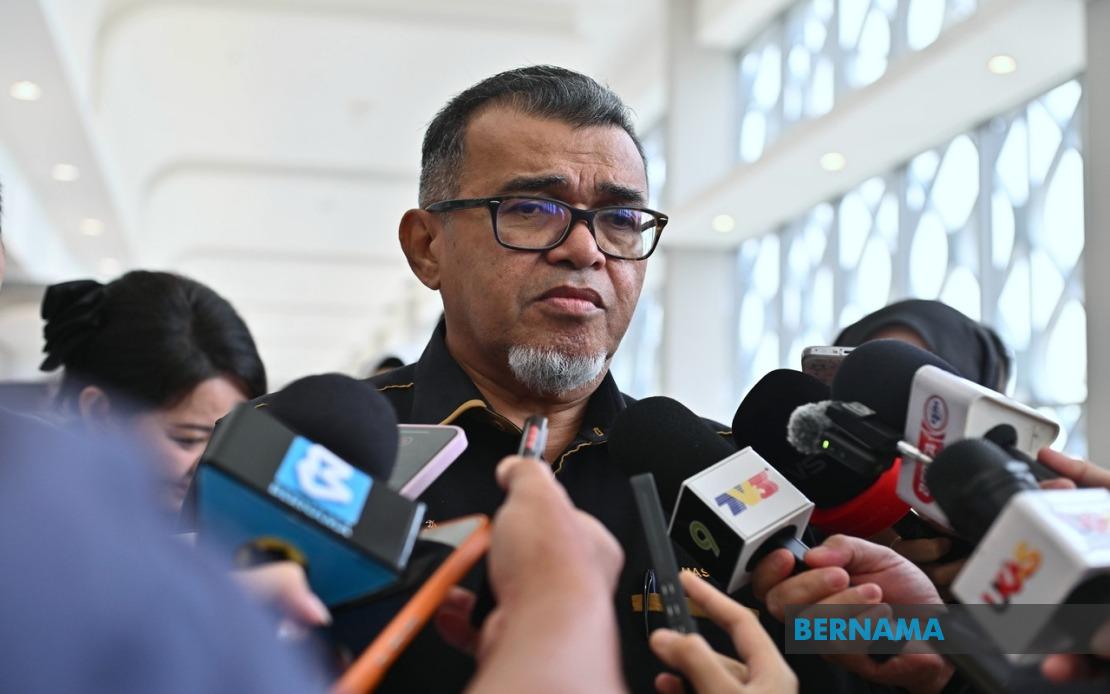
The Federal Government has committed RM30 million to substantially upgrade Short Take-Off and Landing (STOL) airports serving the remote communities of Long Banga and Ba'kelalan in Sarawak. Deputy Transport Minister Datuk Hasbi Habibollah disclosed the allocation during remarks following the National MADANI Taxi Renewal Programme for Sarawak in Kuching, signalling renewed federal attention to infrastructure gaps affecting interior regions.
The investment will be distributed equally between the two facilities, with RM15 million earmarked for Long Banga and an identical sum for Ba'kelalan. This parity reflects a recognition that both airstrips serve similarly isolated populations dependent on air connectivity for essential services, commerce, and movement beyond their settlements. The allocation represents a tangible commitment to ensuring that rural aviation infrastructure keeps pace with contemporary operational demands and safety standards.
Currently, both locations rely on Twin Otter aircraft, narrow-bodied turboprops designed specifically for operations from short, austere airfields. While these rugged machines have proven invaluable for reaching communities inaccessible by road, they are inherently capacity-constrained. The Twin Otter typically carries between 9 and 19 passengers depending on configuration, meaning each service supports only limited passenger volumes. For communities where scheduled flights may run infrequently, this restriction creates bottlenecks affecting everything from medical evacuations to business travel and student mobility.
The upgrade programme targets runway extension as a priority initiative. Longer runways would enable operations by larger regional aircraft such as the Cessna Caravan or DHC-6 derivatives equipped with higher passenger capacities. Runway improvements also enhance safety margins, reducing weather-related flight cancellations and allowing operations in marginal conditions where existing surfaces would be unusable. Enhanced drainage systems and sealed surfaces would extend airfield lifespan while reducing maintenance burdens on local operators.
Beyond runway infrastructure, the allocation encompasses broader facility modernisation. Terminal buildings in remote airstrips typically lack air conditioning, passenger amenities, and weather protection. Upgraded facilities would include improved passenger lounges, weather-resistant structures, and enhanced ground handling capabilities. Better maintenance hangars and refuelling infrastructure would streamline aircraft turnarounds and reduce operational costs for regional carriers dependent on these routes.
For Sarawak specifically, these investments carry particular significance given the state's geography and development patterns. Much of Sarawak's interior remains accessible primarily by air or river. Communities in the Limbang district, where both Long Banga and Ba'kelalan are located, have historically depended on STOL services as lifelines to regional centres. Improved connectivity directly influences quality of life, enabling access to specialised healthcare, secondary education, and economic opportunities unavailable locally. Young people increasingly struggle to remain in remote areas when mobility constraints limit educational and career prospects.
The allocation also reflects broader MADANI framework priorities emphasising inclusive development and bridging urban-rural divides. By investing in rural infrastructure that many urban Malaysians never utilise, the government acknowledges its commitment to development equity across diverse regional contexts. This approach contrasts with previous eras when interior Sarawak infrastructure received comparatively limited federal investment relative to more politically salient or densely populated regions.
Economically, better air infrastructure supports emerging sectors within Sarawak's interior. Agricultural communities seeking to export produce to peninsular markets require reliable transportation. Emerging rural tourism ventures depend on visitor accessibility. Indigenous crafts and other value-added products struggle to reach distant markets when logistics remain constrained. Infrastructure improvements thus function as economic enablers beyond their immediate transport function.
Operationally, runway extensions would benefit regional air operators managing these routes. Higher fuel costs and aircraft maintenance burdens disproportionately affect carriers operating small aircraft over long distances. Larger equipment operating from improved facilities would reduce per-passenger operating costs, potentially enabling airlines to maintain or expand service frequency. More frequent scheduling, in turn, makes air travel more viable for routine rather than purely emergency journeys.
The upgrade timeline and implementation mechanisms remain undisclosed, though Deputy Minister Habibollah's announcement suggests projects within the medium-term capital investment horizon. Coordination between federal and state authorities, particularly Sarawak's public works departments, will be essential to execution. Local community engagement during planning phases could identify usage patterns and facility priorities most relevant to actual passenger and cargo needs.
These investments also position Malaysia advantageously within Southeast Asian aviation development trends. Regional neighbours increasingly recognise STOL infrastructure's critical role in inclusive connectivity. As Malaysia pursues its aviation tourism and regional hub aspirations, demonstrating commitment to universal service principles—ensuring remote populations benefit from transport advances—strengthens national positioning and regional diplomatic standing.
The RM30 million commitment ultimately represents an acknowledgement that aviation infrastructure forms the foundation of modern inclusive development. For communities where geography traditionally imposed isolation, even modest improvements in air connectivity generate disproportionate quality-of-life gains. By directing resources to Long Banga and Ba'kelalan, the Federal Government signals that comprehensive development encompasses not merely peninsular or urban priorities, but genuinely extends to Sarawak's remotest reaches.

