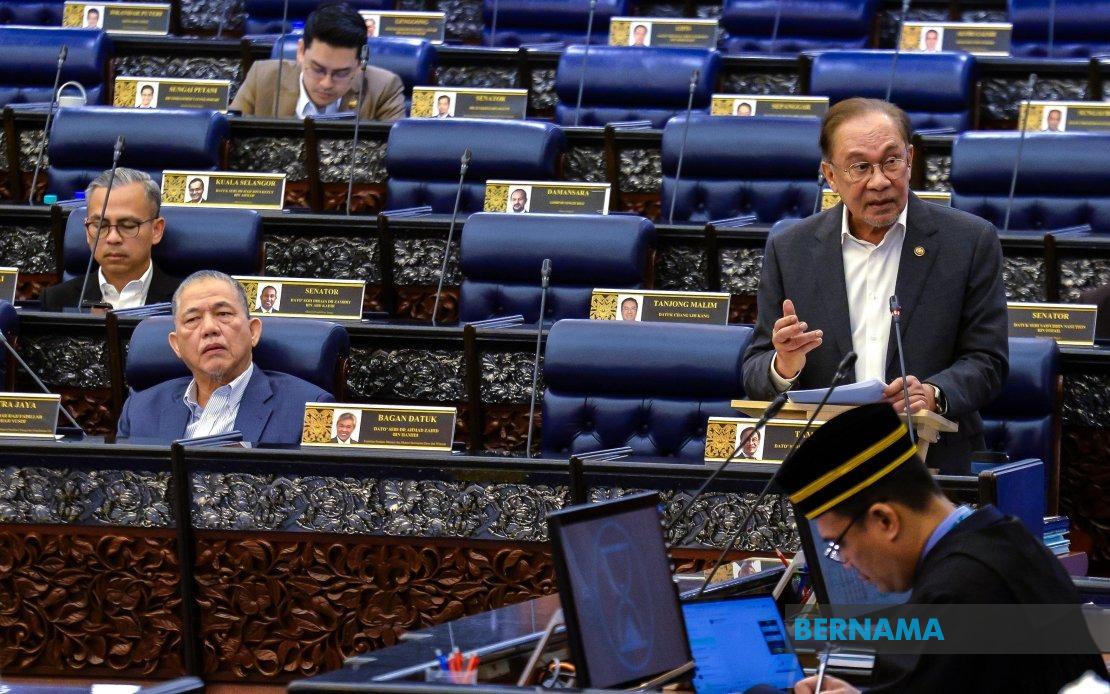
Prime Minister Datuk Seri Anwar Ibrahim has defended the federal government's distribution mechanism for state allocations, emphasizing that funding decisions prioritise the specific developmental requirements and welfare needs of each state rather than their individual tax revenue contributions to the national coffers. Speaking during parliamentary question time in Kuala Lumpur, the Prime Minister sought to address concerns about fairness in the allocation process whilst highlighting the government's commitment to equitable resource distribution across the nation.
The Prime Minister's remarks came in response to parliamentary questions raised by Datuk Seri Doris Sophia Brodi from GPS representing Sri Aman, who had queried whether the current distribution methodology adequately addresses state-level concerns about receiving insufficient allocations relative to their revenue generation. The inquiry reflected broader conversations among state governments about the relationship between federal support and their fiscal contributions to the national economy.
According to Anwar, the statistical reality demonstrates that the vast majority of Malaysia's states receive federal allocations significantly exceeding their individual tax revenue contributions. Only Selangor and Penang, both economically robust regions with substantial commercial and industrial bases, generate more tax revenue than they receive in federal allocations. This structural arrangement underscores the redistributive nature of Malaysia's federal financing system, which deliberately channels resources from higher-revenue-generating states to those with greater development requirements or lower fiscal capacity.
The allocation methodology reflects a needs-based approach rather than a revenue-based model. Under this framework, the federal government assesses each state's specific requirements across multiple sectors and priority areas. These encompassing considerations include comprehensive flood mitigation and disaster management infrastructure, major transportation projects such as the Pan Borneo highway upgrades, establishment of new road networks to improve connectivity, enhancement of water and drainage systems serving growing populations, targeted poverty reduction initiatives, and investment in educational facilities and broader public infrastructure development. This multifaceted evaluation ensures resources flow toward addressing genuine developmental gaps rather than perpetuating existing economic disparities.
Anwar specifically emphasised the MADANI Government's enhanced commitment to prioritising states that historically received relatively lower allocations under previous administrations. Kedah, Terengganu and Kelantan have all received substantially elevated federal funding during the current administration's tenure, reflecting a conscious policy shift toward addressing regional development imbalances. The Prime Minister presented this directional change as evidence of the government's determination to correct previous inequities and ensure more equitable national development. This reorientation carries significant implications for Malaysia's progress toward regional balance and social cohesion.
The federal allocation debate reflects a fundamental tension within federal systems worldwide: balancing economic efficiency with equity considerations. Malaysia's approach consciously prioritises equity by redistributing wealth from developed to developing regions, a mechanism that aims to prevent widening disparities and ensure all citizens access basic services regardless of geographic location. However, this necessarily means economically productive states like Selangor and Penang contribute more to federal revenues than they receive back, a dynamic that periodically generates political friction within those states.
For Malaysian readers and regional observers, this clarification illuminates how federal financing mechanisms shape development patterns across the country. States with significant infrastructure deficits, including flood-prone areas requiring enhanced mitigation systems or regions with inadequate educational facilities, benefit substantially from this needs-based allocation approach. Conversely, prosperous states must accept that their fiscal contributions support the broader national development agenda, a sacrifice justified through social welfare and economic stability arguments.
The significance of this distinction extends beyond accounting mechanics. By anchoring allocation decisions to developmental needs rather than revenue generation, the federal government explicitly rejects the notion that economic contribution alone determines resource entitlement. This philosophical stance carries implications for how Malaysia conceptualizes national solidarity and inter-regional responsibility. It suggests that all regions, regardless of current economic performance, deserve investment in their futures, with wealthier areas expected to support broader national objectives.
The MADANI Government's emphasis on enhanced allocations to historically disadvantaged states represents a deliberate policy correction. States like Kelantan and Terengganu, which have experienced economic challenges and higher poverty rates, receive priority consideration under the current administration's framework. This strategic reorientation could potentially alter development trajectories in these regions by enabling accelerated infrastructure expansion, skills development, and economic diversification. For Southeast Asian observers, this demonstrates how federal fiscal policy can be instrumentalised for regional equity goals.
Moving forward, the Prime Minister's articulation of allocation principles serves to manage expectations and defend against charges of unfairness. By transparently explaining the rationale behind distribution decisions, the government attempts to build understanding that the system serves collective national interests rather than reflecting political favoritism. However, ongoing discussions about federal-state fiscal relations suggest that stakeholders will continue scrutinizing these allocation patterns, particularly as economic conditions evolve and regional needs shift.
The allocation methodology ultimately reflects political choices about national priorities. The current approach privileges infrastructure development, poverty reduction, and service expansion in less-developed regions over returning funds to revenue-generating states. Whether this strategy optimally serves Malaysia's long-term development remains subject to legitimate debate. Nevertheless, the federal government's explicit commitment to needs-based allocation represents a principled stand on inter-regional equity that will continue shaping Malaysian federalism and development policy.

