The collision of haute couture and extreme weather created an unexpected tableau at Paris Couture Week, where the season's most influential style-setters grappled with temperatures that tested the limits of conventional glamour. Across the French capital, celebrities attending the industry's most prestigious shows faced an acute challenge: delivering red-carpet impact whilst remaining comfortable in conditions more suited to beach resorts than fashion capitals. The result was not a retreat from elegance but rather a sophisticated recalibration of how high fashion adapts to environmental pressures—a shift with implications for both industry practices and global fashion trends.
The timing of this climatic pressure arrived at a moment when fashion weeks across Europe had already experienced the effects of warming temperatures. Earlier menswear shows in Paris had unfolded beneath similarly oppressive heat, signalling that the industry could no longer design exclusively for temperate spring conditions. By the time couture collections took centre stage, both designers and their celebrity clientele had begun developing a visual vocabulary for dressing in heatwave conditions—one that maintained the aspirational quality of haute couture whilst acknowledging the physical reality of their surroundings. This evolution reflects broader global conversations about sustainable fashion and industry adaptation to climate volatility.
For female attendees, the practical response took on surprisingly elegant forms. Exposed shoulders emerged not as a deliberate design statement but as a functional solution to thermostat challenges, yet the aesthetic proved so appealing that it became a defining visual theme of the week. Tan Sri Michelle Yeoh exemplified this approach, arriving in a refined black ensemble that demonstrated how strategic positioning of fabric could create both visual sophistication and physiological comfort. The silhouette became less about revelation and more about strategic ventilation—a distinction that speaks to how fashion adapts when necessity meets artistry.
The sundress, often dismissed as casual resort wear, experienced an unexpected rehabilitation during the week. Sophisticated interpretations of the form provided attendees with designs that retained couture credentials whilst embracing the practical virtues of loose-fitting, breathable construction. Priyanka Chopra's appearance in a scalloped gown captured this sentiment particularly well, translating summer lightness into something that retained the architectural precision expected of high fashion. These choices suggested that the traditional hierarchy placing structured formality above comfortable practicality might be shifting, particularly as climate volatility makes heat events more predictable components of the fashion calendar.
Material selection became perhaps the most critical design consideration for guests navigating the week's thermal challenges. Silk and silk-blend fabrics dominated choices not merely for their cooling properties but for their continued association with luxury and refinement. The selection of lightweight materials became a form of technical sophistication rather than a compromise on quality, demonstrating that breathability and opulence are not mutually exclusive. For those attuned to fashion's material semiotics, the prevalence of lighter fabrics communicated a message of elegance whilst resolving the basic human problem of thermoregulation.
Men's fashion witnessed parallel adaptations that subtly transformed traditional couture conventions. Bad Bunny and Hudson Williams exemplified a relaxation of tailoring conventions, embracing oversized proportions and reduced layering that maintained masculine silhouettes whilst incorporating cooler design elements. The choice to forgo traditional shirt layers beneath suits represented a quiet rebellion against dress codes that prioritise formality over comfort, suggesting that menswear may be undergoing its own reckoning with climate-conscious design. Light colour palettes supplemented these structural choices, reflecting heat whilst maintaining the sophisticated aesthetic expected at couture events.
The modest accessory choice spotted on songwriter Ejae—a simple black folding fan—offered perhaps the most overtly practical response to the conditions. Yet even this utilitarian object managed to integrate seamlessly into her overall presentation, suggesting that functional fashion accessories need not compromise aesthetic coherence. The fan's appearance recognised an implicit shift in how luxury dressing accommodates reality: elegance and practicality increasingly emerge from the same design impulse rather than competing objectives.
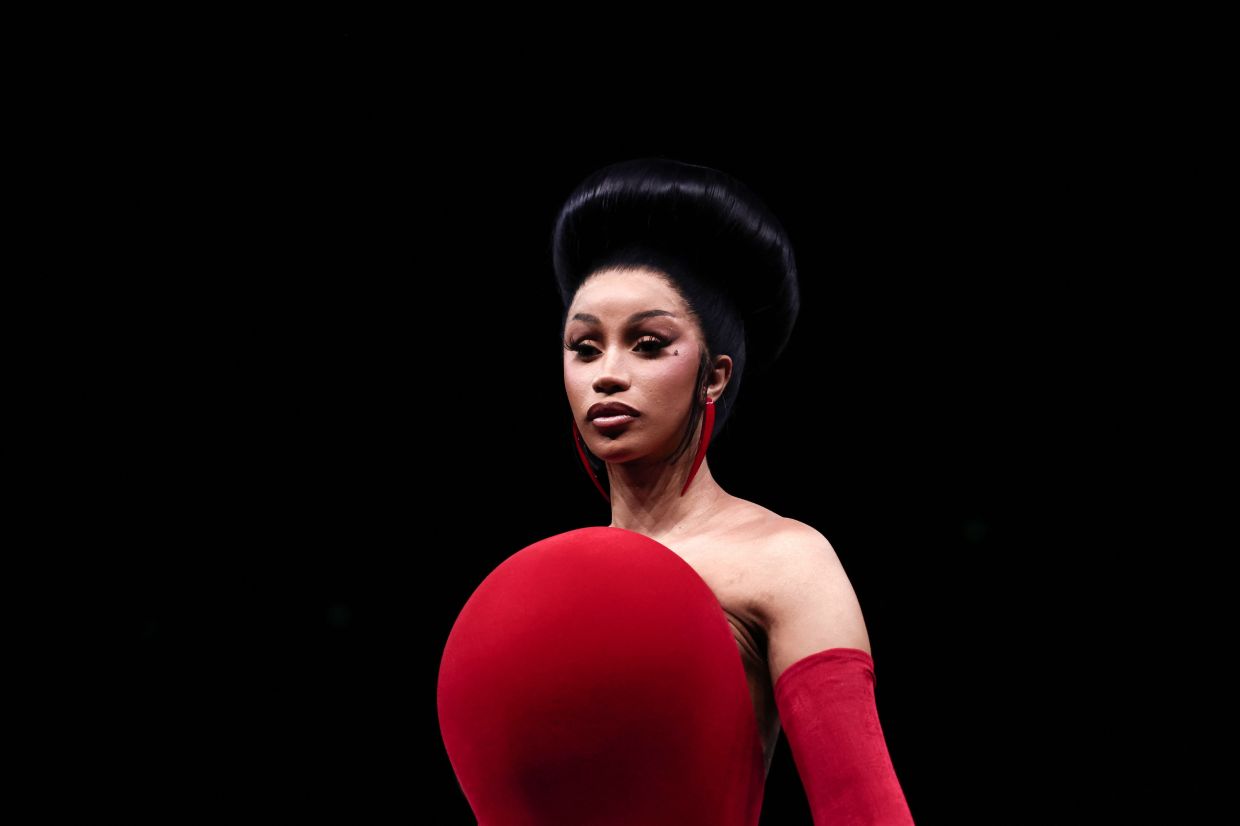
Cardi B's appearance provided the notable exception to this week's general movement towards comfort-conscious design. Her sculptural, tightly fitted silhouette stood apart from the prevailing aesthetic, a reminder that fashion's avant-garde continues to prioritise artistic statement over environmental accommodation. This divergence raises important questions about fashion's relationship with changing climate conditions: should haute couture adapt to environmental realities, or does its value partly reside in its disregard for practical constraints? The presence of such uncompromising statements alongside climate-adaptive choices created a productive tension within the week's overall aesthetic conversation.
The broader implications of this heat-driven adaptation extend beyond Paris. Southeast Asian fashion capitals, which operate in perpetually warm conditions, have long navigated the challenge of integrating formal wear with tropical climates. Malaysian fashion designers and attendees might find validation in seeing Paris-based luxury fashion embrace lightweight fabrics and strategic ventilation—approaches that region-based creators have necessarily employed for years. The heat experienced during Couture Week essentially accelerated the adoption of design principles already established within warm-climate fashion ecosystems, suggesting that global fashion may increasingly draw on solutions developed by designers accustomed to permanent warmth.
Fashion weeks themselves may require structural reconsideration as climate volatility increases the probability of temperature extremes coinciding with major industry events. The adaptation demonstrated at Paris Couture Week was largely spontaneous and individual rather than systematic, yet it revealed how designers and celebrities can respond creatively to environmental constraints. Future seasons might see more intentional integration of climate-conscious design into the couture calendar, transforming heat from an unfortunate obstacle into an acknowledged parameter shaping aesthetic choices.
The week ultimately demonstrated that haute couture's resilience depends partly on its flexibility. The celebrities who maintained both elegance and physical comfort achieved something more important than mere sartorial success—they illustrated how luxury fashion can acknowledge environmental reality without diminishing its aspirational power. As global temperatures continue their upward trajectory, the innovations on display at Paris Couture Week may become increasingly relevant, pointing toward a future where high fashion routinely incorporates the climate-conscious adaptations that were once considered concessions to comfort.

