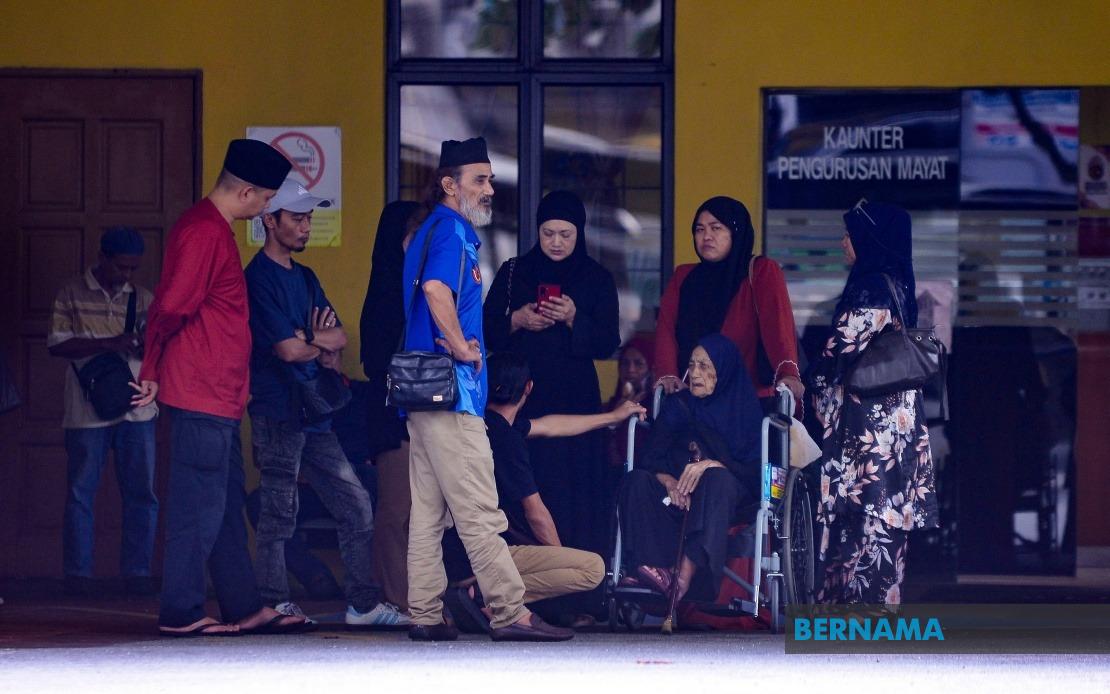
A grieving family member is calling for a comprehensive and transparent investigation into a deadly collision involving a Malaysian Immigration Department lorry at Maju Junction in the early hours of the morning, as questions mount over the circumstances that led to the loss of three lives. Mohd Nadzri Razali, 69, whose brother-in-law Shaik Mohd Firdaus Shaikh Yahya, 53, was killed alongside two of his daughters, expressed deep concern about allegations surrounding the incident and voiced his determination to see justice served for the bereaved family members.
The crash occurred around 1 am when an empty Isuzu Black Maria vehicle operated by the Immigration Department was en route from the Kuala Lumpur Immigration Office to Chow Kit to conduct enforcement operations targeting undocumented migrants. According to eyewitness accounts and preliminary information, the lorry is believed to have entered the intersection at Maju Junction while the traffic signal for its lane was displaying red, despite having its beacon lights and siren activated. At that precise moment, a Proton Saga sedan that had a green light authorising it to proceed straight through the intersection was unable to take evasive action and collided directly with the lorry.
The force of the impact proved catastrophic, sending the heavy Immigration vehicle careening across the junction and into an uncontrolled skid. As the lorry skidded across the roadway, it struck a group of pedestrians and struck an Inokom Matrix multi-purpose vehicle parked or positioned nearby. Among those struck were members of the same family who had been in the vicinity at that hour. The tragic outcome left three members of the family dead at the scene: Shaik Mohd Firdaus Shaikh Yahya and his two daughters, Siti Nor Sazlin, 25, and Siti Darwisyah Auni, 12, were pronounced dead. The mother of the daughters, Norhayati Razali, 55, sustained severe injuries and was immediately hospitalised.
Mohd Nadzri, speaking from his home in Taman Aman Fasa 2, Mambang Di Awam in the Kampar district, stressed that he had heard concerning details about how the accident unfolded. He stated that his primary concern centres on the allegation that the Immigration lorry proceeded through a red traffic light, which he believes warrants thorough examination during any investigation. "I hope for a full investigation, because it is claimed that the traffic light was red," he explained to those present. His plea for accountability reflects the family's desire to understand exactly what led to such a tragic sequence of events and to ensure that responsibility is appropriately assigned.
Meanwhile, Norhayati Razali remains hospitalised at Kuala Lumpur Hospital's Intensive Care Unit as she battles to recover from her severe injuries. According to her brother, there remains uncertainty about when she might be discharged or cleared to leave hospital care, as her medical condition continues to require close monitoring and specialist intervention. However, he noted with cautious optimism that she has regained consciousness, marking a positive development in her recovery journey. The family has expressed a preference to relocate her to either Hospital Ipoh or Teluk Intan Hospital once her condition stabilises sufficiently, bringing her closer to home in the Perak region.
The compound tragedy has devastated the family in ways extending beyond the immediate loss. Mohd Nadzri expressed the profound emotional toll of losing three family members simultaneously, describing it as a shock that continues to reverberate through their close-knit household. The anguish is intensified by the timing of the loss: the family had suffered another bereavement on 30 May, merely a few months prior. Just two weeks before the fatal accident, he had last seen the victims when they returned to their hometown to maintain and visit the graves of departed family members at Teluk Bakong in Ayer Tawar, a poignant moment that underscores the fragility of life.
The family has made arrangements to lay the three deceased victims to rest together in a single grave at the Muslim Cemetery in Kampung Air Hitam Labu in Campar, a decision that reflects their desire to keep the loved ones together even in death. This burial arrangement carries deep significance for the family, allowing them to maintain a unified memorial to those they have lost. The police and relevant authorities have opened an investigation into the incident under Section 41(1) of the Road Transport Act 1987, which addresses serious vehicular accidents and their circumstances.
The case raises critical questions about traffic compliance and operational procedures for official vehicles engaged in enforcement activities. The use of beacon lights and sirens by emergency and law enforcement vehicles creates a complex situation in which such vehicles may proceed through intersections while traffic signals indicate red, provided they do so with appropriate caution and with reasonable expectation that other road users will yield. However, the collision at Maju Junction suggests that standard assumptions about visibility, reaction time, and vehicle control may not have been met in this particular instance. The investigation will need to examine whether the lorry's operators exercised due care and whether visibility conditions at the early morning hour contributed to the tragedy.
For Malaysian road safety observers, this incident underscores persistent concerns about how enforcement and official vehicles operate within regular traffic environments, particularly during nocturnal operations when visibility is compromised and civilian alertness may be reduced. The case also highlights the vulnerability of pedestrians at busy intersections, even when traffic signals suggest their crossing should be safe. The family's insistence on transparency and thorough investigation reflects broader public interest in understanding how such accidents occur and what systemic or procedural factors might be addressed to prevent similar tragedies in the future. As the investigation proceeds, the focus will inevitably rest on determining whether proper protocols were followed and whether any lapses in judgment or procedure contributed to the catastrophic outcome.

