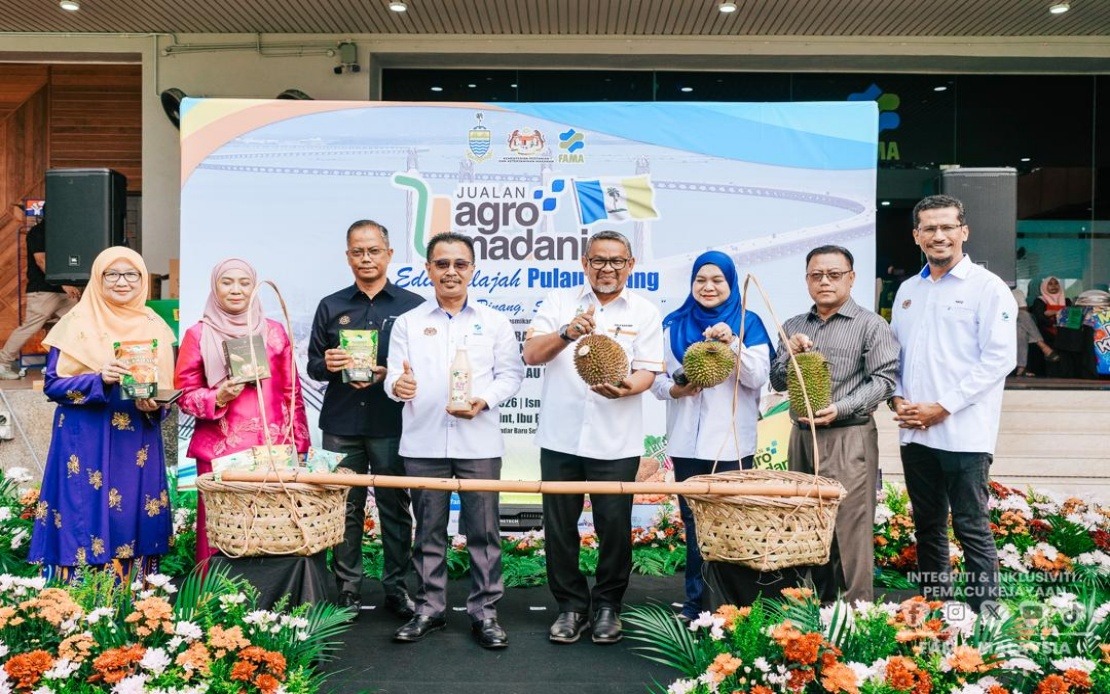
Malaysia's Federal Agricultural Marketing Authority (FAMA) has reported strong commercial performance from its flagship Agro MADANI Sales programme, known locally as JAM, which generated RM46.72 million across 1,833 separate marketing events conducted nationwide during the January to May period. The results underscore the government's broader strategy to modernise agricultural distribution networks while creating sustainable income opportunities for rural entrepreneurs throughout the country.
The programme represents a crucial bridge between small-scale agri-business operators and mainstream consumer markets. By organising periodic sales activations in urban and semi-urban areas, FAMA effectively circumvents traditional middleman structures that historically compressed margins for farmers and smallholders. The approach aligns with national economic diversification goals, particularly as policymakers seek to strengthen value-added agricultural processing and direct-to-consumer sales models that retain greater wealth within farming communities.
On July 1, FAMA marked the expansion of JAM into Penang with a major activation at its Selayang headquarters, attended by director-general Abdul Rashid Bahri and Penang State Economic Planning Division secretary Kamarul Azlan Mustaffa. The Penang edition represented the programme's third major deployment in the Selangor-Klang Valley corridor and was structured to accommodate approximately 2,000 visitors with a revenue target of RM100,000. This expansion reflects confidence in the model's scalability across different regional markets with distinct consumer preferences and agricultural specialisations.
The Penang activation leveraged the state's distinctive agricultural heritage, particularly its renowned fruit production. Organisers allocated 45 retail stalls to 30 Penang-based entrepreneurs, creating a curated marketplace that emphasised quality produce and regional authenticity. Premium durian varieties featured prominently—including Balik Pulau specimens and speciality types such as Black Thorn, Red Prawn, and Hor Lor cultivars—alongside Cempedak King and other tropical fruits that command premium pricing in urban markets. This product-centric approach transforms FAMA's retail events into experiential marketing platforms where consumers encounter producer stories and quality narratives alongside conventional price-based shopping.
The initiative received institutional support from Penang's Rural Development, Agrotechnology, Food Security and Cooperatives Committee through Exco member Datuk Rashidi Zinol, who collaborated with the Penang Bumiputera Development Council to embed entrepreneurial development objectives within the sales programme. This multi-agency coordination reflects a recognition that agricultural marketing interventions operate most effectively when integrated with broader small business development, skills training, and network-building initiatives. Rather than treating FAMA's events as transactional retail venues, state-level partners positioned them as ecosystem-building platforms where entrepreneurs expand networks, gather market intelligence, and establish direct relationships with high-volume urban consumers.
FAMA's statement characterised the programme as advancing the agency's core mandate of strengthening Malaysia's agri-food marketing chain. The organisation emphasised three interconnected benefits: enhanced market visibility for participating entrepreneurs, expanded distribution channels that generate higher sales returns, and improved consumer access to fresh, quality agricultural products at prices more competitive than conventional retail channels. This value proposition addresses persistent structural challenges within Malaysian agriculture, where small producer fragmentation and limited market access historically constrain profitability and discourage younger generations from remaining in farming.
The product mix demonstrated deliberate diversity aimed at capturing household spending across multiple consumption categories. Beyond premium fruits, the Penang edition featured agro-based products and processed food items manufactured by local entrepreneurs, addressing demand for value-added products that command higher margins than raw agricultural commodities. Equally significant, the event incorporated iconic Penang culinary offerings—nasi kandar, Penang laksa, char kuey teow, mee sotong, and air sarbat—creating a holistic cultural and gastronomic experience that reinforces regional identity while supporting food service entrepreneurs and informal economy participants.
The RM46.72 million aggregate sales figure across five months translates to approximately RM9.3 million monthly revenue, suggesting consistent market demand and effective event execution at scale. With 1,833 programmes nationwide, the average event generated roughly RM25,500, indicating that FAMA has successfully calibrated event formats and promotional strategies to achieve viable transaction volumes across diverse geographic and demographic contexts. This consistency provides evidence that the model addresses genuine market gaps rather than operating as a subsidy-dependent showcase programme.
For Malaysian policymakers, the Agro MADANI programme illustrates how targeted public-sector interventions in agricultural marketing can simultaneously advance multiple policy objectives: rural livelihood support, food security and price accessibility, urban consumer engagement with local agriculture, and entrepreneurial ecosystem development. The programme's expansion into state-level partnerships, as evidenced by the Penang collaboration, suggests a replicable model that can be adapted to regional agricultural strengths and market characteristics. However, sustainability ultimately depends on whether participating entrepreneurs achieve sufficient customer acquisition and repeat business to justify continued participation beyond subsidised event platforms.
For Southeast Asian observers, FAMA's approach offers relevant lessons regarding agricultural modernisation in middle-income economies. Many regional countries face similar challenges in connecting smallholder farmers to profitable markets, particularly as conventional supply chains concentrate value among wholesalers and retailers. By creating periodic high-traffic sales events in urban centres, FAMA creates temporary but valuable alternatives to permanent retail infrastructure, reducing capital requirements while generating immediate revenue. The model's emphasis on producer narratives, quality differentiation, and regional specialisation also reflects broader consumer trends toward authenticity and locality that purchasing behaviour data consistently confirms across urban Southeast Asia.
The road ahead for Agro MADANI likely involves further geographic expansion and potential evolution toward hybrid models that combine periodic pop-up activations with sustained digital platforms and logistics infrastructure. Enhanced digital integration could extend the programme's reach beyond physical events, allowing entrepreneurs to maintain relationships with customers acquired through JAM programmes and develop subscription or bulk-purchase arrangements. Additionally, deepening partnerships with state governments and private-sector stakeholders—as Penang has begun—could accelerate the programme's scaling while distributing operational and promotional costs more broadly across the entrepreneurship support ecosystem.

