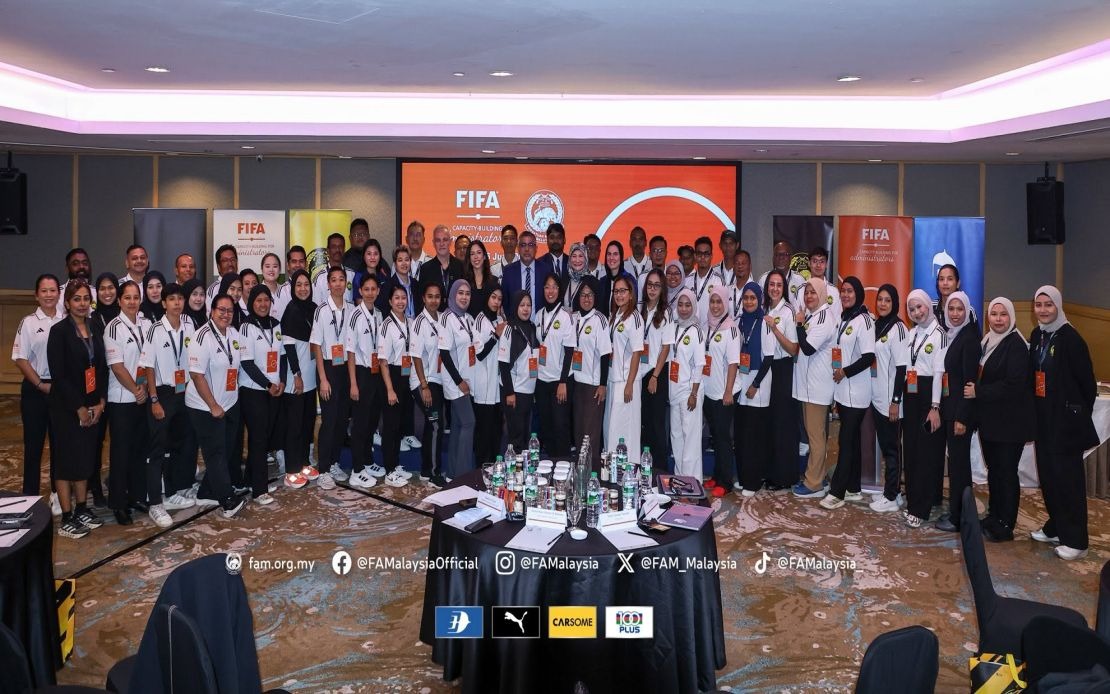
The Football Association of Malaysia (FAM) has commenced a pivotal four-day capacity-building initiative designed to elevate the professionalism and strategic direction of women's football administration across the country. The FIFA Capacity-Building For Administrators 2026 programme, which launched in Kuala Lumpur on June 23, represents a concerted effort to move beyond on-field technical development and address the critical gap in organisational infrastructure that supports women's teams and competitions at all levels.
Recognising that sustainable growth in women's football requires more than skilled players and coaches, FAM has partnered with FIFA to ensure that administrators, team managers, and support staff possess the knowledge and competencies needed to operate professional, efficient organisations. This philosophical shift acknowledges the reality that many women's football programmes in the region have struggled not due to lack of talent, but because of weak management structures, inadequate competition frameworks, and insufficient understanding of governance principles.
The programme is being delivered by two FIFA Women's Football Development Experts: Safia Abdeldayem and Pema Choden Tshering, both of whom bring international experience in building women's football ecosystems across diverse footballing contexts. Their involvement underscores FIFA's commitment to standardising best practices in women's football administration and ensuring that emerging football nations benefit from proven methodologies that have succeeded elsewhere.
Participants attending the four-day workshop will engage with five core modules specifically tailored to women's football environments. The Women's Leadership component addresses the persistent underrepresentation of women in decision-making roles within football organisations, seeking to build confidence and capability among female administrators. Women's Competition modules cover the structural and operational aspects of organising leagues, tournaments, and cup competitions that balance competitiveness with sustainability. The Players' and Clubs' Rights curriculum ensures participants understand their obligations to protect athlete welfare and institutional integrity.
Strategic Planning represents perhaps the most crucial module, as many women's football programmes lack coherent medium and long-term planning. Teams and organisations operating without clear strategic frameworks frequently face resource allocation problems, inconsistent performance trajectories, and difficulty attracting sponsors or securing government support. By equipping administrators with strategic planning tools, FAM aims to create conditions where women's football programmes can demonstrate growth trajectories that attract stakeholders.
Among those present at the programme launch were FAM Secretary-General Datuk Noor Azman Rahman, FIFA Women's National Team Competitions Committee member and Asian Football Confederation Women's Football Committee member Datuk Suraya Yaacob, and FAM Women's Football Technical Director Soleen Al-Zoubi. Their collective presence reflects the serious institutional commitment behind this initiative, signalling to regional federations that women's football administration warrants leadership attention at the highest levels.
For Malaysia specifically, the timing of this programme is significant. The national women's team has shown glimpses of promise in recent years, but inconsistent performance and limited media coverage suggest that the ecosystem supporting the team remains fragile. By training administrators and managers in professional governance and strategic planning, FAM creates the possibility of building institutional memory and continuity, which has often eluded Malaysian women's football programmes that have suffered from frequent restructuring and leadership changes.
The initiative also positions Malaysia within FIFA's broader women's football development strategy, which has become increasingly focused on developing nations and emerging markets in Asia-Pacific. By participating in FIFA-sponsored programmes, Malaysian administrators gain access to global networks of women's football professionals and exposure to innovations being tested elsewhere. This networking effect often yields unexpected benefits, from partnership opportunities to recruitment of talented coaches and administrators from neighbouring countries.
FAM's stated belief that expanding the pool of skilled managers and administrators will create a "stronger, more professional and sustainable ecosystem" reflects international evidence about women's football development. Countries that invested in administrator training and leadership development in women's football—including Norway, Germany, and Australia—consistently saw corresponding improvements in team performance, fan engagement, and overall institutional stability. These outcomes suggest that Malaysian investment in administrative capacity is not tangential to performance but fundamental to it.
The programme also addresses a gender dimension often overlooked in football development discourse. By creating pathways for women to assume leadership roles in football administration, FAM contributes to broader gender equity objectives while simultaneously building an administration cadre that inherently understands women's football from the inside. Women administrators often prove more attuned to the specific challenges facing female players and coaches, from managing dual responsibilities to navigating workplace cultures that have historically been male-dominated.
Looking forward, the success of this programme will depend partly on what happens after the four-day training concludes. Without follow-up support, mentoring, and institutional incentives to apply learnings, many participants will struggle to implement new approaches within existing organisational structures. FAM's commitment to ongoing support and perhaps establishing alumni networks of trained administrators will be critical to translating individual learning into systemic change.
For Southeast Asian football more broadly, Malaysia's engagement with FIFA capacity-building programmes signals that the region is taking women's football development seriously at institutional levels. As other associations observe the Malaysian initiative, competitive pressures may encourage similar investments in neighbouring countries, gradually raising administration standards across the region and creating a more level playing field for women's football competition.