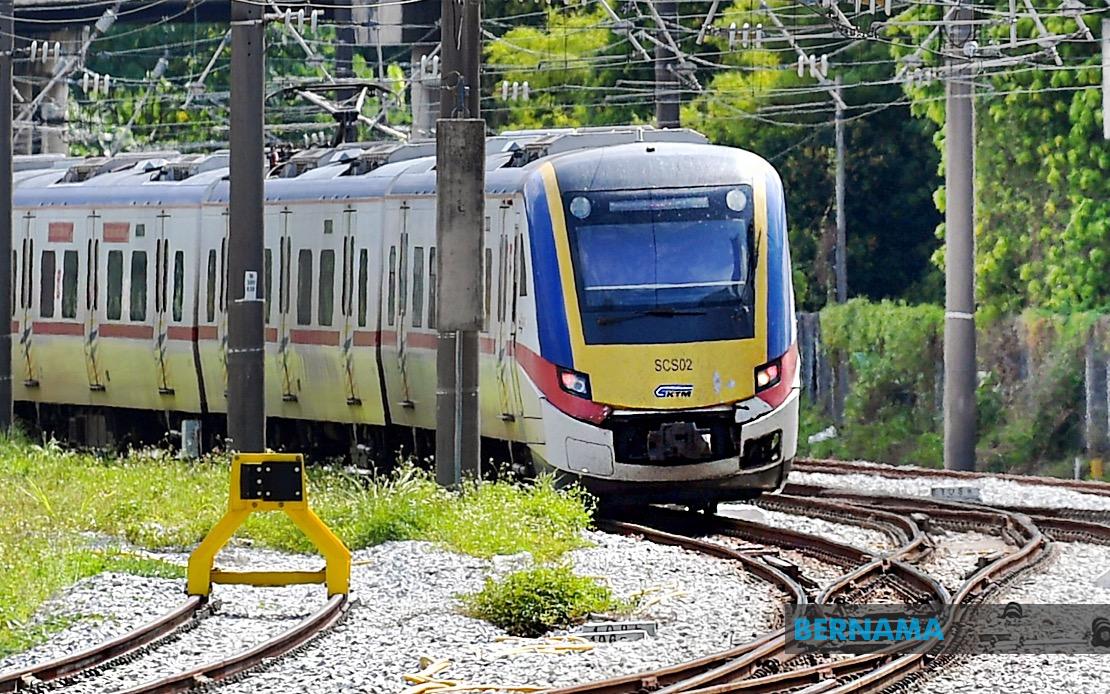
Railway commuters across the Klang Valley faced significant travel disruptions on July 23 when a wooden structure originating from a third-party construction site toppled onto the main railway corridor near Batang Benar, severing the overhead power infrastructure that supplies both KTM Komuter and Electric Train Service operations. The incident immediately crippled train movements in the affected area, forcing Keretapi Tanah Melayu Berhad (KTMB) to implement emergency protocols and seek alternative solutions for thousands of stranded passengers attempting to reach their destinations.
According to KTMB's initial assessment, the fallen structure made direct contact with the overhead line system positioned between Batang Benar and Labu stations, resulting in a complete power failure across that critical section of the network. The damage to the electrical infrastructure proved extensive enough to warrant the complete suspension of train services through the affected corridor, leaving both KTM Komuter and ETS operations unable to proceed. This represented more than a temporary inconvenience; it highlighted vulnerabilities in how third-party construction activities are monitored and controlled near vital transportation infrastructure.
The disruption's geographic scope extended across multiple stations and service lines. KTM Komuter routes originating from Pulau Sebang and heading towards KL Sentral were forced to terminate at Seremban Station, while inbound services destined for either KL Sentral or Batu Caves could only operate as far as Bangi Station. The section between Bangi and Seremban stations became completely inoperative, effectively bisecting the Klang Valley network and forcing passengers to seek alternative routing or abandon their journeys entirely. KTMB advised affected travellers that they could not rely on train services through this critical stretch and needed to make other arrangements to continue their travel plans.
To mitigate the impact on commuters, KTMB activated an emergency response involving multiple shuttle bus services. Three shuttle buses were deployed to connect Seremban, Tiroi, Batang Benar, Labu and Bangi stations, providing a temporary alternative for KTM Komuter passengers who needed to bridge the service gap. For ETS passengers, the response proved equally comprehensive, with seven shuttle buses positioned at major terminals including KL Sentral, Bandar Tasik Selatan, Kajang and Seremban stations. Recognising that the disruption extended beyond mere inconvenience, KTMB authorised full refunds for ETS passengers unwilling to continue their journeys using the substitute bus services, underscoring the severity of the operational breakdown.
The railway operator's investigation into the root cause revealed a troubling pattern of safety protocol violations by the contractor engaged in the wayleave project. According to KTMB's statement, the Public Works Department contractor failed to adhere to mandatory safety procedures that govern construction activities near the railway corridor. The breaches included the contractor's failure to provide a comprehensive work schedule and, critically, the absence of proper notification to KTMB regarding when bridge construction works would actually commence. These omissions proved catastrophic because they prevented KTMB from deploying the necessary monitoring personnel at the construction site.
Under KTMB's established Site Entry Permit Standard Operating Procedure, stringent conditions must be met before any construction work proceeds in proximity to the railway corridor. The framework mandates the physical presence of three designated KTMB technical representatives—drawn from the Regional Engineer, Signalling and Communications, and Electrification departments—to actively monitor construction activities once full approval has been granted and all prerequisite documentation has been submitted. These representatives serve as the critical link between construction contractors and railway operations, ensuring that activities remain within safe parameters and that no actions inadvertently jeopardise the railway infrastructure. The contractor's failure to trigger this protocol meant that no KTMB oversight existed when the construction structure fell.
This incident raises serious questions about the enforcement mechanisms governing third-party activities near Malaysia's critical transport infrastructure. The Klang Valley rail network serves hundreds of thousands of daily commuters, making it one of the nation's most vital mobility arteries. The ease with which a construction contractor could bypass established safety requirements suggests gaps in how KTMB validates compliance before work commences. For Malaysian commuters and businesses relying on predictable rail services, the incident underscores the need for stronger verification processes and potentially stricter penalties for contractors who fail to meet safety obligations.
The immediate challenge facing KTMB involved restoring service along the damaged corridor. The railway operator indicated that its technical teams were actively working to repair the overhead line system, though no specific timeline for restoration was provided. Given the technical complexity of overhead power system repairs and the need to ensure complete safety before resuming full-speed operations, commuters faced an uncertain waiting period. The damage assessment would likely reveal whether simple repairs could restore functionality or whether more extensive reconstruction of the overhead infrastructure might be necessary, potentially extending the disruption period.
The broader implications extend beyond the immediate inconvenience to commuters. This incident highlights the vulnerability of modern rail networks to disruptions originating from adjacent construction activities. As urbanisation accelerates and new development projects proliferate across the Klang Valley, the frequency of construction work near the railway corridor is likely to increase. Without robust enforcement of safety protocols and meaningful consequences for violations, similar incidents could recur. The incident also raises questions about coordination between KTMB and other government agencies, particularly the Public Works Department, which appears to have engaged the contractor involved in this incident.
For Malaysian commuters already experiencing congestion on alternative routes, the seven shuttle buses provided by KTMB represented only partial relief. During peak travel periods, buses could not possibly accommodate the volume of passengers ordinarily carried by train services. Road congestion around affected stations likely intensified significantly, creating ripple effects across the Klang Valley's broader traffic network. Businesses depending on reliable employee commute times, delivery schedules and service appointments would have faced operational complications caused by the service disruption.
KTMB's response focused on damage control and service restoration, but the incident raises fundamental questions about how third-party contractor oversight operates in Malaysia's critical infrastructure sectors. While KTMB apologised for the inconvenience and reiterated its commitment to passenger safety and operational integrity, the underlying systemic issue remained: how did a contractor breach safety protocols substantially enough to cause physical damage to power infrastructure? The answer likely involves examining not just KTMB's procedures but the enforcement mechanisms and penalties that motivate contractor compliance with safety requirements.
Passengers were advised to monitor KTMB's official social media channels and consult station staff for service updates, reflecting the modern reality that social media has become a primary channel for railway operator communications. As restoration efforts proceeded, the railway sector and the broader construction industry would be watching closely to see whether this incident would prompt regulatory changes or enforcement improvements designed to prevent recurrence.

