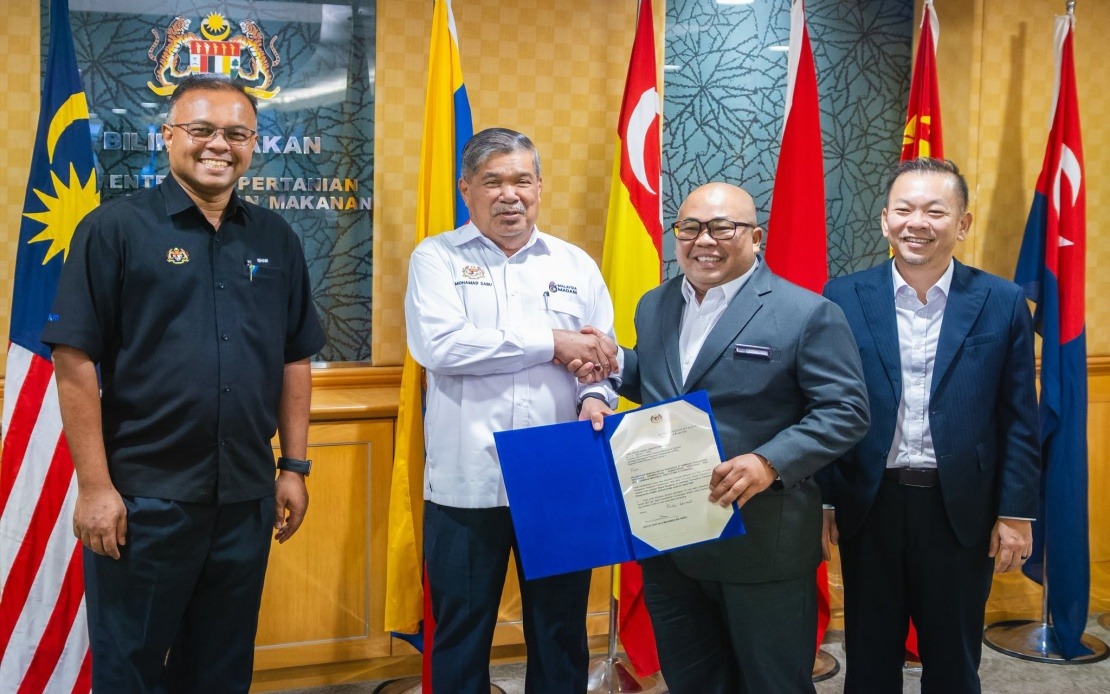
Faisal Iswardi Ismail has been elevated to director-general of the Federal Agricultural Marketing Authority (FAMA), Malaysia's primary body for promoting and distributing locally produced agricultural goods. Agriculture and Food Security Minister Datuk Seri Mohamad Sabu formally handed over the appointment letter following a post-Cabinet meeting in Kuala Lumpur on August 5, with the appointment taking effect from August 1.
The promotion of Faisal Iswardi, who previously served as deputy director-general overseeing food security and operations, represents a continuation of institutional knowledge within FAMA's leadership structure. His background in the agency's operational and food security divisions positions him with direct experience in the portfolio's most critical functions, particularly relevant given Malaysia's ongoing commitment to ensuring stable food supplies and supporting domestic agricultural producers.
In announcing the appointment, Mohamad Sabu emphasised the significance of the role and the responsibilities now vested in the new leadership. He acknowledged through a Facebook statement that FAMA's mandate extends far beyond simple commodity distribution—the authority serves as a critical infrastructure for connecting smallholder farmers and agri-food entrepreneurs with markets, thereby improving their commercial viability and income prospects. This framing reflects broader government policy around agricultural development and rural economic empowerment.
The timing of this leadership transition arrives as Malaysia navigates complex agricultural challenges including climate variability, labour shortages, and the need to modernise farming practices while maintaining competitiveness. FAMA's role in aggregating supply, standardising quality, and creating reliable market pathways for producers has become increasingly important as the nation seeks to reduce import dependency for essential food items and strengthen domestic supply chains.
Faisal Iswardi's appointment carries particular significance for Malaysia's food security architecture. The authority under his stewardship will need to balance multiple objectives: supporting farmers through better market access and pricing stability, ensuring consumers have reliable access to affordable fresh produce, and maintaining quality standards that meet both domestic and export requirements. These objectives sometimes pull in different directions, requiring sophisticated management and policy coordination.
The messaging from the minister also underscores the government's continued attention to agricultural sector challenges. By highlighting FAMA's role in strengthening the food supply chain and increasing farmer incomes, Mohamad Sabu signals that agricultural marketing infrastructure remains a cabinet-level priority. This is noteworthy given competing demands on government resources and the technical complexity of agricultural development in a middle-income economy.
For Southeast Asian context, Malaysia's experience with formal agricultural marketing authorities offers lessons and potential collaboration opportunities with regional neighbours. FAMA's mandate—ensuring fair pricing for farmers while maintaining supply stability—mirrors challenges across the region where agricultural sectors still employ significant portions of the workforce and remain economically and politically sensitive.
The appointment also reflects institutional continuity at a time when FAMA faces evolving demands. The authority has been expanding its digital presence and e-commerce channels, particularly accelerated during recent years, to reach consumers directly and reduce intermediaries. These modernisation efforts require leadership that understands both operational realities and innovation imperatives.
Faisal Iswardi's elevation also represents career progression within the civil service agricultural sector, which may have implications for recruitment and retention of talent within FAMA and related agencies. Demonstrating clear pathways for advancement can strengthen institutional capacity and encourage capable individuals to pursue careers in agricultural administration and food security governance.
The broader context includes Malaysia's commitment to various regional food security initiatives and trade frameworks that increasingly emphasise traceability, sustainability, and value-added processing. FAMA's role in facilitating these transitions—helping farmers and entrepreneurs upgrade to meet higher standards and access premium markets—will likely feature prominently in the new director-general's strategic priorities.
Looking forward, Faisal Iswardi's tenure will be measured against FAMA's ability to navigate post-pandemic agricultural recovery, climate adaptation, and the digital transformation of agricultural supply chains. His operational background suggests familiarity with these challenges, though implementation success will depend on resources, political support, and coordination with other government agencies in agriculture, trade, and commerce.

