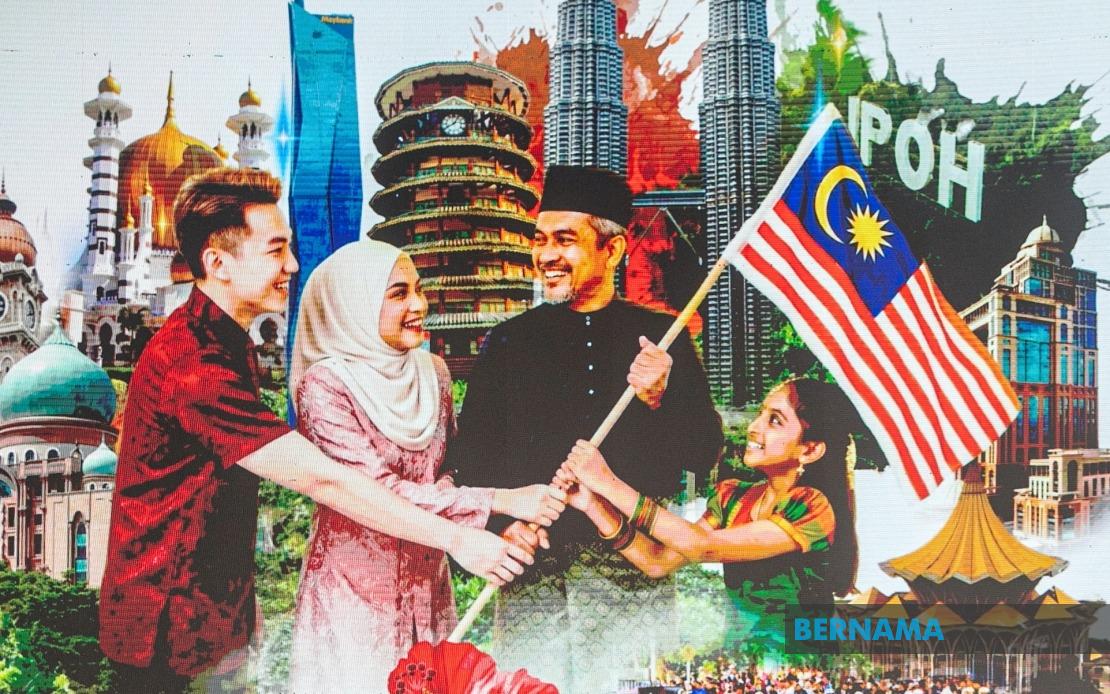
Communications Minister Datuk Seri Fahmi Fadzil has cautioned the public against careless use of artificial intelligence when creating content featuring Malaysia's national flag, stressing the importance of maintaining the Jalur Gemilang's visual integrity during the 2026 National Month and Fly the Jalur Gemilang campaign. Speaking at the campaign's launch in Ipoh on July 19, Fahmi emphasised that content creators bear a responsibility to ensure AI-generated imagery accurately represents the flag's design and symbolic elements, particularly its 14 distinctive red and white stripes.
The warning reflects growing concerns about how machine-learning tools, increasingly popular among social media users and digital marketers, can inadvertently distort or misrepresent national symbols. The Jalur Gemilang's 14 stripes are integral to Malaysia's national identity, and their accurate depiction carries cultural and constitutional significance. Fahmi's intervention highlights how rapidly advancing technology has outpaced traditional safeguards for protecting the nation's symbols, creating a gap that requires renewed public awareness and corporate responsibility.
At the campaign launch, held at the Sultan Azlan Shah Ministry of Health Training Institute in Tanjung Rambutan, Fahmi urged Malaysians to familiarise themselves with proper flag etiquette alongside technological literacy. He encouraged citizens participating in the Fly the Jalur Gemilang initiative to take additional time to learn correct flag protocols before relying on AI tools, treating digital competence and patriotic responsibility as interconnected concerns. The broader campaign seeks to cultivate patriotism across residential areas, villages, and government premises from now through at least September 16.
The event was officiated by Prime Minister Datuk Seri Anwar Ibrahim, alongside National Unity Minister Datuk Aaron Ago Dagang and Perak Menteri Besar Datuk Seri Saarani Mohamad, underscoring the government's commitment to this messaging. Their presence signalled that safeguarding national symbols amid technological change ranks as a matter of sustained ministerial attention. This level of engagement also reflects the complexity of digital governance in Southeast Asia, where rapid AI adoption has created novel challenges for countries seeking to protect cultural and constitutional icons.
Fahmi outlined the Communications Ministry's collaborative approach, announcing plans to work alongside the Malaysian Press Institute and Malaysian Media Council to engage news organisations throughout National Month. These partnerships will ensure that any representation of the Jalur Gemilang circulating through media channels, whether generated by human designers or AI systems, meets accuracy standards. Such institutional coordination recognises that controlling the accuracy of national symbols requires coordination across multiple stakeholders rather than top-down government mandates alone.
When questioned about enforcement, Fahmi stressed that the ministry would adopt a graduated response rather than immediately invoking legal remedies. The approach prioritises education and voluntary correction, treating errors as opportunities for guidance rather than occasions for punitive action. Officials would initially contact those responsible for inaccurate AI-generated content or improper flag displays, requesting corrections through advisory channels. Only if such warnings go unheeded would the ministry escalate to considering further measures, though Fahmi acknowledged that specific laws do govern the display of national symbols.
This measured strategy reflects both practical governance constraints and political judgment. Aggressively prosecuting every flag-related error could alienate ordinary citizens experimenting with emerging technologies, whereas consistent non-enforcement undermines the symbolic importance officials wish to protect. The advisory-first approach seeks a middle path, leveraging persuasion and social pressure before invoking legal machinery. For content creators and social media users, the message is clear: demonstrating care when depicting national symbols matters, and carelessness invites official correction.
The broader context involves Malaysia's evolving relationship with artificial intelligence as both economic opportunity and cultural challenge. As Southeast Asian nations compete to develop AI capabilities and attract technology investment, they simultaneously grapple with protecting cultural heritage and national symbols in digitally native formats. Malaysia's approach, balancing pragmatic flexibility with symbolic protection, could offer lessons for neighbouring countries facing similar tensions between technological embrace and cultural stewardship.
Regarding the 2026 celebrations themselves, the National Day festival will be hosted in Putrajaya, while Malaysia Day observances will take place in Sarawak, though specific venues remain under finalisation. These decisions distribute celebratory events across the federation's major population and political centres, ensuring broad geographical representation. The extended flag-flying campaign, stretching from July through mid-September, provides citizens sustained opportunity to demonstrate patriotic commitment through visible symbol-bearing, creating a more distributed and participatory form of national commemoration than concentrated single-day events.
For Malaysian organisations and individuals engaged in digital content creation, the ministerial guidance carries immediate practical implications. Anyone using AI image generators, text-to-image platforms, or other machine-learning tools to produce National Month material should verify outputs against authoritative flag specifications before publication. Given how easily AI systems can introduce subtle errors, particularly in precisely replicating visual elements like the flag's stripe count and arrangement, human review remains essential. Professional media organisations should implement similar verification protocols to maintain institutional credibility.
The incident illustrates how digital tools, despite their efficiency and accessibility, require human judgment and oversight, particularly when handling culturally sensitive content. As AI capabilities become more sophisticated, the responsibility for ensuring accuracy shifts partly onto users and platforms themselves. Malaysia's Communications Ministry, through this campaign, is essentially formalising what amounts to digital citizenship—the idea that using powerful tools to represent national symbols carries civic obligations alongside technical capability.
The warning also underscores that technological solutions alone cannot substitute for cultural knowledge. No AI system can automatically understand why the 14 stripes matter or calibrate the importance of perfect visual fidelity. Only users armed with both technical competence and patriotic awareness can navigate the intersection responsibly. This requirement places particular emphasis on educational institutions, media organisations, and government communications units to equip citizens with contextual understanding alongside technical skills.
As Malaysia enters the 2026 National Month campaign period, the Communications Ministry's emphasis on accuracy and care with AI-generated flag imagery sets important precedent for how governmental institutions will balance technological enthusiasm with cultural protection. The graduated enforcement approach, institutional partnerships with media bodies, and emphasis on public education rather than prohibition reflect a mature governance model—one that acknowledges technology's inevitability while asserting the enduring importance of national symbols. For regional observers, Malaysia's measured response offers a template for protecting cultural patrimony without unnecessarily restricting innovation.

