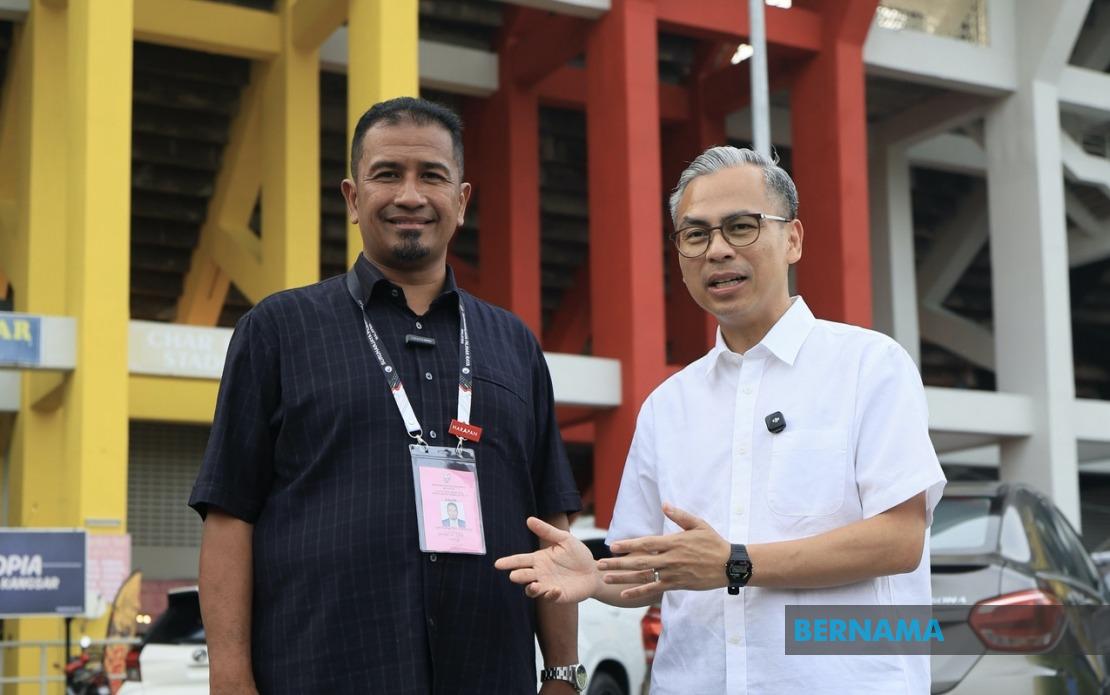
Communications Minister Datuk Seri Fahmi Fadzil has raised concerns about the tone of campaigning in the Negeri Sembilan state election, calling on all contesting parties to prioritise substantive debate over destructive tactics after reports of vandalism targeting Pakatan Harapan materials. Speaking in Seremban on July 22, Fahmi appealed for the election contest to be rooted in ideas and factual discourse, distancing campaign efforts from personal attacks and acts of sabotage that threaten to undermine the democratic process.
The immediate trigger for Fahmi's intervention was the reported vandalism of billboards belonging to PH's Rantau state constituency candidate, Dr Azizul Hakim Mahdi. The incidents, which generated social media attention with several Facebook posts appearing to document the destruction, prompted Fahmi to stress that such actions constitute criminal offences warranting investigation and prosecution by the authorities. His intervention reflects concerns within the ruling coalition about escalating campaign tensions during an election cycle that still has over a week to run before polling on August 1.
The Rantau constituency holds particular significance within Negeri Sembilan's political landscape, making the targeting of the PH candidate's campaign materials a notable concern. Beyond the immediate incident, Fahmi's remarks signal growing apprehension about whether the state election might descend into the type of acrimonious campaign environment that has occasionally marred previous electoral contests in Malaysia. By publicly framing vandalism and sabotage as matters for law enforcement, he attempted to establish clear boundaries around acceptable campaign behaviour and establish consequences for transgressions.
Fahmi's appeal for maturity in campaigning reflects a broader tension within Malaysian electoral politics. While competition between parties is inherently robust, particularly in fiercely contested state elections, the distinction between vigorous advocacy and destructive conduct remains crucial to preserving public confidence in democratic institutions. The minister's emphasis on this distinction underscores an implicit acknowledgement that some campaign elements may be pushing boundaries, necessitating a renewed emphasis on ethical standards.
The communications minister offered his remarks while accompanying PH's Sikamat state seat candidate Nur Azman Mohamad during a campaign walkabout at the Paroi Stadium Seremban City Council stalls, demonstrating his hands-on involvement in the election effort. This dual role—simultaneously supporting candidates while calling for campaign discipline—reflects the delicate balance party leaders must maintain between energising their own supporters and maintaining the institutional integrity of the electoral process itself. His presence on the campaign trail while issuing calls for restraint sends a message that political ambition need not require compromising democratic values.
Regarding the overall campaign trajectory, Fahmi expressed satisfaction with progress through the first week while cautioning that intensity would likely accelerate as polling day approached. He suggested that major political figures were still operating at relatively low gear, with the expectation that subsequent weeks would witness substantially increased activity and mobilisation. This assessment aligns with typical patterns in Malaysian state elections, where campaigns often build momentum gradually before reaching a crescendo in the final days.
Prime Minister Datuk Seri Anwar Ibrahim has already been actively involved in the Negeri Sembilan campaign, conducting multiple stops on the day of Fahmi's remarks, signalling the coalition's determination to defend its state position. The anticipated intensification of high-level participation in coming days suggests that Negeri Sembilan has become a focal point for the federal government's political priorities. For the opposition and other contesting parties, the visible commitment of federal leadership underscores the stakes involved in this particular contest.
The Election Commission has set August 1 as polling day, with early voting scheduled for July 28, providing a clear timeline for the campaign's conclusion. This schedule compresses the remaining campaign period into approximately one week from Fahmi's statement, meaning that any escalation in campaign intensity will occur within a relatively compressed timeframe. The compressed timeline makes Fahmi's call for discipline particularly timely, as the final week often witnesses the most heated exchanges between competitors.
For Malaysian voters and observers, Fahmi's intervention raises important questions about campaign standards and enforcement mechanisms. While his appeal carries moral and political weight as a government minister, the practical capacity to prevent vandalism and sabotage depends substantially on vigilant reporting and responsive law enforcement. The visibility of social media documentation of the Rantau vandalism suggests that such incidents are increasingly difficult to conceal, potentially serving as a deterrent to parties considering similar actions.
The Negeri Sembilan state election carries broader implications for Malaysia's political trajectory, with coalitional control of state administrations influencing national political dynamics. The emphasis on campaign conduct standards thus extends beyond mere procedural fairness, touching on how Malaysia's democratic institutions establish and enforce norms that protect electoral integrity. Fahmi's public stance contributes to an evolving conversation about the relationship between competitive political ambition and institutional responsibility.
Moving forward, the test of Fahmi's call for healthy campaigning will lie in whether all parties heed his message during the critical final week of the election period. The willingness of competing political forces to embrace issue-based campaigning rather than resorting to sabotage and personal attacks will provide a measure of Malaysian democracy's maturity. As the Negeri Sembilan contest intensifies, maintaining this standard becomes increasingly important for preserving public faith in electoral processes.

