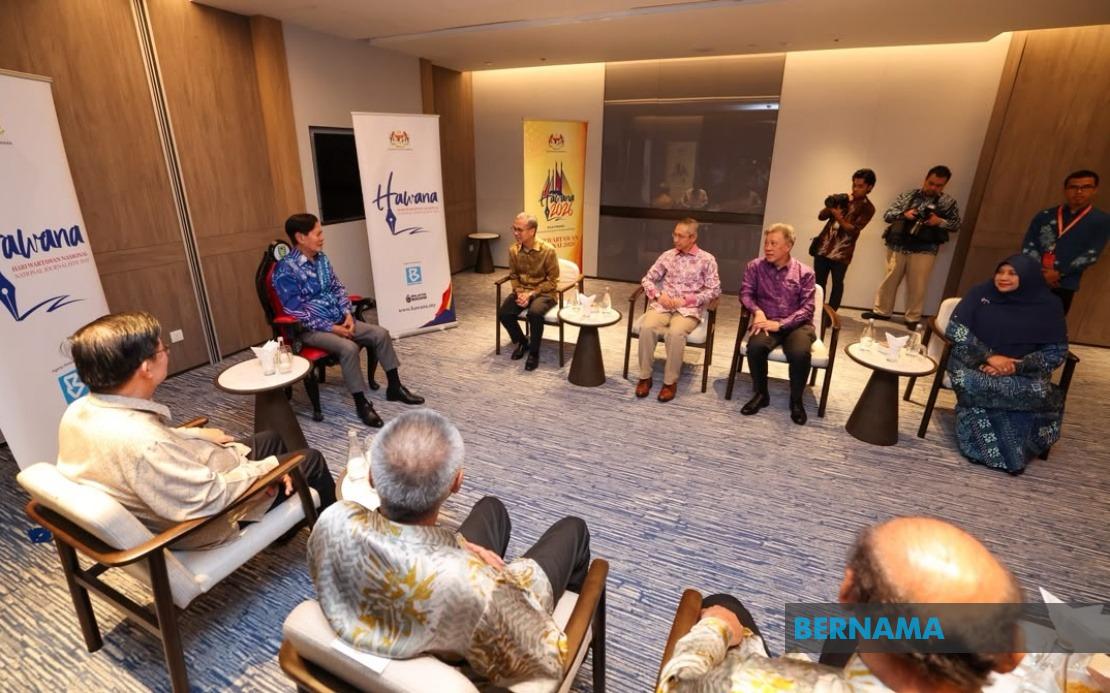
Malaysia's Communications Minister Datuk Fahmi Fadzil has issued a clarion call for media practitioners throughout the ASEAN region to deepen their collaborative efforts in tackling the mounting challenge of false information and inaccurate reporting. Speaking at an official dinner in Butterworth on June 19, Fahmi emphasized that building stronger partnerships across national borders, pooling expertise, and adopting uniform quality standards represent essential strategies for safeguarding regional peace, economic development, and democratic resilience.
The minister framed the contemporary media landscape as fundamentally fractured, with information cascading through channels at unprecedented velocity while competing narratives jostle for public attention. In such an environment, Fahmi contended, journalism anchored in verifiable facts, professional ethics, and accountability becomes not merely desirable but critically necessary. He positioned the media as society's vital connective tissue, simultaneously linking citizens to unfolding events and serving as a crucial intermediary between government decision-makers and those charged with implementation.
Fahmi's remarks came during festivities marking the National Journalists' Day (HAWANA) 2026 celebration, an occasion that transcended simple commemoration to serve as a strategic platform for reaffirming the media industry's indispensable role in national development and regional cooperation. The event, organized under the patronage of the Penang State Government, brought together senior figures from Malaysia's communications establishment, including Penang Governor Tun Ramli Ngah Talib, Chief Minister Chow Kon Yeow, and senior officials from the Communications Ministry.
The gathering also drew representatives from Malaysia's state-controlled news agency, Bernama, alongside executives from private media enterprises and diplomatic delegations from fellow ASEAN nations. This composition underscored the multi-stakeholder nature of addressing misinformation—a challenge that demands coordination between government, traditional news organizations, and international partners. Wong Chun Wai, chairman of Bernama, alongside chief executive officer Datin Paduka Nur-ul Afida Kamaludin, were among those present, reflecting institutional commitment to the agenda.
The emphasis on ASEAN-level cooperation carries particular significance for Malaysian stakeholders. The ten-nation regional bloc faces mounting pressures from coordinated disinformation campaigns, often originating beyond Southeast Asia, that exploit local grievances and societal divisions. By establishing mechanisms for rapid intelligence-sharing about false narratives, standardized fact-checking protocols, and coordinated media literacy initiatives, ASEAN nations could substantially improve their collective resilience. Malaysia, as a major regional economy and communications hub, stands positioned to anchor such efforts.
Fahmi's advocacy reflects growing recognition among Southeast Asian governments that misinformation transcends conventional security threats. False narratives about elections, public health measures, or ethnic tensions can destabilize societies more swiftly than conventional military challenges. The pandemic years demonstrated this vulnerability acutely, as health-related falsehoods spread across social media, undermining government responses and endangering lives. Regional cooperation represents a pragmatic response to a genuinely transnational problem.
The Penang State Government's willingness to host HAWANA 2026 and organize the accompanying diplomatic dinner signals broader commitment to positioning Malaysia as an intellectual and operational center for regional media standards development. Fahmi explicitly commended the state government's recognition of the media profession's societal contributions, framing journalistic work as foundational to democratic governance and social cohesion. This political endorsement, emanating from both federal and state leadership, provides institutional backing for strengthening professional standards.
For Malaysian media practitioners specifically, the minister's message carries an implicit challenge to elevate their competitive position within regional journalism hierarchies. As digital platforms erode traditional revenue models and freelance arrangements proliferate, establishing formally recognized standards through ASEAN coordination could protect professional journalists from downward wage pressure and resource starvation. Networks for knowledge exchange and best-practice sharing would particularly benefit smaller news organizations lacking the resources for extensive fact-checking operations.
The timing of this emphasis on regional media collaboration reflects anxieties about emerging technologies that enable misinformation at scale. Artificial intelligence tools increasingly allow rapid generation of convincing false content, while social media algorithms prioritize engagement over accuracy, creating perverse incentives for sensationalism. No single national regulatory framework can adequately address these systemic challenges; coordinated ASEAN action becomes necessary for meaningful impact.
Fahmi's framing of journalists as bridges between policymakers and affected populations also hints at a subtle agenda regarding media-government relations. By positioning journalism as essential infrastructure for translating complex policy into public understanding, the minister arguably seeks to cultivate media cooperation with government priorities. While legitimate, this dynamic requires vigilance to ensure that bridge-building does not devolve into media capture or self-censorship masquerading as patriotic responsibility.
The specific mention of sharing knowledge and exchanging best practices suggests concrete mechanisms may already be under development within ASEAN communications ministerial forums. Malaysia could lead in establishing regional fact-checking consortia, joint training programs for investigative journalists, and early-warning systems for coordinated disinformation campaigns. Such initiatives would require ongoing technical and financial investment but promise substantial returns in terms of information ecosystem resilience.
Ultimately, Fahmi's appeal reflects sober recognition that media fragmentation and information chaos serve neither ASEAN's collective interests nor individual member states' development aspirations. Strengthening journalism through regional cooperation represents an investment in democratic stability and social trust—foundations increasingly eroded by unchecked misinformation. Whether such aspirations translate into sustained institutional change remains an open question, dependent on continued high-level political commitment and adequate resource allocation across member nations.

