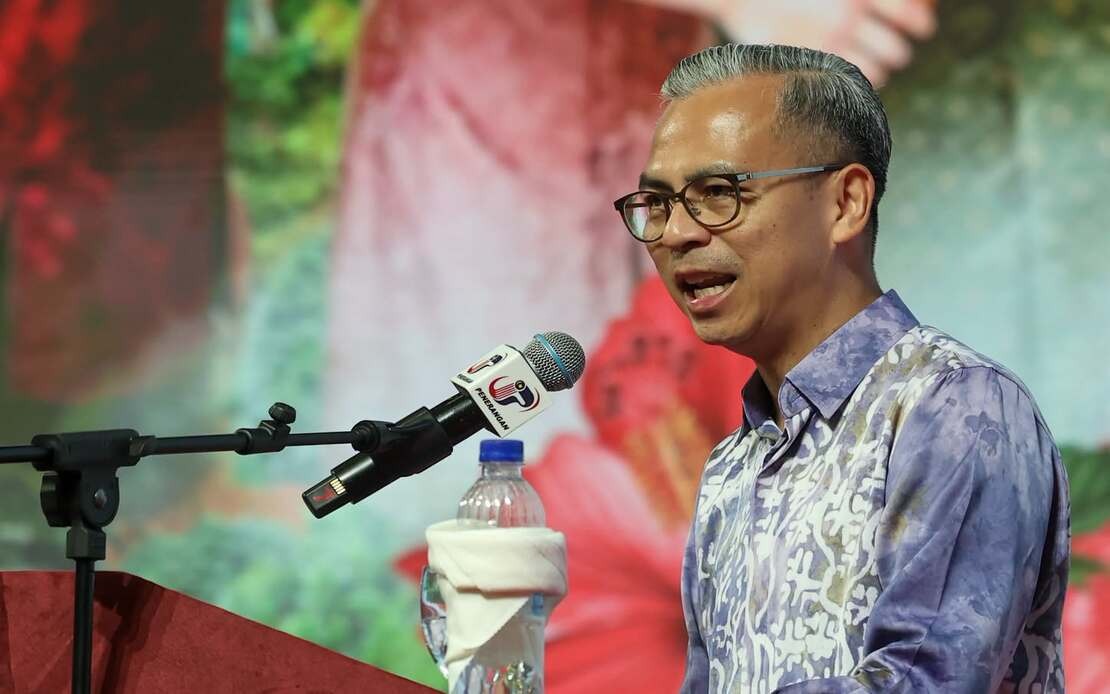
Communications Minister Datuk Seri Fahmi Fadzil has extended public congratulations to celebrated vocalist and songwriter Faizal Tahir following the selection of his composition 'Aku Berjanji' as the official theme song for next year's National Day and Malaysia Day festivities. The accolade comes as the nation gears up for commemorative events marking its founding moments, with the new anthem serving as a cultural centrepiece for the extended celebration period.
The song made its public debut at the launch ceremony of the 2026 National Month and Fly the Jalur Gemilang Campaign held in Ipoh, where it was performed for audiences gathered to witness the campaign's formal commencement. The staging provided Malaysians with their first opportunity to hear the composition in person, introducing the melody and lyrical content that will accompany national festivities throughout the year. Fahmi's acknowledgement through social media underscored the government's investment in cultural expressions of national identity during significant patriotic observances.
The minister highlighted the thematic resonance embedded within the musical composition, noting that Faizal Tahir had crafted a work centred on messages of collective unity, shared purpose, and affection for the nation. These conceptual threads align with broader government messaging during official commemorations, where emphasis on social cohesion and common citizenship typically feature prominently in political and cultural programming. By selecting a song architect of Faizal Tahir's stature and creative credibility, organisers sought to elevate the artistic dimensions of the celebrations beyond ceremonial convention.
The campaign's formal launch by Prime Minister Datuk Seri Anwar Ibrahim earlier marked an official starting point for what Fahmi characterised as mounting anticipation across Malaysian society. The sequential unveiling of campaign elements—beginning with the theme song and encompassing broader initiatives to encourage flag display—suggests a coordinated strategy to build momentum toward next year's commemorations. Such phased approaches allow government messaging to permeate public consciousness through multiple touchpoints and cultural mediums.
Beyond musical dimensions, Fahmi emphasised the practical importance of proper flag presentation, calling upon all residents to display the Jalur Gemilang with appropriate care and correct installation standards. The appeal reflects longstanding protocols surrounding national symbols, where physical presentation carries symbolic weight and conveys collective respect. His emphasis on proper flag condition and placement suggests officials view these visual displays as extensions of patriotic sentiment, making their maintenance integral to the broader observance framework.
A particular concern raised by the minister involved the intersection of contemporary technology and national symbolism. Fahmi cautioned social media users against deploying artificial intelligence systems to generate or manipulate imagery of the Jalur Gemilang, warning that such technological interventions risk introducing distortions that could compromise the dignity inherent in Malaysia's primary national emblem. The cautionary statement reflects emerging challenges facing governments worldwide as digital tools democratise content creation, potentially enabling both intentional and inadvertent misrepresentations of state symbols.
The warning regarding artificial intelligence applications carries specific relevance for Malaysian digital contexts, where social media penetration remains substantial and user-generated content constitutes an significant portion of daily information flow. Without explicit guidance, enthusiastic citizens wielding AI image generators might inadvertently produce versions of the national flag containing visual inaccuracies—incorrect colour proportions, altered geometric configurations, or other subtle deviations—that circulate widely before verification occurs. The minister's intervention attempts preventive messaging to ensure that flag imagery circulating during celebratory periods maintains authenticity and precision.
From a governance perspective, the coordinated effort to establish a musical centrepiece, launch a flag-flying campaign, and establish parameters for digital content creation demonstrates how modern administrations orchestrate cultural and symbolic dimensions of national observance. Rather than relying solely on ceremonial events or governmental pronouncements, officials leverage entertainment figures, grassroots flag displays, and clear digital etiquette guidelines to shape how citizenship manifests across multiple social domains. This layered approach seeks to create an environment where patriotic expression feels organic rather than mandated.
For regional observers, Malaysia's approach to upcoming national commemorations illustrates how Southeast Asian democracies balance state messaging with cultural authenticity. By enlisting respected artists and framing observances around universal themes like unity rather than narrow political narratives, the government attempts to construct inclusive celebrations capable of resonating across Malaysia's diverse communities. The emphasis on shared patriotism rather than divisive partisanship provides a thematic scaffold that competing political constituencies can theoretically inhabit without fundamental contradiction.
The selection of 'Aku Berjanji' as the central artistic element also reflects broader government understanding that memorable melodies and lyrical content penetrate public consciousness more effectively than political speeches or policy documents. Songs carry emotional resonance that pure rhetoric struggles to achieve, making musical choices strategically significant for how nations wish to present themselves during important anniversary moments. Faizal Tahir's participation, given his established reputation and musical credibility, lends artistic legitimacy to the chosen composition rather than appearing as a government-imposed mandate.
Looking toward 2026, the infrastructure established through the campaign launch—encompassing creative production, symbolic displays, and digital content standards—will presumably expand throughout the coming months as additional programming elements receive announcement. The threshold of national anniversaries typically prompts governments to examine how their societies have evolved, what bonds citizens together, and what aspirations unite the population regardless of other differences. Malaysia's emphasis on unity through a musical medium suggests officials recognise that emotional and cultural appeals may resonate more powerfully during commemorative periods than conventional political argumentation.

