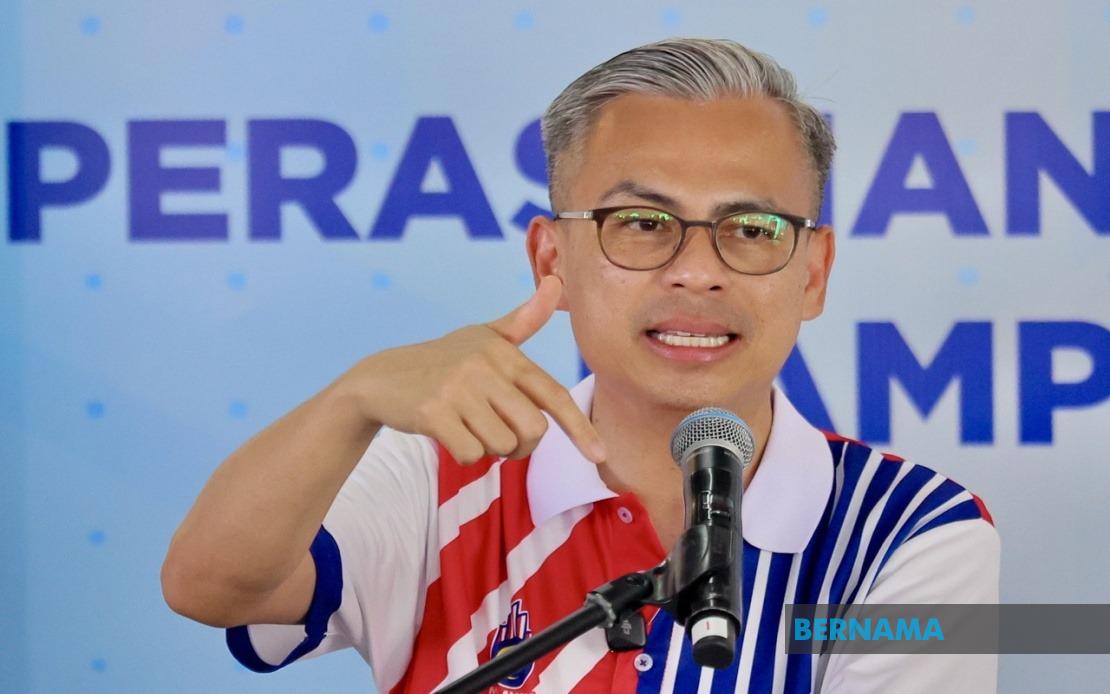
Communications Minister Datuk Fahmi Fadzil has lashed out at persons behind a deceptive WhatsApp account masquerading as Pakatan Harapan (PH) candidate Saiful Nizam Samat in the Endau state seat contest, branding the scheme as a reckless tactic by those willing to breach ethical boundaries to secure victory in the Johor state election.
Fahmi's strong rebuke, posted in the comments section of Saiful Nizam's official Facebook announcement, underscores growing concerns about the weaponization of social media platforms during Malaysia's state-level electoral campaigns. The incident reveals how easily fraudsters can exploit the informal nature of instant messaging applications to deceive voters and manipulate public opinion during politically sensitive periods.
Saiful Nizam moved swiftly to distance himself from the counterfeit account, issuing a formal statement clarifying that he neither owns nor operates the WhatsApp channel in question. The account had been using his name and profile photograph while impersonating him in communications with members of the public for what appeared to be campaign-related purposes. The candidate emphasized that the fraudulent account bore no connection whatsoever to his legitimate campaign machinery, Team SS, which operates through verified official channels.
Screenshots shared by Saiful Nizam revealed the depth of the impersonation effort. The fake account displayed his profile picture and used text identifying the sender as "Saiful Samad, the future Endau assemblyman," demonstrating a deliberate attempt to create confusion among voters about the authenticity of campaign communications. Such tactics raise serious questions about digital election integrity and the vulnerability of voters to misinformation campaigns.
In his public statement, Saiful Nizam urged the voting public to exercise heightened caution regarding unsolicited campaign communications received through messaging applications. He advised citizens to refrain from volunteering personal information to unknown accounts claiming association with candidates or campaign teams. The candidate also established a verification protocol, encouraging anyone who receives suspicious messages to reach out directly to Team SS through officially confirmed communication channels before responding or sharing information further.
The emergence of fake accounts impersonating political candidates during election periods reflects a broader challenge facing Malaysian democracy in the digital age. As voters increasingly rely on instant messaging platforms for campaign information and engagement, bad actors have exploited this shift to sow confusion and potentially manipulate electoral outcomes. The incident demonstrates how cybersecurity vulnerabilities and platform-design shortcomings can create opportunities for electoral malpractice.
The Endau constituency contest has proven particularly competitive, featuring a four-way battle involving candidates representing Barisan Nasional (BN), Pakatan Harapan (PH), Perikatan Nasional (PN), and Parti Orang Asli Malaysia (ASLI). This multi-cornered contest heightens the stakes for all participating parties, potentially creating stronger incentives for candidates and operatives to employ questionable tactics in pursuit of voter engagement and support. The prevalence of fake accounts in such fiercely contested races suggests that electoral dirty tricks have adapted to the digital sphere.
The incident carries implications beyond Endau itself. As Malaysia transitions toward greater digitalization of political campaigning, election authorities and political parties must grapple with establishing clearer standards for online conduct and implementing more robust verification mechanisms. The lack of standardized authentication protocols for candidate social media accounts leaves voters vulnerable to deception and makes it difficult for legitimate candidates to maintain control over their public messaging.
Fahmi's intervention as a senior government minister signals official disapproval of such tactics and may encourage other authorities to scrutinize similar fraudulent accounts operating during ongoing state elections across the country. His public criticism sends a message that digital impersonation schemes targeting electoral candidates constitute unacceptable conduct, regardless of which party benefits from such activities.
For Malaysian voters and campaign observers, the Endau fake-account incident serves as a cautionary reminder to verify the legitimacy of campaign communications before engaging with them or sharing personal details. As electoral competition becomes increasingly sophisticated in its use of technology, the responsibility falls not only on candidates and parties to maintain authentic digital channels but also on voters to develop stronger digital literacy and skepticism toward unsolicited political messaging.
The broader context of state elections in Johor remains competitive and contentious, with multiple parties vying for electoral dominance. Incidents like the Endau fake-account scheme underscore how information warfare and digital manipulation have become integral to modern electoral contests in Malaysia, presenting challenges for democratic integrity that regulators and political actors have yet to fully address through coherent policy frameworks and enforcement mechanisms.

