The Home Ministry has moved to dispel concerns about the nature of disciplinary measures within the Royal Malaysia Police, asserting that extra drills and field duties represent a structured approach to maintaining institutional standards rather than punitive measures intended to harm personnel. The clarification comes in response to ongoing scrutiny surrounding police disciplinary practices, particularly following a high-profile incident earlier this year that raised questions about the safety and appropriateness of such measures within the force.
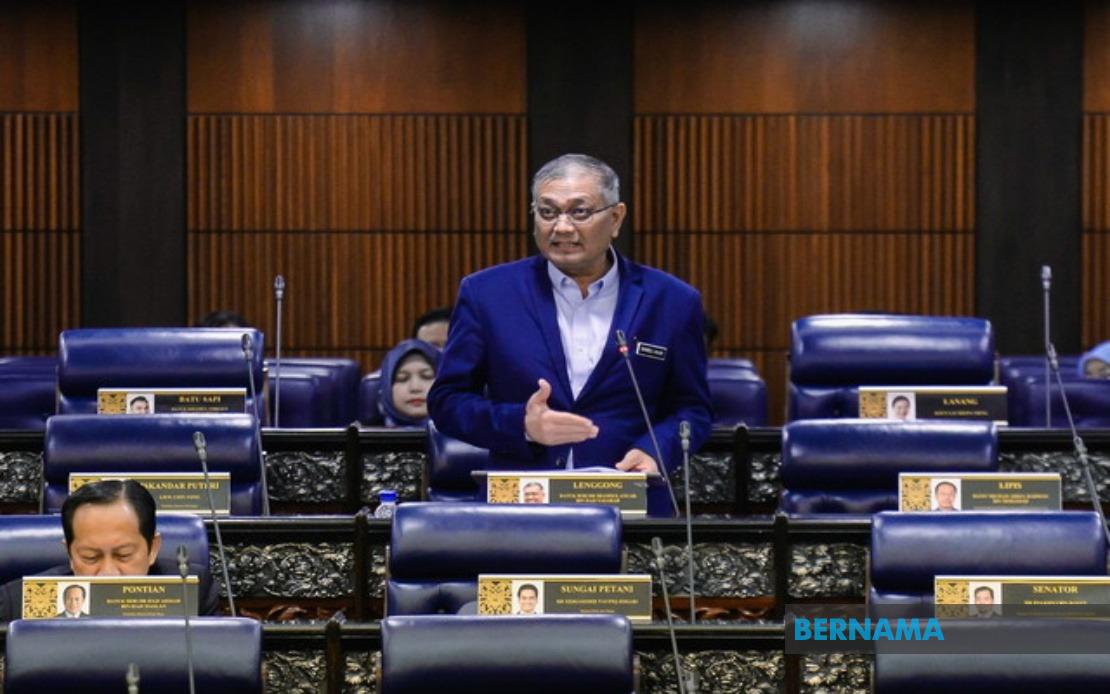
Deputy Minister Datuk Seri Dr Shamsul Anuar Nasarah provided the statement during parliamentary proceedings, emphasising that field duties operate as a mechanism specifically designed to instil discipline, develop character, and facilitate behavioural transformation among officers dealing with minor infractions. The deputy minister grounded his explanation in formal regulatory authority, citing Paragraph 32 of the Inspector-General of Police's Standing Orders, which establishes the legal and procedural framework for implementing such measures within the police hierarchy.
The parliamentary exchange was triggered by a question from MP Roy Angau Gingkoi of Lubok Antu, who sought clarification on the standard operating procedures governing the implementation of extra drills. His inquiry referenced the death of a police officer in Sepang during May, an incident that had catalysed broader discussion within Malaysia's political and civil society circles about the necessity for enhanced safeguards and uniform protocols across all rank levels within the force. Roy Angau's question also probed whether the Home Ministry intended to establish standardised disciplinary frameworks that would apply consistently regardless of an officer's rank.
In addressing the specific incident and subsequent concerns, Shamsul Anuar disclosed that the PDRM Integrity and Standards Compliance Department had issued an administrative directive dated June 29 introducing new procedural measures designed to strengthen existing oversight mechanisms. Central to this enhanced framework is the requirement for health assessment documentation, which the ministry presented as a critical safeguard intended to ensure that officers undergoing disciplinary measures do so under conditions that account for their individual physical wellbeing and medical circumstances. This administrative adjustment signals an acknowledgement within the Home Ministry that existing procedures, while potentially adequate in their original conception, required reinforcement to address emerging concerns about implementation practices.
Existing regulatory provisions establish clear temporal boundaries for the application of field duties, stipulating that such assignments cannot extend beyond four hours in any single day and cannot be sustained for longer than five consecutive days. These constraints reflect an institutional recognition that disciplinary measures, while necessary for maintaining force discipline, must operate within physiologically manageable parameters. The deputy minister further emphasised that supervising officers bear direct responsibility for ensuring that field duties are conducted with appropriate prudence, maintaining controlled conditions, and carefully considering each officer's physical capacity, existing health status, environmental factors, and other circumstances that might compromise their safety during the disciplinary process.
The question of rank-based disparities in disciplinary application emerged as a significant theme within the parliamentary discussion. Critics had suggested that field duties and extra drills were disproportionately imposed on junior-ranking police personnel, potentially reflecting inconsistent application of disciplinary standards. Shamsul Anuar countered this assertion by explaining that Paragraph 32 of the Standing Orders was deliberately designed as a disciplinary alternative specifically for junior police officers, functioning as an option that permits the resolution of minor infractions without resorting to more formal and severe disciplinary proceedings. He rejected allegations of rank-based favouritism by clarifying that senior police officers operate under entirely different regulatory frameworks governing their discipline, governed by distinct legal provisions tailored to their respective service categories and seniority levels.
The question of potential bullying or ragging within police disciplinary frameworks also surfaced during parliamentary questioning, with MP Datuk Awang Hashim of Pendang expressing concerns about whether extra drills could morph into oppressive conduct. Shamsul Anuar responded by articulating that every disciplinary measure implemented within the force remains subject to rigorous procedural requirements and cannot be administered solely according to the discretion or preferences of supervising officers. This assertion attempts to position disciplinary measures as institutionally constrained rather than individually arbitrary, suggesting that multiple checkpoints and oversight mechanisms operate to prevent the transformation of legitimate discipline into mistreatment.
For Malaysian readers and civil society observers, the Home Ministry's clarification carries significant implications for understanding the internal operational culture of the Royal Malaysia Police during a period of heightened public attention to police accountability. The May incident in Sepang had triggered broader national conversation about the boundaries between legitimate institutional discipline and practices that might infringe upon officer welfare and safety. The ministry's articulation of these distinctions, coupled with the introduction of health assessment requirements, suggests an institutional response attempting to preserve disciplinary mechanisms while acknowledging legitimate concerns about their implementation.
The regulatory framework cited by Shamsul Anuar also reflects broader international perspectives on police discipline, where many modern law enforcement systems distinguish between corrective measures intended to modify behaviour and punitive approaches designed primarily to inflict suffering. Malaysia's approach, as articulated by the Home Ministry, aligns with this conceptual distinction. However, the practical gap between policy documentation and on-the-ground implementation remains a significant consideration, particularly given that the June 29 directive represents a relatively recent procedural adjustment responding to specific incidents.
The clarification regarding rank-based disciplinary standards raises nuanced questions about institutional equity within the police force. While the deputy minister's explanation acknowledges that senior officers operate under different regulatory regimes, the question of whether this reflects appropriate differentiation or systemic inequality remains contested. The parliamentary exchange suggests that at least some legislators remain unconvinced by the ministry's assertions that disciplinary standards are applied fairly across organisational hierarchies.
Moving forward, the practical effectiveness of the enhanced framework will likely depend on implementation fidelity by supervising officers and the adequacy of existing oversight mechanisms to identify cases where disciplinary measures veer into problematic territory. The introduction of health assessment requirements represents a tangible procedural enhancement, yet questions persist about whether such documentation requirements will genuinely prevent concerning incidents or simply create paper trails intended to demonstrate procedural compliance.
The Home Ministry's parliamentary statement also carries implications for Southeast Asian police reform discourse more broadly. As regional countries grapple with questions of police accountability and institutional modernisation, Malaysia's approach to reclassifying and regulating disciplinary measures offers both a model and a cautionary example of how institutional frameworks can be restructured in response to public concerns whilst attempting to preserve existing operational prerogatives.

