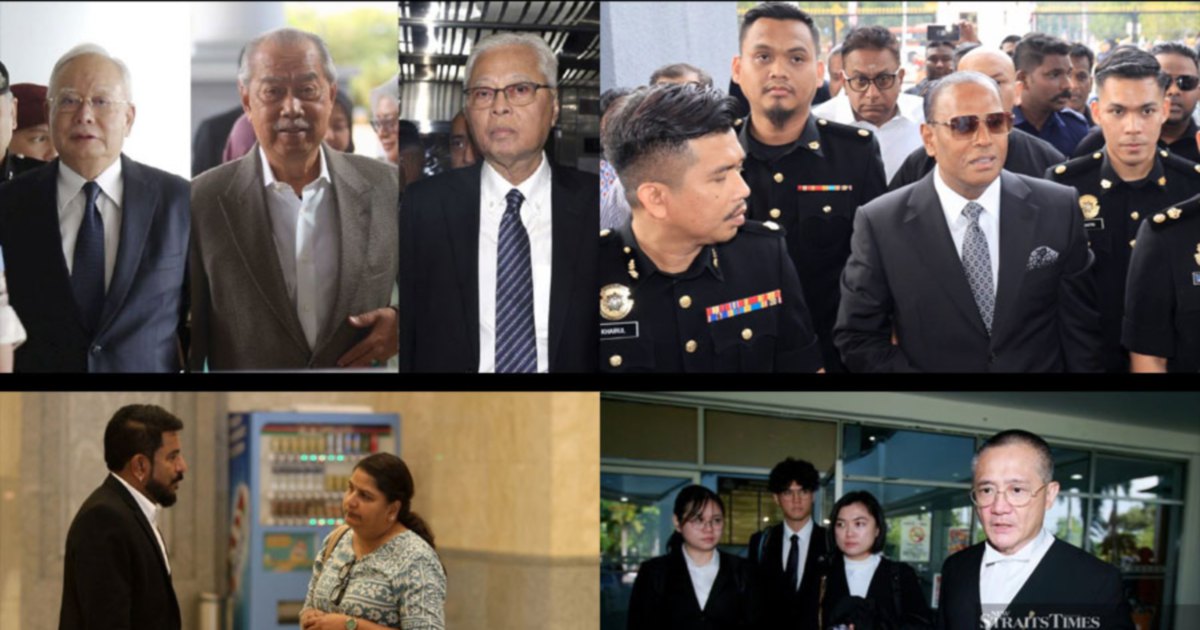
Malaysia's judicial system became a focal point of national scrutiny this week as three former prime ministers and a former minister appeared in high-stakes proceedings, underscoring the country's ongoing reckoning with political accountability. The convergence of these cases represents a significant moment in Malaysia's legal landscape, reflecting broader societal expectations that no public figure—regardless of their previous standing—should be exempt from judicial scrutiny.
The appearance of three former holders of Malaysia's highest office in court proceedings simultaneously signals the depth of investigations into alleged misconduct spanning multiple administrations. Each case carries substantial implications, not merely for the individuals involved but for institutional confidence in Malaysia's governance structures. The judiciary's handling of these matters will serve as a barometer for the nation's commitment to applying the rule of law consistently across all tiers of society, particularly among the political elite.
Concurrently, a former minister faced proceedings related to his own corruption allegations, adding another dimension to what has become an unprecedented concentration of high-profile political cases before Malaysian courts. The timing of these cases—occurring within the same judicial cycle—reflects the cumulative effect of investigations initiated during previous change-of-government transitions and the systematic review of controversial decisions made across different administrations.
These landmark rulings carry profound consequences for Malaysia's political future and democratic institutions. Each judgment sets precedent not only in legal doctrine but in demonstrating whether accountability mechanisms function equally regardless of a defendant's former status or political influence. The international business community and foreign observers are also monitoring these proceedings closely, as Malaysia's judicial independence and commitment to anti-corruption efforts influence the country's reputation and investment climate.
The concentration of former political leaders in court underscores tensions within Malaysia's political system that have accumulated over decades. Allegations spanning financial impropriety, abuse of office, and breach of public trust suggest systemic governance failures rather than isolated incidents. The courts now bear the responsibility of methodically examining evidence, interrogating witnesses, and delivering verdicts that either reinforce or undermine public faith in institutional accountability.
For Malaysian observers, particularly those in the business and civil society sectors, this judicial moment represents either validation of the system's capacity for self-correction or confirmation of its limitations. The outcomes will influence perceptions of whether Malaysia's institutional frameworks—despite their imperfections—can genuinely hold power accountable. This perception itself affects investor confidence, civil participation, and the legitimacy of governance going forward.
The proceedings also occur against the backdrop of Malaysia's regional context, where competing narratives about democratic governance and institutional strength circulate among Southeast Asian peers. How Malaysia's courts navigate these cases will contribute to the nation's standing within the region and its ability to model effective anti-corruption mechanisms to other democracies facing similar challenges.
The legal teams involved face the substantial challenge of managing public attention while ensuring fair proceedings. Media coverage, political commentary, and public opinion create atmospheric pressure that could either impede impartial adjudication or reflect legitimate democratic interest in accountability. Malaysian courts must balance these competing considerations—acknowledging public interest while protecting the integrity of proceedings.
These cases also highlight the delayed nature of accountability mechanisms in Malaysia. The span of time between alleged misconduct and judicial examination suggests that investigations require considerable duration, evidence gathering involves complexity, and the legal system's capacity is strained by the volume and sophistication of alleged offences. This temporal gap between alleged wrongdoing and courtroom proceedings raises questions about whether swift justice remains attainable for cases involving political figures with extensive resources for legal defence.
For ordinary Malaysians, the week represents a tangible demonstration that political rank and former office do not provide immunity from legal consequences. The visibility of former prime ministers in public proceedings normalises the principle that governance accountability supersedes hierarchical status, though sceptics note that charging senior figures still represents progress rather than systemic transformation.
The landmark rulings anticipated from these proceedings will generate immediate political reverberations but will also shape Malaysia's jurisprudential development on corruption, abuse of office, and governance accountability. Legal scholars will likely scrutinise the judicial reasoning for years, extracting principles applicable to future cases and institutional reform discussions.
Ultimately, this week crystallises a critical juncture in Malaysia's democratic evolution. The outcomes will neither solve systemic governance challenges nor fully satisfy demands for comprehensive institutional reform, but they will establish benchmarks for whether Malaysia's courts can credibly examine the conduct of those who previously wielded the nation's highest authority. The implications extend beyond individual verdicts to encompass fundamental questions about institutional legitimacy and the rule of law's application across Malaysian society.

