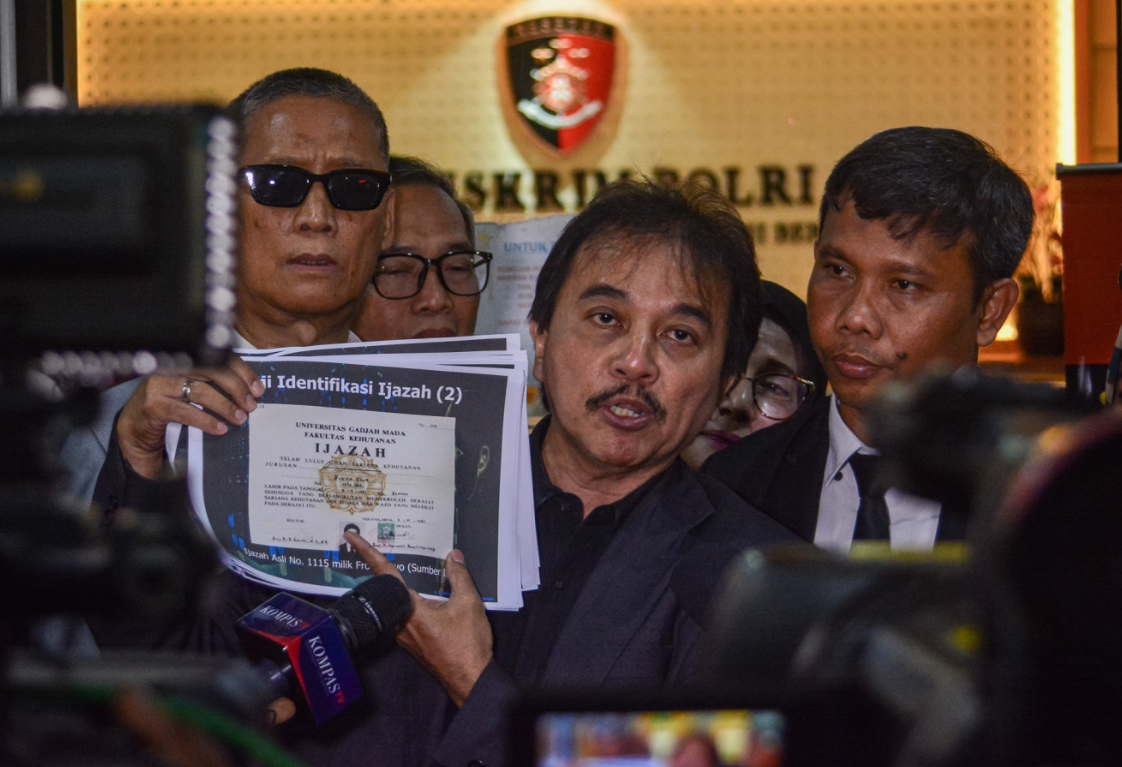
Jakarta police have taken former youth and sports minister Roy Suryo and health activist Tifauzia 'Tifa' Tyassuma into custody following allegations of defamation connected to the long-disputed authenticity of ex-president Joko 'Jokowi' Widodo's university diploma, representing a significant intensification of a row that has occupied Indonesian public discourse since 2019.
The two suspects were apprehended at their homes on Friday morning, according to statements from Roy's legal representative Ahmad Khozinudin. Both face accusations of making false claims regarding Jokowi's academic qualifications, with investigators additionally alleging they manipulated electronic documents to substantiate their assertions that the diploma was fraudulent. The detention follows formal completion of preliminary investigations by the Jakarta Police's General Crimes Directorate and precedes the handover of the case file to prosecutors.
Investigation director Senior Commissioner Iman Imanuddin characterised the detention as a standard procedural measure necessary before escalating the matter to the Jakarta Prosecutor's Office. According to his statement at a press briefing, the move aims to prevent administrative bottlenecks within the criminal justice system whilst enabling completion of remaining formalities including medical examinations and evidence verification. This framing reflects police protocol in cases involving multiple parties and complex documentation.
The diploma controversy has proved remarkably durable within Indonesian politics. Initial questions surfaced on social media platforms in 2019, prompting years of investigation and legal action involving diverse stakeholders. In May 2025, the National Police formally certified the diploma's authenticity and concluded their initial inquiry into forgery allegations. However, the matter resurfaced during a case review conducted in July 2025, when critics including Roy Suryo renewed their challenges to the police's conclusions, demonstrating the persistence of scepticism within certain political circles.
Roy, who held ministerial office under the administration of former president Susilo Bambang Yudhoyono, has emerged as a prominent voice questioning the official narrative surrounding Jokowi's credentials. His detention carries particular significance given his status as a former government official, potentially signalling authorities' determination to pursue defamation charges against figures across the political spectrum, regardless of their previous standing or public prominence.
The legal framework underpinning the prosecution centres on Indonesia's Electronic Information and Transactions (ITE) Law, a controversial statute that criminalises defamation conducted through digital means. The law carries maximum imprisonment of six years, providing prosecutors with substantial sentencing latitude. This legislative tool has attracted international scrutiny from human rights organisations, which argue it chills legitimate political speech and enables selective prosecution of government critics.
Refly Harun, the lawyer representing both detainees, contested the necessity of the detention order, emphasising that his clients had consistently responded to police summonses and complied with all reporting obligations. He particularly objected to the timing, noting that case transfer to prosecutors was not scheduled until Monday, rendering the interim detention he characterised as disproportionate and procedurally excessive. This legal challenge suggests potential disputes ahead regarding the appropriateness of detention conditions and duration.
The police investigation has cast a wider net than Roy and Tifa alone. Authorities previously identified six additional individuals as suspects within the defamation case, though subsequent developments narrowed this group. Following mediation proceedings, prosecutors withdrew charges against three suspects: Eggi Sudjana, Damai Hari Lubis, and Rismon Sianipar. This selective prosecution pattern hints at complex negotiations occurring behind the scenes and raises questions about the consistency of evidentiary standards applied across different defendants.
For Malaysian observers, the Jokowi diploma saga underscores challenges common to Southeast Asian democracies regarding the intersection of political accountability, freedom of expression, and rule of law. The case demonstrates how questions about leader credentials—inherently matters of public interest—can become entangled with criminal proceedings that simultaneously stifle legitimate inquiry. The application of defamation statutes against political critics reflects broader regional patterns wherein governments deploy legislation designed for distinct purposes to constrain political opposition.
The detention of Roy Suryo and Tifa Tyassuma also illuminates power asymmetries within Indonesia's legal system. State institutions, particularly police forces, retain substantial discretion in determining whether allegations merit investigation and prosecution. Critics observe that this case exemplifies how formal legal processes can be weaponised to silence inconvenient questions and reward political conformity, even when underlying factual disputes remain genuinely contested within informed public circles.
Looking forward, the prosecution of Roy and Tifa will likely proceed through Indonesian courts over coming months, potentially generating additional headlines as legal arguments unfold. The case's trajectory may influence how Indonesian institutions balance demands for investigating alleged defamation against citizens' rights to scrutinise public figures and institutions. Similarly, regional observers will monitor whether the final verdict reinforces or constrains political speech protections in Southeast Asia's largest democracy.

