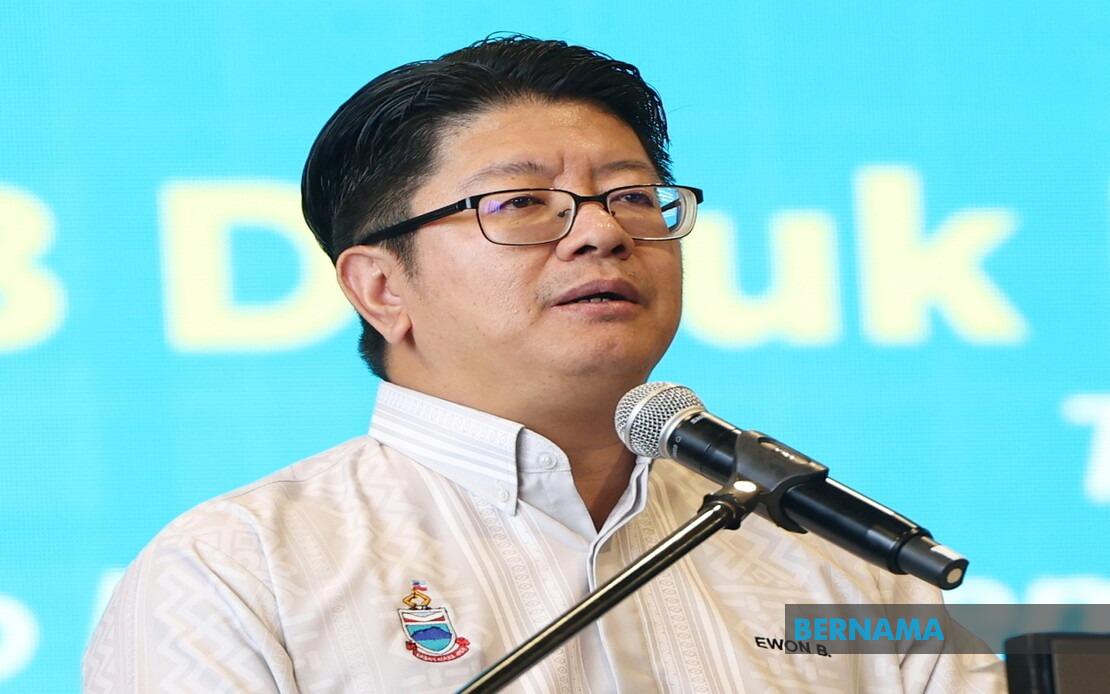
Datuk Ewon Benedick and Datuk Donald Peter Mojuntin have cemented their grip on UPKO's top positions, remaining unchallenged as the party's president and deputy president respectively for the incoming 2026-2029 term. Their positions were decided at the 17th UPKO triennial delegates conference held in Penampang on August 10, where the membership confirmed the leadership slate through an election process that saw no rival candidates emerge for the principal offices.
The lack of competition for the top posts reflects a broader consolidation within the party hierarchy, with five vice-presidential seats similarly going uncontested. These roles are held by Jairaiaz Joseph, Datuk Wong Thien Fook, Datuk Pangiran Lalung, Datuk Basari Sarikun, and Datuk Dr Laurentius Nayan Ambu. The absence of contested races at this tier of leadership suggests a party working to present a unified front as it navigates its role within Sabah's political landscape and the broader Gabungan Rakyat Sabah coalition framework.
In his address concluding the conference proceedings, Ewon articulated a vision of democratic participation while emphasising party cohesion. He underscored that the election outcome should strengthen rather than fracture organisational bonds, framing the membership as a unified extended family united behind shared objectives. This messaging appears carefully calibrated to ensure that delegates who attended the conference, regardless of how they voted or whether they supported alternative candidates, feel included in the party's forward trajectory.
Ewon further elaborated on the responsibility that falls to newly elected leadership, particularly regarding UPKO's relationship with Sabah's government structure. As part of the Gabungan Rakyat Sabah coalition led by Chief Minister Datuk Seri Hajiji Noor, UPKO's elected leadership must serve as a conduit between the party membership and state government priorities. This positioning underscores how Sabah's regional parties operate within larger coalition arrangements, balancing local party interests with the demands of participatory governance at the state level.
Beyond the senior posts, the party witnessed significant turnover in its ancillary wings, indicating generational and strategic shifts within UPKO's organisational structure. The Youth wing secured new direction with Carlye Lajimin assuming the chief role and Newbaxter Tibin taking the deputy chief position, suggesting a deliberate effort to inject fresh energy and perspectives into the party's engagement with younger voters. Such transitions in youth leadership often signal broader strategic recalibrations aimed at expanding electoral appeal and ensuring organisational relevance among demographic groups that increasingly shape electoral outcomes.
The Women's wing demonstrated stability with Mohina Sidom returning as chief, though the deputy chief position changed hands as Lomiti Jahan secured the post. Retention of the incumbent women's chief suggests confidence in existing direction, while the deputy chief change may reflect the party's desire to diversify representation or bring new skills to women's advocacy and mobilisation efforts. For a regional Sabah party operating in Malaysia's complex political environment, the strength of women's wing leadership directly impacts voter outreach and community engagement capacity.
The Young Generation wing, a distinct category from Youth, elected Emmanuel Atin as chief with Alison Chan assuming the deputy position. The existence of separate youth and young generation structures within UPKO reflects the party's granular approach to demographic engagement, allowing for targeted programming and representation across different age cohorts. This structural sophistication enables parties to craft age-appropriate messaging and activities while maintaining flexibility in responding to generational priorities.
For Malaysian observers tracking Sabah politics, UPKO's internal consolidation carries implications for the state's political stability and coalition dynamics. As a longstanding regional party with deep roots in Sabah's political culture, UPKO's ability to maintain internal unity while participating in broader coalitions affects the broader equilibrium of power within the state. The uncontested nature of the leadership election suggests that potential challengers either accepted the incumbent leadership's legitimacy or recognised that challenging entrenched positions might destabilise the party during a period when maintaining coalition coherence serves broader strategic interests.
The conference also provided a platform for the party to articulate its policy priorities and legislative agendas. With elected representatives mandated to articulate UPKO positions during parliamentary and state assembly debates, the party maintains channels for influencing governance outcomes beyond merely holding ministerial appointments. This emphasis on articulating party positions through parliamentary debate reflects the disciplined coalition politics that characterises Malaysian governance, where parties negotiate influence through multiple institutional channels simultaneously.
Ewon's explicit reference to the party's relationship with Chief Minister Hajiji Noor signals UPKO's confidence in its positioning within the current coalition structure. Given that Sabah politics has experienced significant flux in recent years, with coalition formations and dissolutions occurring relatively frequently, the stability signalled by unopposed leadership elections carries symbolic weight regarding coalition durability. Regional parties that maintain internal cohesion typically negotiate from stronger positions when coalition arrangements eventually require renegotiation.
Looking forward, the newly constituted leadership faces the task of translating internal unity into concrete policy achievements and voter satisfaction. The next three years will test whether UPKO can leverage its position within the Gabungan Rakyat Sabah coalition to deliver tangible benefits to its membership and constituents. In Malaysian state politics, particularly in regions where multiple regional parties compete for legitimacy, parties must continuously demonstrate their value proposition to justify their existence and electoral support.
The UPKO conference concluded a leadership cycle that produced no dramatic shifts at the apex, suggesting the party has settled on its strategic direction for the medium term. This stability potentially benefits coalition partners who can rely on consistent UPKO positions during negotiations, while providing the party itself with the continuity necessary to execute longer-term plans without disruption from leadership transitions. Whether this stability translates into enhanced political influence or organisational stagnation will become apparent as the party navigates Malaysia's complex federal-state political dynamics over the 2026-2029 period.

