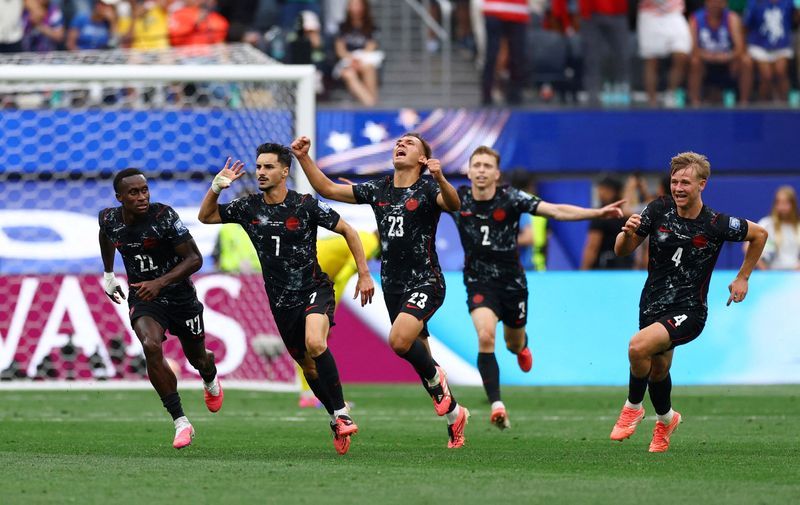
Stephen Eustaquio's thunderous strike from the edge of the penalty area in the 92nd minute delivered Canada a dramatic 1-0 victory over South Africa at Los Angeles Stadium, catapulting the co-hosts into the World Cup last 16 for the first time in their history. Receiving the ball at the penalty box's perimeter, the Canadian midfielder unleashed a powerful drive that sailed past diving goalkeeper Ronwen Williams, providing a heart-stopping climax to the first knockout-round encounter of the tournament and sending the Canadian contingent of supporters into celebration.
The narrative of this match reflected two nations navigating unfamiliar territory in the competition's most demanding phase. Both Canada and South Africa were making their debut in knockout football, adding an extra layer of tension to proceedings. South Africa appeared content to absorb Canadian pressure and edge towards extra time, potentially forcing a penalty shootout, but Eustaquio's intervention in the tournament's dying moments made such calculations irrelevant. The goalkeeper's desperate dive proved futile against the velocity and placement of a shot that had been building in intensity throughout an increasingly tense second period.
Canada's journey to this point had been neither straightforward nor entirely convincing. The squad advanced from their group for the first time across three World Cup appearances, yet arrived at Los Angeles following a dispiriting 2-1 defeat to Switzerland on Wednesday. With only three days' rest after that setback in their final group match, the co-hosts faced the additional challenge of playing their first knockout game outside Canada, a logistical and psychological hurdle that coach Jesse Marsch's men managed to overcome despite visible fatigue in stretches.
Marsch's assessment of the contest centred on his team's inability to convert the chances they created throughout the ninety minutes. While acknowledging that opportunities emerged regularly, he suggested his players lacked the clinical efficiency required at this competitive level—until Eustaquio's redemptive moment. The coach praised his squad's resilience and character, declaring them "Canadian heroes" in the post-match aftermath. For Eustaquio personally, the moment transcended individual achievement; he described feeling as though every teammate had contributed their strength to the shot, a sentiment that captured the collective will required for Canada's improbable run.
The opening forty-five minutes unfolded as a cautious affair between two teams still learning the rhythms of knockout football. Genuine scoring opportunities proved elusive, with neither side willing to expose themselves through aggressive advancement. Canada's most promising moment arrived just before halftime when a corner created chaos in South Africa's penalty area. Moise Bombito's header was cleared off the line by Aubrey Modiba, while Tajon Buchanan's immediate follow-up struck goalkeeper Ronwen Williams directly in the chest. Shortly thereafter, the Canadians protested for a penalty after Richie Laryea fell in the area, but the VAR review upheld the referee's decision not to award the spot kick—a call that generated considerable frustration among Canada's vocal supporters who had packed the stands in red.
Marsch's visible frustration at the halftime interval, continuing to voice his objections as the teams departed the field, underscored the intensity building among the Canadian contingent. The second period saw South Africa adopt an increasingly passive approach, appearing reluctant to take risks and seemingly prepared to let the match drift towards additional play. This tactical choice frustrated Canada's attacking ambitions while simultaneously playing into their hands by failing to generate genuine pressure that might have squeezed the co-hosts.
Another Canadian opportunity emerged just before the mandatory hydration break in the second half. Tani Oluwaseyi's shot required a save from Williams, and when the rebound fell to Jonathan David in a promising position, Mbekezeli Mbokazi's alert defensive work cleared the danger. These repeated near-misses, accumulating across the ninety minutes, created an mounting sense that Canada's tournament story might conclude in disappointment—until Eustaquio's intervention dramatically rewrote that narrative in spectacular fashion.
The consequence of this victory extends beyond the immediate gratification of advancing further. Canada will now face either the Netherlands or Morocco on July 4 in Houston, competing for a quarter-final berth against one of Europe's traditional powerhouses or an emerging North African force. The prospect of facing either opponent represents uncharted territory for Canadian football, presenting opportunities to measure the squad's genuine capabilities against elite international competition. The co-host status that provided some psychological comfort earlier in the tournament no longer applies; Canada must now navigate away fixtures against established footballing nations.
South Africa can nonetheless take some pride from their achievement. The squad reached the knockout rounds at their fourth World Cup attempt, finally breaking through to achieve a milestone that had eluded them in three previous campaigns. However, their tame exit, characterised by defensive solidity without offensive ambition, proved ultimately insufficient. Coach Hugo Broos, at seventy-four years old, left the door open regarding his future, cryptically indicating this would be his final World Cup while deferring decisions about what follows. His reticence perhaps reflected disappointment that his tactical approach, while preventing catastrophe, failed to generate the attacking thrust that might have altered the match's trajectory.
Canada's advancement carries significance extending beyond football statistics. For a nation competing at home and seeking to establish football credentials on a global stage, this progression validates long-term investment in player development and structural organisation. The dramatic nature of the victory, decided by a substitute midfielder in injury time, provided the kind of narrative moment that galvanises national sporting consciousness. Whether this represents the beginning of a sustained Canadian challenge or merely an improbable flash remains to be determined, but for now, the co-hosts have claimed their place among the world's elite sixteen and earned the right to dream of further progress.

