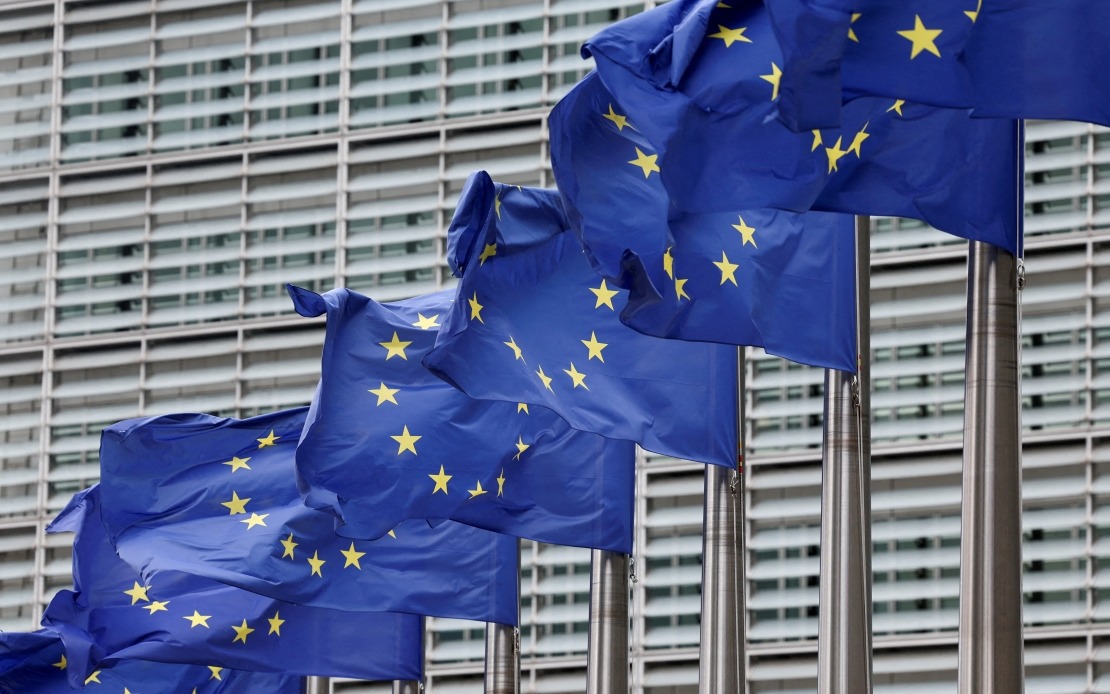
European Union foreign ministers convened in Brussels on Monday to assess escalating tensions in West Asia and consider whether the bloc should introduce additional restrictions targeting Israeli settlement expansion in the occupied West Bank. The gathering highlighted deepening fractures within the 27-nation bloc over how aggressively to respond to the contentious issue of Israeli settlement policy, a matter that has proved divisive among member states for years.
The European Commission had prepared several policy options for discussion, ranging from targeted import restrictions to comprehensive bans on goods originating from Israeli settlements. These proposals reflected pressure from several EU capitals demanding a stronger stance, yet simultaneously acknowledged the political reality that achieving consensus across all member states remains exceptionally difficult. The preparatory work signalled Brussels' acknowledgment that settlement expansion continues to be a significant irritant in EU-Israel relations, requiring deliberate diplomatic and economic responses.
The fundamental challenge facing EU ministers stems from divergent national positions on the appropriate level of economic pressure. Spain, Ireland, and Belgium have consistently advocated for stringent sanctions, viewing settlement expansion as incompatible with international law and a genuine obstacle to peace negotiations. These countries see robust measures as essential to demonstrating EU commitment to Palestinian rights and two-state solutions. Conversely, Germany and several other member states have resisted calls for severe sanctions, citing concerns about escalation and preferring diplomatic engagement over punitive economic measures.
The procedural mechanics governing EU decision-making complicated the path forward considerably. If ministers classify trade restrictions as foreign policy sanctions, the bloc requires unanimous approval from all 27 member states—a threshold that one holdout can block entirely. This unanimity requirement has historically empowered individual nations to protect allies or prevent actions they deem counterproductive. However, if framed purely as trade policy, these measures would require only a qualified majority, defined as support from 15 of 27 member states representing at least 65 per cent of the EU's total population. This technical distinction held enormous practical significance, as reclassification would substantially lower the political barrier to adoption.
The complexity of achieving consensus underscored broader European divisions over Middle Eastern policy and the appropriate balance between economic leverage and diplomatic channels. Member states with significant trade relationships with Israel worried that sanctions could damage bilateral commerce and trigger retaliatory measures. Others questioned whether trade restrictions would actually influence Israeli government behaviour or simply harden positions on both sides. These pragmatic considerations, coupled with genuine disagreements over the legality and morality of settlement expansion, created a genuinely fractured negotiating environment.
Beyond Israeli settlements, the Brussels meeting addressed multiple regional and international security concerns demanding urgent attention. Ministers anticipated discussing recent developments concerning Iran, reflecting ongoing anxieties about Tehran's nuclear programme and regional activities. The Russian invasion of Ukraine dominated the agenda as well, with ministers expected to approve additional sanctions targeting Russian individuals, state entities, and organisations implicated in the ongoing conflict. Ukrainian Foreign Minister Andrii Sybiha attended the informal consultations, providing firsthand perspective on battlefield conditions and Ukraine's strategic requirements.
The question of comprehensive new sanctions packages against Russia remained unresolved heading into the meeting, particularly regarding whether trade restrictions could receive sufficient backing and swift implementation. The EU has imposed multiple sanction rounds targeting Russian officials, oligarchs, and economic sectors since February 2022, yet policymakers continuously debate whether existing measures sufficiently constrain Russian capabilities or whether escalation remains necessary. Energy sanctions proved especially contentious, as several European nations remained dependent on Russian energy supplies despite diversification efforts.
For Malaysia and Southeast Asian observers, these EU deliberations carried important implications beyond their immediate Middle Eastern or European contexts. The settlement dispute and sanctions discussions reflected broader tensions between principles-based foreign policy and pragmatic economic considerations that resonate across Asia-Pacific diplomacy. Southeast Asian nations often navigate similar tensions when responding to geopolitical disputes involving major trading partners, balancing rhetorical commitment to international law against commercial interests and influence maximisation.
The fractious nature of EU consensus-building on Israeli settlements also illustrated how diverse regional organisations struggle to coordinate coherent responses to contentious issues affecting global stability. ASEAN nations frequently confront analogous challenges coordinating positions on matters like the South China Sea, territorial disputes, and great power competition, where member states hold competing strategic interests and relationships. The EU's inability to achieve unanimity on settlement sanctions demonstrated that even wealthy, institutionalised blocs encounter structural impediments to forceful collective action.
Longer-term implications for Palestinian-Israeli peace prospects depended partly on whether the EU could marshal sufficient political will to impose meaningful economic consequences for continued settlement expansion. International pressure alone rarely compels policy changes, yet consistent economic pressure from major trading blocs can significantly increase the costs of particular strategies. The outcome of the Brussels meeting would signal whether the European Union could transcend its internal divisions sufficiently to communicate binding consequences for settlement policies, or whether procedural hurdles and strategic differences would once again produce symbolic gestures rather than substantive action.
The meeting underscored that multilateral responses to Middle Eastern conflicts remain constrained by member state heterogeneity and divergent national interests. Even as the EU confronts Russian aggression in Ukraine and Iranian regional activities, the Israeli-Palestinian question continues generating fierce disagreement among European capitals. Whether Monday's consultations would yield fresh sanctions or merely reaffirm existing positions remained uncertain, reflecting the persistent difficulty of converting European diplomatic consensus into coordinated economic action on West Asian disputes.

