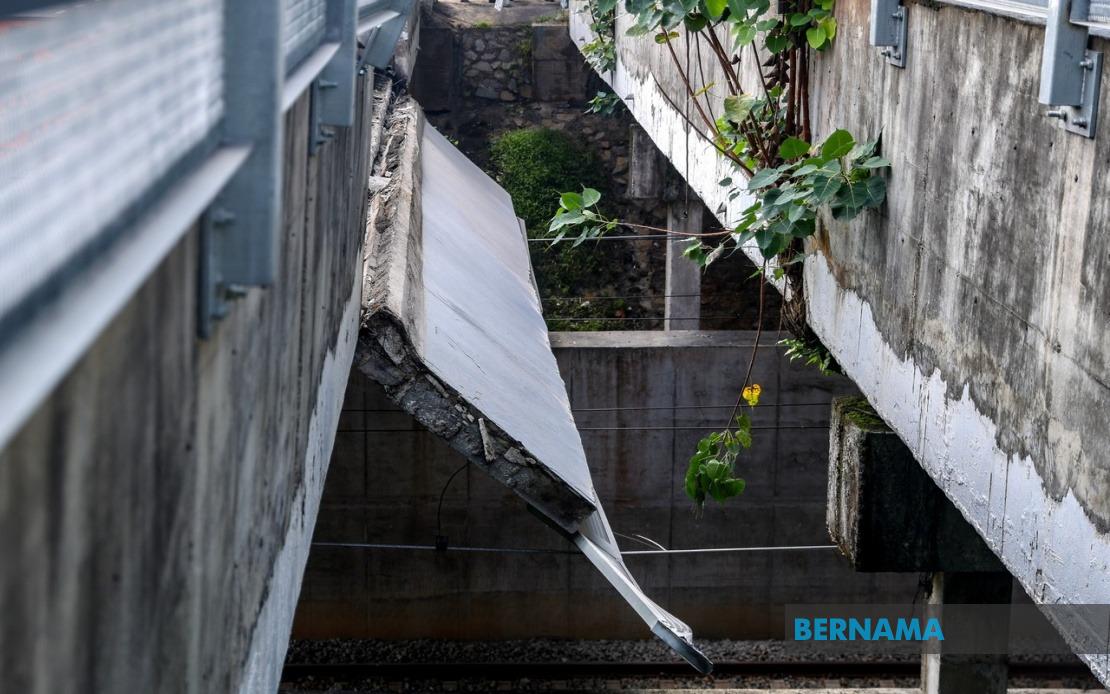
A major disruption to Malaysia's Electric Train Service (ETS) network unfolded on the morning of August 6 when a lorry collision damaged critical rail infrastructure along the Kulai-Kempas Baru corridor in Johor. The incident, which involved a 120-tonne crane operation to remove fallen concrete structures that had struck the overhead power lines, prompted Keretapi Tanah Melayu Berhad (KTMB) to implement immediate contingency measures to protect passenger interests while restoration efforts proceeded.
The incident affected three major ETS services departing from JB Sentral Station, including the long-distance routes to Padang Besar, Kuala Lumpur, and Butterworth. In response, KTMB quickly arranged shuttle bus transportation from both JB Sentral and Kempas Baru stations to Kulai Station, allowing passengers to reach their final destinations by transferring to available train services. This coordinated approach ensured continuity of travel for commuters and intercity passengers who might otherwise have faced significant delays or cancellations.
The root cause of the disruption originated from a vehicle carrying flammable liquid that skidded near the rail line the previous day, destabilizing a concrete parapet structure that subsequently collapsed and made contact with the overhead line system that powers ETS trains. The severity of the structural damage necessitated heavy lifting equipment to safely clear the debris, with the responsible transport company, Transmare-Chemie (M) Sdn Bhd, coordinating the availability of the required 120-tonne crane. Initially, the crane had not been secured when authorities began responding to the incident early in the morning.
Restoration works presented a multi-faceted challenge extending beyond simple debris removal. KTMB personnel had to address damage to the overhead line infrastructure while ensuring structural safety through comprehensive technical inspections and safety clearance procedures. These protocols reflect the railway operator's commitment to preventing recurring incidents and maintaining the integrity of the network. The complexity of these restoration tasks meant that pinpointing a definitive reopening timeframe proved impossible during the initial stages of the response.
For passengers unwilling to proceed with their journeys amid the disruption, KTMB offered full refunds and committed to providing additional assistance through station staff. This passenger-first approach acknowledged the inconvenience and potential schedule disruptions caused by the incident, particularly for business travellers and time-sensitive commuters. The provision of comprehensive support options represented a recognition of the broader economic implications of ETS service disruptions in Malaysia's interconnected transportation network.
The Shuttle Selatan service network experienced partial disruption, with the Kulai-Kempas Baru-Kulai route suspended entirely while the Pasir Gudang-JB Sentral and associated routes maintained regular operations. This selective suspension strategy allowed KTMB to preserve service on unaffected corridors while concentrating resources on the damaged area. Such operational flexibility demonstrates the interconnected nature of Malaysia's rail infrastructure and the cascading effects that localised incidents can produce across broader transportation networks.
The incident highlights vulnerabilities in the interaction between road and rail infrastructure in densely developed transportation corridors. The Kulai-Kempas Baru area, as a critical link in the southern railway network serving Johor Bahru and beyond, requires robust protection against external hazards including vehicular incidents. The proximity of rail lines to major transportation routes necessitates ongoing evaluation of safety barriers and risk mitigation measures to prevent similar occurrences. Such considerations have implications for other sections of Malaysia's ETS network passing through similarly populated or traffic-intensive zones.
From a regional perspective, disruptions to the JB Sentral hub carry wider significance given its role as a major interchange serving not only domestic ETS services but also international connections toward Thailand. Any extended disruption at this critical junction potentially affects passenger flows across Southeast Asia's growing rail connectivity initiatives. The efficient resolution of such incidents therefore extends beyond domestic Malaysian concerns to encompass regional transportation networks and cross-border travel patterns.
KTMB's coordinated response involving multiple stakeholder agencies including the transport company responsible for the vehicle and various technical inspection teams reflects the institutional frameworks Malaysia has developed for managing transportation crises. The communication of regular updates to the travelling public, provision of alternative transport arrangements, and transparent articulation of reopening criteria all demonstrate established protocols for service disruption management. However, the incident also underscores the importance of preventative infrastructure improvements and enhanced safety measures at vulnerable intersections between road and rail networks.
The restoration timeline remained fluid and dependent on the physical removal of debris, technical certification processes, and safety validation procedures. KTMB's insistence on comprehensive safety clearance before permitting train operations resumed reflected regulatory requirements and operational best practices designed to prevent accidents. Commuters expecting quick resumption of normal services would have needed to adjust expectations accordingly, with restoration potentially extending over several hours or longer depending on weather conditions, equipment availability, and the extent of hidden damage discovered during detailed inspections.
For Malaysian travellers and the broader transportation community, incidents such as this one underscore the intricate dependencies within modern rail networks and the cascading effects of localised infrastructure damage. The resilience of passenger services depends not solely on rail operators but equally on the safety standards maintained by related transport industries and the coordination mechanisms available when crises occur. The Kulai-Kempas Baru incident, while disruptive, provided a real-world test of Malaysia's capacity to manage transportation emergencies and maintain passenger service continuity under challenging circumstances.

