Communications Minister Datuk Seri Fahmi Fadzil has underscored the indispensable function that ethical and independent journalism performs in sustaining democratic systems and fostering a populace equipped with reliable information. Speaking during remarks at a major industry gathering, Fahmi articulated a vision in which the fourth estate operates with integrity and autonomy, serving as a bulwark against falsehoods and serving the broader interests of the nation.
The minister's comments arrive at a moment when media institutions across the globe face mounting pressures from technological disruption, economic contraction, and coordinated efforts to undermine public trust. In Malaysia's context, where the information ecosystem has grown increasingly fractured and vulnerable to manipulation, Fahmi's call for journalistic excellence carries particular resonance. The proliferation of unverified content circulating through digital platforms has complicated the media landscape considerably, making the distinction between professional reporting and false narratives increasingly crucial for ordinary citizens seeking factual information.
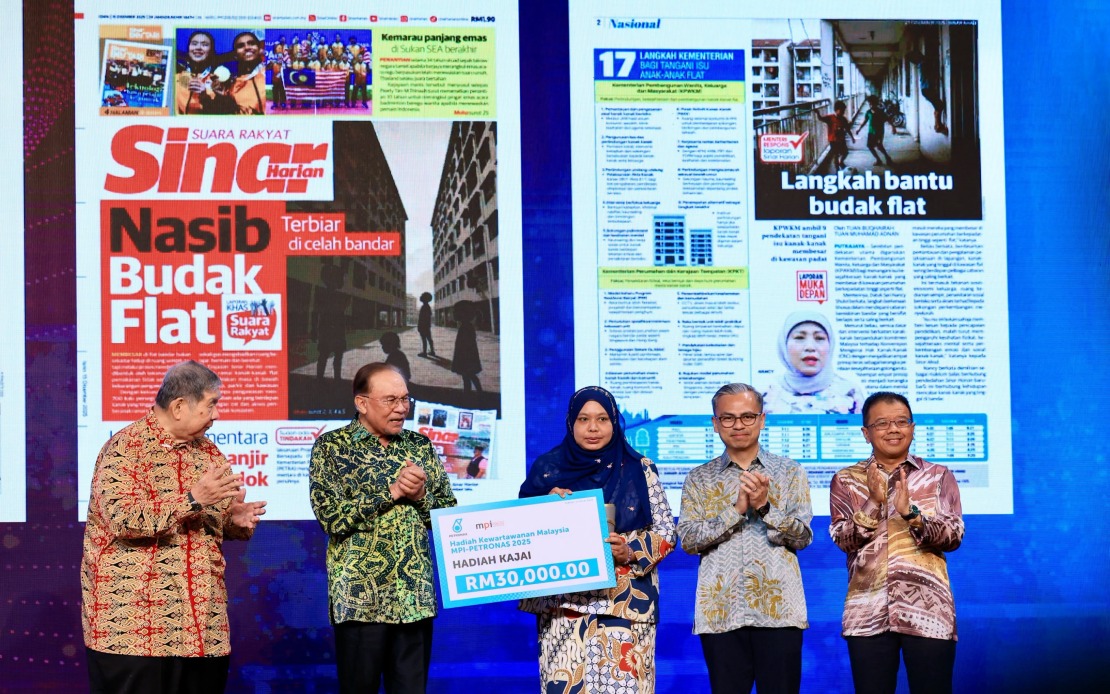
Fahmi's remarks were delivered at the Malaysian Journalists' Night 2026, an annual convocation that drew approximately one thousand participants from across the media industry, government structures, private enterprise, and academic institutions. The event doubled as the venue for presenting the MPI-PETRONAS Malaysian Journalism Awards 2025, an honour system designed to recognise outstanding contributions and technical excellence within the journalistic profession. Prime Minister Datuk Seri Anwar Ibrahim attended the occasion, lending governmental endorsement to the celebration of media practitioners and their work.
The Malaysian Journalists' Night represents one of the calendar's most significant occasions for the news industry, organised persistently each year by the Malaysian Press Institute (MPI). Beyond mere recognition of individual or organisational achievement, the gathering functions as a mechanism for strengthening relationships between journalists, government functionaries, and corporate stakeholders. These connections matter substantially because they establish channels through which mutual understanding can develop and collaborative approaches to shared challenges can be formulated.
The emphasis on journalistic responsibility resonates within a broader regional context where Southeast Asian democracies confront analogous challenges surrounding information integrity. Thailand, Indonesia, the Philippines, and other nations in the bloc have grappled with the destabilising effects of coordinated disinformation campaigns and the erosion of institutional trust. Malaysia's commitment to defending media independence thus carries implications extending beyond national borders, contributing to regional resilience against systemic attacks on factual discourse.
Fahmi's message specifically thanked media practitioners for their ongoing commitment to truthfulness and professional standards. This acknowledgment serves dual purposes: it validates the difficult work undertaken by journalists operating under increasingly constrained circumstances, while simultaneously articulating governmental expectations regarding ethical conduct. The framing suggests that the administration views press freedom not as an impediment to governance but as a prerequisite for legitimate democratic operation.
The contemporary information environment presents particular obstacles that earlier generations of journalists did not encounter. The velocity at which false narratives propagate through social networks, the algorithmic amplification of sensationalism, and the economic incentives that reward engagement over accuracy have fundamentally altered the competitive landscape. Within this transformed ecosystem, the maintenance of professional standards requires conscious, continuous effort and institutional resources that many traditional media outlets have struggled to sustain.
The Malaysian Journalism Awards specifically recognise excellence across the profession, serving as an aspirational model for emerging practitioners and established newsrooms alike. By celebrating achievements in reporting, investigation, and analysis, the honour system reinforces the value placed upon rigorous journalism within Malaysian society. Such recognition mechanisms matter because they signal what a society considers worthy of emulation and investment, shaping the trajectory of professional development across generations.
Fahmi's framing of media independence as a democratic essential reflects international best practice regarding the relationship between press freedom and governance legitimacy. Comparative studies consistently demonstrate that societies with stronger protections for journalistic autonomy experience higher levels of public trust in institutions and more informed electoral participation. Conversely, contexts where government controls information flow or where media outlets serve as propaganda instruments tend to experience degraded institutional performance and diminished citizen confidence.
The gathering of approximately one thousand media representatives, government officials, and corporate leaders created an opportunity for the articulation of shared commitment to information integrity. By bringing these constituencies together in a celebratory context focused on journalistic excellence, the Malaysian Press Institute facilitated the building of consensus around professional norms that transcend particular political interests or commercial imperatives. This convening function proves increasingly valuable as polarisation fragments many aspects of public discourse.
Looking forward, the sustained emphasis on media responsibility and independence will remain critical as Malaysia navigates technological transformation and evolving information ecosystems. The proliferation of artificial intelligence applications in content generation, the continued dominance of digital platforms in news distribution, and the growing sophistication of disinformation techniques all present emerging challenges that require collaborative responses from government, industry, and civil society. The framework articulated by Fahmi—emphasising ethics, independence, and accountability—provides essential guidance for navigating these complexities while preserving democratic institutions.

