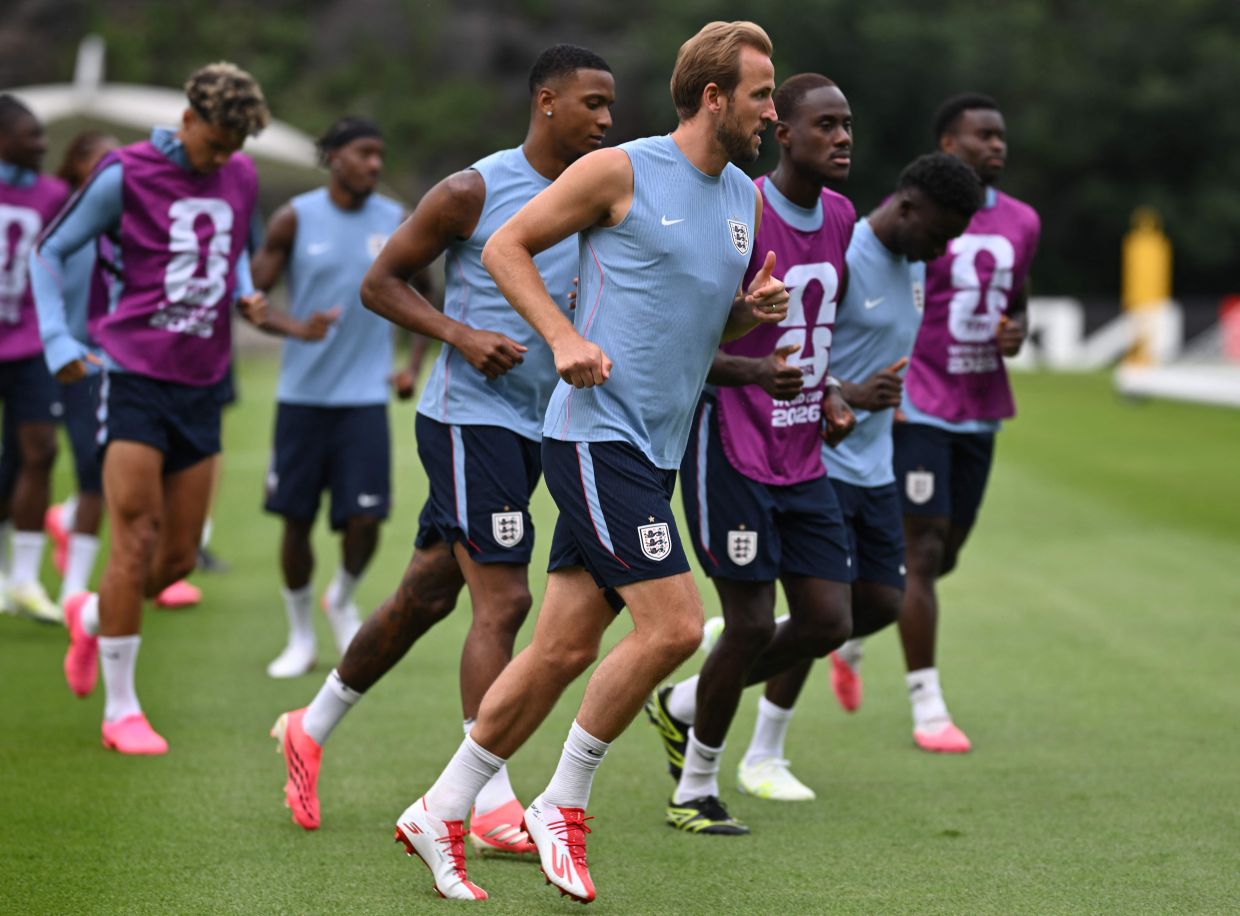
England will step onto one of world football's most hallowed grounds on Sunday when they meet Mexico at the Estadio Azteca in a round-of-16 encounter that carries far more than routine knockout-stage significance. The match represents a return to a venue laden with English sporting memories and demons, coming exactly 40 years after the infamous 'Hand of God' encounter that defined a generation's relationship with international competition. As the knockout phase intensifies, two more quarter-final berths hang in the balance across matches in Mexico City and New Jersey, with France and Morocco having already secured their progression a day earlier.
Thomas Tuchel's England squad enters Sunday's fixture in an uneven state. The Three Lions scraped through their group phase with considerable struggle before requiring a dramatic late intervention from captain Harry Kane to escape the Democratic Republic of Congo with a narrow 2-1 victory. Coming into this tournament with expectations of breaking a 60-year title drought, England's performances have underwhelmed observers and supporters alike, failing to demonstrate the dominance their billing suggested. The alarm bells over defensive solidity remain particularly acute, with the right flank proving persistently vulnerable to opposing pace and incision throughout the competition's earlier rounds.
Mexico, by contrast, radiates attacking confidence and coherence. Javier Aguirre's side has maintained an unbeaten home record across four matches whilst maintaining a shut-out sheet, most recently dispatching Ecuador 2-0 to claim their first knockout-stage victory at a World Cup in four decades. The prospect of eliminating England before a passionate home crowd represents not merely a sporting objective but a cultural moment for Mexican football. However, Aguirre has tempered expectations with notable realism, acknowledging in his pre-match assessment that England's fourth-place FIFA ranking presents a fundamentally different challenge than earlier opponents, and that anything less than a near-flawless performance would prove insufficient.
The physical environment of the Azteca presents a complication that extends beyond typical match preparation. Situated 2,240 metres above sea level, the stadium's altitude creates physiological demands that four days of acclimatisation cannot meaningfully address. Tuchel has been forthright in identifying this as a decisive factor, noting the impossibility of physical adaptation within such a compressed timeframe. His remarks upon arriving in Mexico City, reflecting on the stadium's palpable sense of occasion and historic weight, suggest a manager acutely aware that England confronts not only a capable Mexican team but an entire ecosystem designed to favour their opponents. Weather conditions add another variable: forecasts predicted thunderstorms coinciding with the scheduled 6pm local start time, though FIFA ultimately confirmed the fixture would proceed as originally planned despite earlier considerations to advance kick-off.
Mexico's coach questioned whether altitude would genuinely influence proceedings, reframing the contest as fundamentally a conventional 11-versus-11 proposition. Yet this framing, whilst rhetorically appealing, sidesteps the tangible advantages that home teams enjoy in such elevated venues. The combination of player familiarity, crowd psychology, and physiological adaptation accumulated over a season of domestic competition creates measurable benefits that transcend motivational rhetoric. Aguirre's respect for England's personnel—noting the quality both within and outside their domestic league alongside their physical attributes—indicates full recognition that his team faces no underdogs' narrative but rather opponents against whom execution must reach exceptional standards.
Simultaneously, the second round-of-16 fixture pits Brazil against a resurgent Norwegian side led by the tournament's most lethal finisher. Erling Haaland's five goals across three appearances represents historic efficiency, creating a scenario where the Manchester City forward becomes genuinely capable of single-handedly determining the match's outcome. The irony that Haaland's primary opponent will be Gabriel Magalhaes—an Arsenal player confronting a City teammate—adds a layer of Premier League familiarity to what otherwise appears as a David-and-Goliath narrative. Brazil's defensive partnership has existing experience facing Haaland's movement and intensity, with both central defenders having encountered him regularly in European club competition.
Carlo Ancelotti's relaxed demeanor whilst addressing Brazil's preparation strategies suggests confidence bordering on routine complacency. His assertion that his defenders require no tactical instruction regarding Haaland—given their accumulated exposure—indicates either justified self-assurance or potential underestimation of the threat. Meanwhile, Norwegian coach Stale Solbakken has occupied himself with psychological management, urging his players to view the occasion as merely another match rather than a historic confrontation with a five-time world champion. Solbakken's additional observation that Brazil lacks the overwhelming favouritism of previous iterations suggests recognition that contemporary world football has narrowed the gap between the established elite and capable challengers.
The MetLife Stadium in New Jersey hosts this latter fixture under similarly challenging weather predictions, with the National Weather Service issuing flood warnings for the region. Such meteorological complications create equalising factors potentially more significant than tactical preparations, as both teams must navigate identical environmental obstacles. Whilst Brazil's pedigree and tournament experience carry substantial weight, Norway's in-form status and Haaland's devastating efficiency in the final third render them far from ceremonial participants. The winner here advances to a Miami quarter-final against England's conqueror, raising the stakes further for both weekend encounters.
For Malaysian and Southeast Asian observers, these matches carry considerable interest beyond mere sporting spectacle. England's struggles contrast sharply with pre-tournament expectations, offering lessons in how planning and reputation cannot substitute for genuine collective fluidity. Mexico's resurgence represents a regional football power reasserting continental relevance on a global stage, whilst Brazil and Norway present the perennial dynamic between established footballing superpowers and emerging challengers. The altitude factor at the Azteca particularly resonates given Southeast Asia's own experience with environmental variables affecting international competition.
The weekend fixtures will substantially reshape the tournament's trajectory. An England victory would suggest their group-phase struggles reflected merely temporary dislocation rather than fundamental structural weakness, potentially renewing title ambitions. A Mexican triumph would validate Aguirre's rebuilding and silence critics of their qualification path. For Brazil and Norway, the stakes remain equally profound: Ancelotti's quest for a sixth world title against one of modern football's most dangerous attacking forces. As these matches approach, the narrative shifts from group-stage assessment to knockout reality, where the accumulated pressure of tournament progression separates survivors from departing teams.

