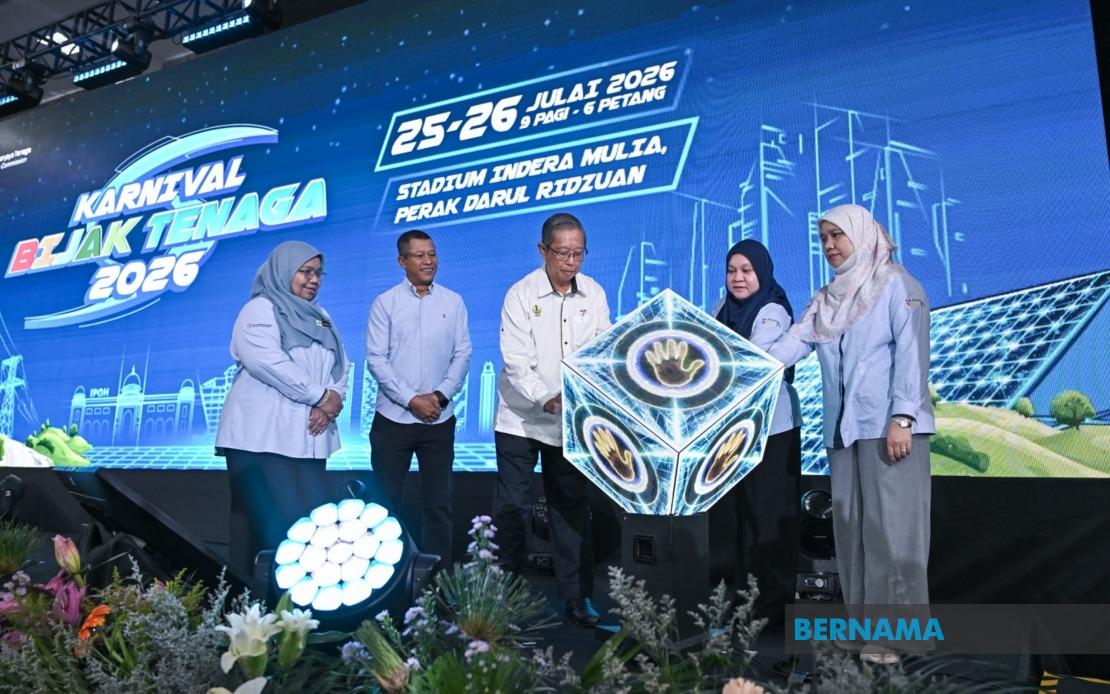
The Energy Commission marked a significant milestone in public engagement when it opened the Energy Smart Carnival 2026 at Stadium Indera Mulia in Ipoh this week, drawing substantially larger crowds than anticipated. The two-day event reflected the regulatory body's determination to deepen community understanding of the national energy transition and its own critical functions overseeing electricity and piped gas distribution across Malaysia. With visitors exceeding the initial 5,000 target to reach over 10,000 attendees, the carnival demonstrated considerable appetite among Malaysians to learn more about energy sector developments and government incentives shaping the industry.
Energy Commission Chairman Datuk Seri Asri Hamidon framed the carnival as a strategic tool for bridging the gap between the regulator and everyday Malaysians. In his remarks at the opening ceremony, he emphasized that direct engagement with the public remained essential to building awareness of the commission's regulatory role and the broader energy transition agenda. Rather than relying solely on formal communications channels, the carnival positioned the Energy Commission as an accessible institution willing to explain its mandate through interactive, family-friendly experiences. This approach signals recognition that public buy-in for the energy transition depends not just on policy directives but on widespread understanding of why these changes matter at the household level.
The carnival's educational components focused heavily on practical aspects of energy management that affect Malaysian households daily. Visitors encountered detailed information about energy efficiency labelling systems, including the significance of 4 or 5-Star Energy Efficiency Labels that guide purchasing decisions for electrical appliances. The Energy Commission also highlighted ST-SIRIM Safety Labels, ensuring that efficiency improvements do not compromise safety standards. By translating technical regulatory frameworks into tangible guidance about which products to buy and how to reduce household consumption, the carnival made abstract energy policy concrete and immediately applicable to consumer behaviour.
The timing of the carnival proved strategically significant, coinciding with the Energy Commission's Silver Jubilee celebration marking 25 years of regulatory oversight. This milestone provided an opportunity to reflect on the institution's evolution while simultaneously positioning itself as forward-looking and responsive to contemporary challenges. The connection between celebrating institutional history and launching major public engagement initiatives underscored how the Energy Commission views its anniversary not merely as commemoration but as a platform for renewed commitment to its evolving responsibilities in facilitating Malaysia's energy transition.
The geographic reach of attendees provided encouraging evidence that energy transition messaging resonates across Malaysia's diverse regions. While the carnival operated in Perak, visitors travelled from as far as Kuala Lumpur and Johor Bahru, suggesting that energy efficiency and renewable energy topics command attention beyond urban centres. This cross-regional participation carries implications for how subsequent phases of the carnival expansion might be tailored to different state contexts while maintaining core educational messages about sustainable energy use and grid safety.
The Energy Commission's strategic communications team indicated that the Ipoh carnival's success has catalyzed plans to expand the initiative to other states beginning next year. This scaling approach reflects confidence that the carnival model successfully achieves the Energy Commission's dual objectives of raising public awareness while positioning the regulator as an institution that values community dialogue. The expansion strategy also acknowledges that energy transition is not merely a technical matter confined to boardrooms and engineering laboratories but fundamentally a social undertaking requiring coordinated changes in how millions of Malaysians consume energy.
The exhibitions and demonstrations at the carnival offered tangible windows into how energy efficiency functions in practice. Rather than distributing pamphlets about household conservation, visitors encountered interactive displays showing the actual impact of different appliances on electricity bills and demand on the national grid. This experiential learning approach recognizes that understanding often emerges more effectively through demonstration than through abstract information. When citizens grasp how their individual consumption decisions affect grid stability and national energy security, they become stakeholders in the transition rather than passive recipients of government directives.
The involvement of Perak Infrastructure, Energy, Water and Public Transport Committee Chairman Datuk Seri Mohammad Nizar Jamaluddin in the opening ceremony highlighted how the Energy Commission's public engagement intersects with state-level governance structures. This multi-level participation reflects the reality that energy regulation operates within a framework involving federal regulatory bodies, state governments, and local authorities. The carnival thus served not only as a communication platform but as an occasion for these different governance levels to demonstrate coordination around energy transition objectives, an important signal to the public that energy policy enjoys coherent support across administrative boundaries.
The Energy Commission's deliberate emphasis on career and educational opportunities within the energy sector addressed a longer-term challenge facing Malaysia's transition agenda: developing the human capital necessary to implement increasingly complex energy infrastructure. By exposing carnival visitors to potential career pathways in renewable energy, grid management, and energy efficiency, the commission cultivated awareness that the transition creates diverse employment opportunities. This messaging proves particularly valuable for young Malaysians evaluating career choices, as it positions the energy sector as dynamic and forward-looking rather than stagnant or declining.
The carnival's framing around safety demonstrated that the Energy Commission views energy transition not as a choice between efficiency and security but as an integrated agenda where both dimensions reinforce each other. Emphasizing 4 or 5-Star efficiency labels alongside safety certifications communicated that pursuing lower household consumption does not mean accepting inferior safety standards. This holistic approach to energy regulation likely resonates with Malaysian consumers who reasonably demand that the products they purchase and the systems they depend on meet rigorous standards across multiple dimensions.
Looking forward, the carnival's success suggests that public engagement through accessible, entertaining platforms may become increasingly central to Malaysia's energy transition strategy. As the sector becomes more technically complex and involves more diverse stakeholder interests, the ability to communicate why transitions matter depends partly on institutions like the Energy Commission finding creative ways to explain their work. The Ipoh carnival demonstrated that such engagement need not be patronizing or oversimplified; rather, it can genuinely enhance public understanding while building trust in regulatory institutions overseeing critical infrastructure.
The Energy Commission's expansion plans for the carnival across additional states represent not merely promotional activity but a recognition that sustainable energy transitions ultimately succeed when they enjoy broad public understanding and support. By taking the carnival to different regions and tailoring its content to local contexts while maintaining consistent messaging about efficiency, safety, and opportunity, the commission positions itself not as a distant bureaucracy but as an institution genuinely invested in dialogue with the communities it serves. This approach may ultimately prove as important to Malaysia's energy transition as the technical innovations and policy frameworks driving the sector's transformation.

