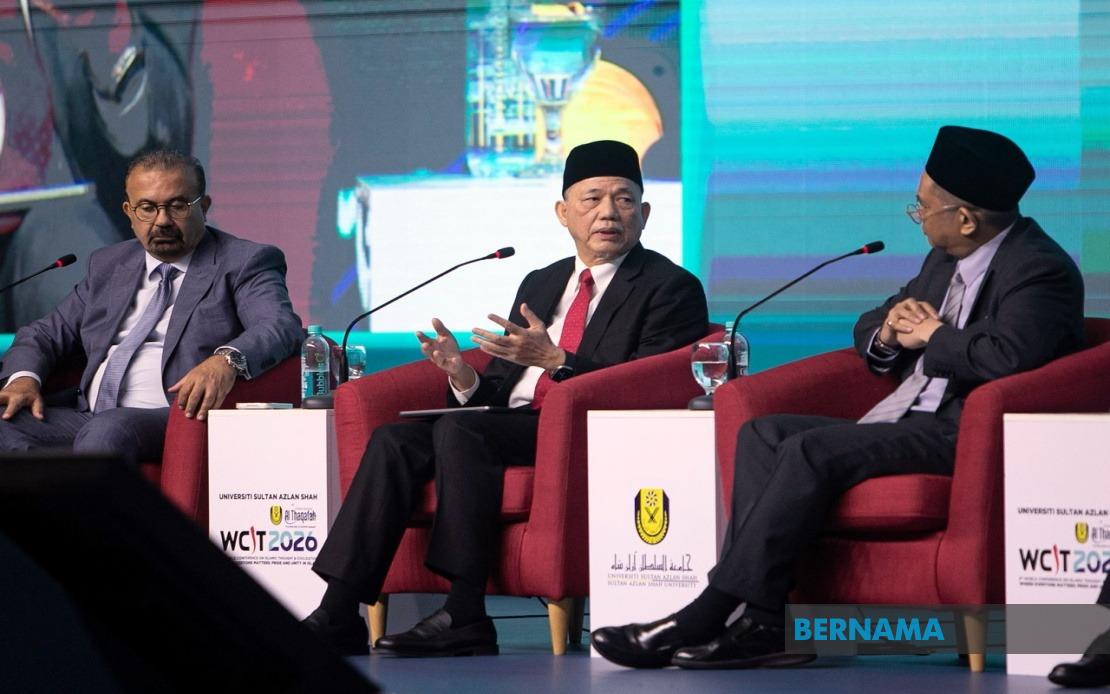
Deputy Prime Minister Datuk Seri Fadillah Yusof has underscored a critical shift in global economics, arguing that energy security and maritime security have merged into a single strategic concern with profound implications for Malaysia and the world. Speaking at the 8th World Conference on Islamic Thought and Civilisation (WCIT) in Ipoh on July 21, Fadillah, who also oversees the Energy Transition and Water Transformation portfolio, pointed to escalating tensions between the United States and Iran as evidence that developments occurring continents away now cascade directly into Malaysian households through electricity bills, petrol prices, and the cost of imported goods.
The modern interconnectedness of energy and shipping means that a geopolitical incident in one region can reverberate across supply chains within days. Fadillah illustrated this by highlighting the strategic importance of the Strait of Hormuz, through which approximately one-third of the world's seaborne oil passes annually. When tensions rise in that waterway, shipping companies reassess risk, insurance premiums climb, and these added costs eventually filter into consumer prices far from the source of the original conflict. For a resource-importing nation like Malaysia, such disruptions carry tangible consequences for inflation, manufacturing competitiveness, and household budgets.
The Deputy Prime Minister emphasized that the ripple effects extend well beyond energy markets alone. International logistics networks depend on predictable shipping costs and reliable transit corridors. When security concerns emerge along major maritime routes, vessels may divert to longer, more expensive paths, adding days to shipping schedules and raising freight charges. Simultaneously, insurance for cargo transiting troubled waters becomes prohibitively expensive, effectively pricing some shipments out of viability. These compounding pressures place strain on supply chains that Malaysian manufacturers rely upon, potentially eroding the nation's competitiveness in time-sensitive industries such as electronics and automotive components.
Fadillah's remarks reveal an increasingly sophisticated understanding within Malaysia's leadership of how geopolitical risk translates into economic vulnerability. The Deputy Prime Minister noted that Malaysia itself occupies a critical position in this interconnected system, lying along the Strait of Melaka, one of the world's busiest shipping lanes. Through this narrow waterway passes roughly 40 percent of global maritime trade and an even higher share of oil destined for Asia. Any instability affecting the Strait of Melaka would instantly impact not merely Malaysia's own economy but the broader regional prosperity upon which neighbouring countries depend. This geographic reality makes Malaysia an involuntary stakeholder in distant conflicts and a voice that carries weight in discussions about maritime stability and freedom of navigation.
In responding to these systemic risks, Fadillah articulated Malaysia's preference for engagement through diplomatic channels rather than confrontational posturing. The nation's historical experience as a trading hub spanning more than a century has entrenched a commitment to open, predictable, and rule-based international commerce. Malaysia's prosperity has been built upon the assumption that borders remain stable, seas remain navigable, and disputes are resolved through negotiation rather than military escalation. This diplomatic instinct reflects not naiveté but rather a clear-eyed assessment that an open trading system serves Malaysia's interests far better than a fragmented, conflict-ridden world.
The convergence of energy and maritime security challenges presents Malaysia with both immediate policy pressures and longer-term strategic considerations. In the near term, policymakers must monitor how regional tensions affect fuel imports and electricity generation, particularly given Malaysia's reliance on liquefied natural gas purchases from global markets. The government must also strengthen contingency planning to buffer against sudden price shocks or supply disruptions that could destabilize the economy. The Energy Transition and Water Transformation Ministry, which Fadillah leads, must navigate this environment by accelerating Malaysia's shift toward renewable and domestically controlled energy sources, reducing dependence on imports vulnerable to disruption.
Fadillah's observations also carry implications for Malaysia's regional diplomacy and its relationships with major powers. As tensions between the United States and Iran periodically intensify, Southeast Asian nations face pressure—both explicit and implicit—to align with one side or the other. Malaysia's declared position, reiterated through Fadillah's remarks, is to maintain friendships across the divide and to champion the principles of international law, freedom of navigation, and respect for sovereignty. This stance positions Malaysia as a voice advocating for de-escalation and adherence to established maritime rules, a role consistent with its interests and its diplomatic traditions.
The deeper implication of Fadillah's analysis is that developing nations like Malaysia have limited ability to insulate themselves from global energy and maritime instability but substantial ability to shape the international norms and institutions that govern these domains. By actively participating in forums addressing energy security and maritime governance, Malaysia can help craft policies that protect small and medium-sized economies from being collateral damage in great power competitions. The Malaysian government's emphasis on rules-based systems reflects recognition that formal agreements and international oversight mechanisms provide the most reliable protection for vulnerable trading nations.
Looking forward, Malaysia's energy and economic planners face the challenge of building resilience into systems that have historically assumed relative stability. Diversifying energy sources, strengthening relationships with multiple trading partners, and investing in domestic productive capacity can reduce vulnerability to distant shocks. Simultaneously, Malaysia can leverage its position along critical sea lanes to advocate for international cooperation on maritime security and freedom of navigation. The Deputy Prime Minister's framing of energy and maritime security as inseparable issues reflects a mature understanding that Malaysia's prosperity depends not only on its own policies but on a stable and predictable international order to which it must actively contribute.

